The Middle East is a turbulent region marked by conflict and instability. Once the cradle of civilization, it is now a battleground among competing powers. Profound ethnic and religious divides mark its political life, multiple geopolitical interest collide on its deserts, and various armed groups fight each other in an intricate network of allegiances in continuous shift. This situation has turned even worse in recent years, with the civil wars in Syria and Yemen, the conflict in Iraq, and the rise of the Islamic State. These events have transformed the regional context, creating power vacuums that each regional actor is trying to fill in accordance to its own interests.
Among others, one of the major drivers of this struggle for power has been the Saudi-Iranian rivalry. With Tehran exploiting the chaos in Iraq and Syria to extend its influence, Riyadh is reacting by reaffirming its alliance with the U.S., by launching an ambitious reform program, and even by taking steps toward rapprochement with Israel. But there is an important bilateral relationship that is often neglected: the one between Saudi Arabia and Turkey. And its direction could have profound consequences for the future geopolitics of the Middle East.
Background
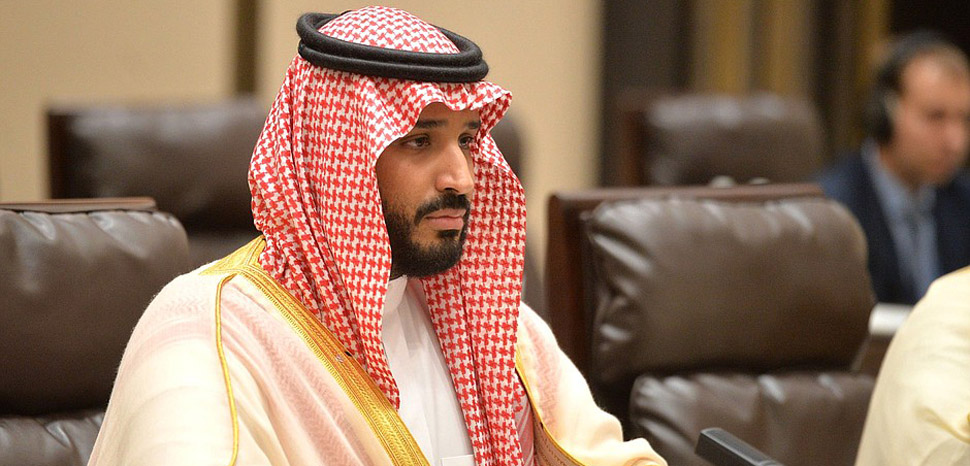
Saudi Arabia finds itself at a turning point. Having to deal with the economic backlashes caused by the drop in oil prices (its main source of revenue) and facing the long-term prospect of exhausting its reserves, Riyadh must also cope with a complex geopolitical environment characterized by Iran’s assertiveness and civil war along Saudi Arabia’s borders in Yemen. These internal and external pressures have put the Kingdom on a course to reform. The initiator of this change is the current strongman in Riyadh, Crown Prince Mohammed bin Salman. Set to become king and holding various charges, notably minister of defense, bin Salman is already transforming the Saudi state. All while concentrating power in his hands by having potential opponents arrested, he announced an ambitious program called Saudi Vision 2030, whose aim is to diversify the economy and prepare it for the post-oil era. He has promoted notable changes in society, allowing women to drive and attend football matches and opening cinemas after decades. As a material example of this symbiosis of social and economic transformation, he launched NEOM, a $500 billion project to build a vast and high-tech city set to become a hub for innovation on the shores of the Red Sea.
At the same time, the Prince is promoting an active international agenda. Iran remains the main rival of the Saudi Kingdom, out of a combination of divergent geopolitical interests and national-religious differences (Iran is a Persian state and the center of Shia Islam, while the Kingdom is Arab and the champion of Sunnism). In a context of rising tensions with Tehran, Prince Salman is actively taking countermeasures. He decided to intervene in Yemen, leading a coalition in the fight against Iran-sponsored Houthi rebels. Last year, he initiated a multinational blockade on Qatar, which he accused of sponsoring terrorism and being too close to Tehran; the diplomatic standoff remains unresolved. He also strengthened Saudi ties with the U.S., buying military equipment worth 350 billion dollars over 10 years in the context of an effort to upgrade the Kingdom’s military. He even declared that Riyadh would develop nuclear weapons if Tehran were ever to obtain them. And more recently, in what is the most significant shift in Saudi foreign policy, he is conducting a rapprochement with Israel.
Even though it maintains no official diplomatic ties with the Jewish state, Saudi Arabia has always adopted a realist-based approach towards Israel, and the two have been able to cooperate in the past. After all, the Kingdom belongs to the group of “pragmatic” Arab states, and both it and Israel are close U.S. allies that share a strong enmity to Iran; they do not want it to expand its influence and most importantly become a nuclear power. For this reason, the two countries oppose the Assad regime in Syria and its Iranian ally, and Tel Aviv approved of the blockade on Qatar. But with the support of the Trump administration, Prince bin Salman has taken further steps. The NEOM project raised the attention of Israeli firms, which are said to have held talks with Saudi officials to explore their involvement in the initiative. There are also rumors that the Prince visited Israel in person, though Riyadh has denied it. It was further speculated that the Saudi Air Force is training to suppress Iranian air defenses in case Israel decides to launch an airstrike on Iran’s nuclear facilities. But the most important development in this regard is the Prince’s statement that “the Palestinians and the Israelis [emphasis added] have the right to have their own land.” Without abandoning the support for the creation of a Palestinian state and the necessity of a peace agreement, this implicitly recognizes for the first time Israel’s right to exist. This is a major shift, as it could pave the way for other Arab leaders to do the same and change the diplomatic balance of the Israeli-Palestinian conflict.
But while these consequences with regard to Iran and the Palestinian issue have been widely discussed, the effects on Saudi Arabia’s relations with Turkey have not. And the Turkey, along with the Kingdom and Iran, is the third major Muslim player in the region, representing yet another national group with diverging as well as shared interests with the other two.
Impact
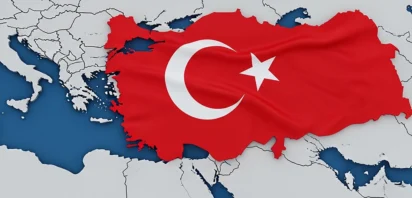
Saudi Arabia’s relations with Turkey are marked by ambivalence, notably in recent years. Both are important US allies, oppose the Syrian regime, and want to contain Iran (Ankara does not view Tehran’s expanding influence on the northern parts of Iraq and Syria favorably, as this could allow it to build a pipeline to the Mediterranean bypassing Turkey, thus undermining its role as an energy crossroad). At the same time, there are also divergences between them. First, the Saudis are firm supporters of al-Sisi’s regime in Egypt, whereas Turkey is backing the opposition, notably the Muslim Brotherhood, which Riyadh considers a terrorist faction. Second, there’s the Qatar issue. When the Kingdom initiated a blockade on the small Gulf emirate, Turkey sustained the Qatar with economic aid and by sending troops in the country.
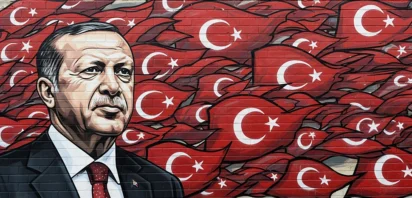
Then, there are the matters of Israel and Iran. With regards to Israel, while Saudi relations with the Jewish State are improving, for Turkey it is the opposite. President Erdogan’s rhetoric and support for political Islamic movements all over the Middle east have alienated Tel Aviv; along with his pro-Arab stance and his vocal support for the Palestinian cause. In this regard, Erdogan and Israel’s PM Netanyahu have recently exchanged harsh words following the killing of Palestinian protesters by Israeli soldiers, with Netanyahu accusing Turkey of indiscriminate bombing against civilians (notably Kurds) and Erdogan calling his counterpart “a terrorist.” Then there is the important issue of gas exploitation in the Eastern Mediterranean, where various regional powers are competing to access offshore gas deposits, with Turkey and Israel on opposing sides. The former has taken an assertive stance in advancing its claims on gas fields exploitation, causing other countries (including Israel) to band together to counter Ankara’s ambitions.
Iran is a factor influencing both Saudi-Turkish and Israeli-Turkish relations. It is well-known that Tehran is the arch-nemesis of both Riyadh and Tel Aviv, but its stance toward Ankara is more ambivalent. Turkey is a NATO member hosting US bases in its territory, and it opposes the Syrian regime. On the contrary, Iran is hostile to America and a friend to Assad. The two also support opposing sides in Yemen and, as mentioned before, Tehran’s increasing influence in (northern) Iraq and Syria is not seen with favor in Ankara. But some problems that now divide the two powers can be resolved. For instance, Iran’s projects for a pipeline reaching the Mediterranean bypassing Turkish territory (provided they ever materialize) would not necessarily harm Ankara’s interests if a sufficient share is granted to it. Moreover, there is also a lot of other potential common ground between the two countries. Both have strained ties with Israel and are pro-Qatar. Trade is also growing between them, with Turkey being largely dependent on oil imports from its Persian neighbor. Recently, the two (together with Russia) have shown the ability to dialogue in finding a common solution to the Syrian conflict. Here, Turkey may accept Assad staying in power provided that the Kurds gain no autonomy and that its oil-related interest are respected. When viewed in combination with the trend of deteriorating ties with Washington and the EU, this could indicate that Ankara will move closer to Tehran in the near future.
Forecast
The Middle East is an intricate web of converging and conflicting interests, and each power agrees with the others on some issues and diverge on others, often resulting in violence. Here more than elsewhere, the relations between two countries depends in large part on their respective stance toward third parties. And in this complex regional dynamic, some trends have emerged recently. Saudi Arabia is becoming more and more hostile to Iran, all the while improving its ties with Israel. At the same time, Turkey’s relations with these two players are going in the opposite direction: enmity is growing toward the Jewish State, and ties with Iran are improving in spite of longstanding differences. As such, it appears likely that Saudi-Turkish relations will also deteriorate. If this trend continues, there will be geopolitical repercussions.
From Saudi Arabia’s point of view, seeing Turkey move closer to Iran will hamper its hopes of exploiting the former to contain the latter’s influence in Iraq and Syria. Having Iraq (a predominantly Shia country with a long border with Saudi Arabia) falling totally under Tehran’s influence would cause serious security problems for Riyadh’s government. But possible countermeasures exist in this sense; namely securing American assistance, supporting Sunni armed groups (at the risk of fomenting the rise of extremist factions akin to the Islamic State), and helping the Kurds, at least in Syria and Turkey itself, as Ankara maintains good relations with the Kurds of northern Iraq mainly due to common interests in exploiting the area’s oil. This last option would achieve the double objective of containing Iran’s influence and frustrating Turkey, at the cost of causing relations to deteriorate further.
A falling out with Ankara would also cause Turkey to reduce its support to anti-Houthi forces in Yemen, thus complicating Riyadh’s efforts to counter Tehran’s influence. Moreover, Turkey could respond by increasing its support for Islamist political movements in Saudi Arabia and elsewhere, thus fostering social turmoil with potentially destabilizing effects like mass popular uprisings.
Still, between the two, it is Turkey that appears more poised to lose overall from worsening relations. Apart from the possibility of seeing Saudi Arabia supporting the Kurds, which is already a notable problem, Turkey will also find it more difficult to exert its influence in key maritime areas like the Red Sea and the Persian Gulf. In regard to the latter, Ankara maintains a military base in Qatar, where it also has notable economic stakes. Concerning the former, it is present through close ties with Sudan and a military base in Somalia. But while the problem in the Gulf can be solved via cooperation with Tehran, in the Red Sea the situation is different: there, Turkey will have to face three hostile powers (Saudi Arabia, Egypt, and Israel), and its ability to freely operate would be severely hampered, with no easy solutions in sight. In general, this loss of power projection capability can be only partially compensated by improved relations with Iran, as this country is an international pariah facing considerable social and economic problems (it has recently changed its official currency exchange rate to stop depreciation caused by fears that the nuclear deal may collapse and sanctions may be restored).
In conclusion, it appears that as Riyadh improves its ties with Tel Aviv, Ankara is finding more common ground with Tehran. Relations between the four capitals are not simple, and in each case there are factors favoring better ties as well as others worsening them, but the trend seems to be strengthening. If it continues, both Turkey and Saudi Arabia will be faced with consequences. What exactly these consequences will be is yet unclear, but it is almost certain that they will not favor stability in the Middle East.