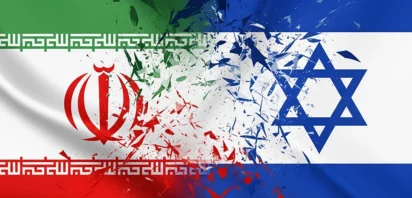
Israel’s likelihood of striking Iran in the near term is shaped less by a discrete ‘decision’ than by an unstable equilibrium left unresolved by diplomacy, deterrence signaling, and regional de-escalation. Since 2024, Israel and Iran have crossed key thresholds: Iran carried out unprecedented direct attacks on Israel, and Israel demonstrated a willingness to hit Iranian strategic assets and—by mid-2025—participate in (or support) larger operations aimed at degrading Iran’s nuclear and air-defense ecosystem.
In late 2025 and early January 2026, senior Israeli and US political messaging has again moved towards conditional threats and ‘round two’ talk, implying that leaders want Tehran to believe follow-on strikes remain on the table if Iran rebuilds certain capabilities.
Nuclear Uncertainty and Strategic Timelines
The most structurally important variable is that the Iran nuclear file is still in a high-risk configuration: Iran retains significant stockpiles of highly enriched uranium and key capabilities (know-how, residual centrifuges, feedstock) even after strikes and sabotage episodes, while international monitoring remains contested and incomplete. Public reporting tied to International Atomic Energy Agency (IAEA) Board action in November 2025 describes continued demands for ‘immediate and full access’ and highlights that verification of stockpiles and sites remains ‘long overdue’—an environment that tends to compress decision timelines for leaders who view uncertainty itself as a strategic risk.
From Israel’s perspective, the central fear is not merely that Iran has enriched uranium, but that the combination of stockpile size, reduced transparency, and potential rebuilding of damaged facilities can shorten warning time and create ‘ambiguous sprint’ pathways that are hard to detect until late. Multiple sources in 2025 emphasized that breakout estimates can be extremely short if political decisions align, while also stressing that weaponization and delivery integration still take time—meaning leaders can rationalize either urgency (‘we must act before concealment hardens’) or restraint (‘we still have time; avoid a regional war’). That ambiguity is precisely what produces recurring crises rather than stable deterrence.
A practical implication is that Israeli strategy becomes threshold-based: strikes become more likely if intelligence suggests Iran is reconstituting air defenses around key nuclear nodes, dispersing critical enrichment equipment, restoring conversion or metallurgical steps relevant to weapon pathways, or pushing enrichment levels/stockpile growth beyond what Israel and its partners can monitor confidently. Analyses of 2025 operations explicitly frame the strategic question as whether earlier strikes ‘disrupted’ versus ‘dismantled’
Iran’s program—because if the answer trends towards ‘disrupted,’ follow-on action becomes the logic of the campaign rather than an exceptional escalation.
Operational Timing and Capability Dynamics
Israel’s incentive to strike rises when it believes the military balance is temporarily favorable—especially if Iranian integrated air defenses were degraded and have not yet been fully rebuilt. Analyses of the post-2024/2025 escalation emphasize that earlier exchanges exposed limits in Iran’s missile-and-drone effectiveness against well-prepared defenses, while also underlining that Iran will learn and adapt. That combination—Israel seeing proof of concept in its defensive depth and offensive reach, and Iran racing to improve saturation tactics, accuracy, and survivability—creates a ‘use it before you lose it’ dynamic.
This is why warning rhetoric often focuses on missiles as much as the nuclear program. If Israeli planners judge that Iran’s conventional precision-strike capacity is being rebuilt faster than diplomatic constraints can slow the nuclear program, they may see a narrowing corridor where strikes are still feasible at an acceptable cost. In that logic, a strike is not necessarily about immediate regime change or even ‘ending’ the program; it is about periodically pushing Iran back from a capability frontier while managing escalation. Late-2025 reporting highlighting Israeli discussions of renewed strikes in 2026, along with US messaging framing action as conditional on Iranian rebuilding, aligns with this deterrence-through-threat posture.
Domestic Politics and Risk Calculus
Strategic timing is often chosen when leaders believe domestic politics can absorb—or benefit from—confrontation. Israel’s leadership has consistently framed Iran as a central, long-term, ‘existential threat’, with ‘keeping the Iran file hot’ serving to unify fractious coalitions, shift the political agenda, and justify exceptional security measures. On the Iranian side, regime-security concerns can also increase regional risk: when internal stability is challenged, leaders sometimes signal external resolve to deter adversaries and rally nationalist sentiment. Recent monitoring of Iranian protest dynamics by ISW/CTP, and contemporaneous reporting that Iranian leaders may consider outward action under domestic pressure, underscores how internal unrest and external signaling can become mutually reinforcing.
However, domestic politics can also restrain. In Israel, the economic and military costs of multi-front readiness (Gaza, Lebanon, maritime threats) and the risk of missile retaliation against population centers can limit appetite for another major Iran exchange unless leaders can argue a clear red-line breach. In Iran, leaders must weigh whether another direct confrontation could damage critical infrastructure, deepen isolation, and create elite fractures. The result is not a one-way escalatory slope; it is a high-variance environment where a small set of triggers—nuclear steps, missile tests, proxy attacks, or a misread signaling episode—can swing leaders from restraint to action quickly.
Washington’s Influence
Israel’s freedom of action is materially affected by US posture: intelligence sharing, munitions stockpiles, diplomatic cover, and regional basing or air-defense cooperation all shift expected costs. Late-December 2025 and early-January 2026 reporting describes high-level US-Israel political discussions that included potential renewed strikes and public warnings aimed at Iran. Even when US leaders do not explicitly greenlight an operation, a public stance that emphasizes conditional willingness to strike can be interpreted—by Israel, Iran, and regional states—as an altered risk calculus.
At the same time, US leadership often seeks to prevent spirals that endanger global energy markets or drag US forces into a broader war. Russia’s call for restraint in response to US strike rhetoric highlights how quickly great-power messaging enters the equation, especially given Russia–Iran ties since the Ukraine war. In practice, this creates a familiar pattern: Washington tries to deter Iran (and reassure Israel) while privately pressuring both sides to avoid steps that force an uncontrollable escalation.
Strategic Energy Chokepoints
Even if Israel’s principal target set is nuclear/missile infrastructure, the strategic consequences are inseparable from energy and shipping routes. Iran has asymmetric leverage in the Strait of Hormuz and through partner forces capable of threatening Red Sea traffic; those vulnerabilities turn any Israel–Iran exchange into a global economic risk event. European and policy analyses in 2025 explicitly warn that a future war could jeopardize energy supplies through the Strait of Hormuz and disrupt already-stressed maritime routes like the Red Sea.
This cuts both ways. It can deter Israel from striking if leaders believe the market shock and maritime retaliation will be blamed on Israel (and, by extension, the U.S.). But it can also increase Israeli willingness to act if leaders conclude Iran is already using these routes as coercive tools and that failure to impose costs will normalize a permanent ‘tax’ on regional commerce. In other words, maritime pressure can be interpreted as either a reason to avoid escalation or a reason escalation is already underway in slow motion.
Unstated Goals and Perception Effects
In most professional military and diplomatic analysis, outright regime change is treated as a high-risk aspiration rather than a reliable operational goal. That said, regime fragility still matters because some strategists see strikes as a way to weaken the Islamic Revolutionary Guard Corps’s (IRGC) external operations, reduce the regime’s coercive capacity, or amplify internal elite doubts—effects that are short of ‘regime change’ but can still be politically attractive. Regime-change language circulates in parts of the political ecosystem around Iran, which can harden Tehran’s threat perception and make it more likely to disperse assets, accelerate sensitive programs, or retaliate through proxies.
The key analytic point is that even a perception that regime change is an adversary objective can shorten Iran’s decision timelines and intensify retaliation logic—thereby increasing the probability of repeated strike cycles. When both sides believe time favors the other, preventive action becomes easier to justify internally.
Regional Spillover and Proxy Risks
Israel’s northern front remains a major escalation vector. When Israel is trading fire with Hezbollah or striking in Lebanon, Syria, or Iraq, Tehran’s deterrence posture and proxy management are tested; likewise, Israel’s leadership may see ‘degrading Iran’s regional network’ as inseparable from preventing future direct strikes. Reporting from January 5 on Israeli strikes in Lebanon—amid an already fragile post-ceasefire environment—illustrates how quickly the region can return to kinetic action even when formal arrangements exist. This kind of ongoing contact raises the risk that a proxy exchange produces an attribution event (for example, a high-casualty strike) that leaders treat as Iranian-directed and respond to with strikes on Iranian territory or high-value Iranian assets.
The practical reality is that escalation rarely follows a clean ladder. It often follows overlapping ‘incident chains’ across theatres. The more active the Lebanon front, the higher the probability that Israel’s Iran calculus shifts from ‘strategic patience’ to ‘strategic interruption,’ especially if Israeli leaders believe Iran is exploiting regional distraction to rebuild nuclear or missile capabilities.
Indicators and Decision Points
the probability of renewed Israeli strikes rises sharply when several messages converge:
- Credible reporting of Iranian reconstruction of key air-defense nodes or missile production lines.
- IAEA/Western reporting indicating further erosion of monitoring access or an unexplained increase in highly enriched stockpiles.
- A major proxy attack that Israel attributes directly to Tehran.
- Visible US–Israel alignment in rhetoric and deployments that suggests Israel will not be isolated diplomatically.
- An Israeli domestic-political moment where leaders have both motive and capacity to bear retaliation costs.
The late-2025 IAEA Board resolution emphasizing access demands and stockpile verification disputes is one such enabling condition because it sustains uncertainty and keeps the nuclear file on a crisis footing.
A particularly dangerous variant is the ‘reconstitution trigger’: if Israel believes the June 2025 damage created only a temporary delay and that Iran is now rapidly rebuilding, Israel may conclude it must strike again before reconstruction reaches a hard-to-penetrate stage. Analyses that frame 2025 strikes as potentially a delay rather than dismantlement feed this logic, implying a follow-on requirement if the strategic objective is to keep Iran from approaching a weapon threshold under cover of ambiguity.
Conversely, renewed strikes become less likely if: (1) a credible diplomatic track emerges that visibly constrains enrichment and restores verification; (2) US private pressure becomes explicit enough to raise the political cost for Israel; (3) Israel assesses that a strike would trigger an unacceptable multi-front barrage (Iran, Hezbollah and maritime disruption) given current readiness; or (4) energy/shipping markets are already fragile enough that allies indicate that they cannot absorb additional shocks. European policy analysis has been explicit that negotiated constraints could roll back risk without a broader regional war, and major ratings/energy analysts have repeatedly highlighted how conflict adds systemic risk—inputs that feed restraint arguments within allied capitals.
Overall Risk Assessment
On balance, a renewed Israeli strike on Iran in early 2026 is plausible because the strategic drivers that produced the last round—nuclear uncertainty, verification disputes, missile reconstitution, multi-front proxy interaction, and domestic political incentives—remain active, and recent high-level rhetoric suggests leaders want the option to be credible. The strongest single ‘fact pattern’ supporting near-term risk is the combination of ongoing IAEA access/verification confrontation and the explicit, public recycling of ‘round two’ language in US–Israel political signaling, which is typically used to deter Iranian rebuilding but also keeps operational pathways politically pre-authorized.
Scott N. Romaniuk—Senior Research Fellow, Centre for Contemporary Asia Studies, Corvinus Institute for Advanced Studies (CIAS); Department of International Relations, Institute of Global Studies, Corvinus University of Budapest, Hungary.