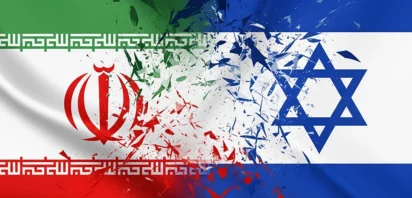
As of December, the confrontation between Israel and Iran has entered a volatile phase – one marked not by rhetoric alone, but by a clear military signaling and a narrowing diplomatic window. In the space of days, a cluster of developments, including missile tests across Iran, executions linked to espionage, senior military warnings in Israel, and parallel declarations of readiness from Tehran, have reinforced a growing belief among Israeli decision-makers that the confrontation is already approaching a point of no return.
Israel’s increasing likelihood of striking Iran does not stem from a single trigger but from the convergence of several strategic trends, including accelerating Iranian missile restocking and signaling, nuclear ambiguity absent verification, and the expansion and confidence of Iran’s proxy network, in addition to the collapse of mutual restraint in the intelligence and deterrence domain. Taken together, these dynamics are reshaping Israel’s calculus from risk management to preventive action.
Missile Signaling: From Capability to Intent
In December, it was reported that Iran conducted new ballistic missile tests in several cities, including Tehran, Isfahan, and Mashhad, around six months after the 12-day war with Israel in June. While Tehran framed these tests as defensive exercises, their timing and geography carried unmistakable strategic messaging.
For Israel, the tests confirmed three concerns. Firstly, that Iran is rapidly restoring and dispersing missile capabilities damaged earlier in 2025. Secondly, that missile forces are central to Iran’s post-war deterrence doctrine. And finally, that Tehran is prepared to signal readiness publicly, not just through covert channels.
Israeli defense planners increasingly assess that Iran’s missile program now represents the most immediate threat, even ahead of the nuclear file. Precision improvements, solid-fuel systems, and survivable launch platforms raise the specter of saturation attacks that could overwhelm Israel’s multilayered air defenses, including the Iron Dome and David’s Sling. Missile drills also compress warning timelines. In Israeli strategic culture, exercises that resemble operational profiles are treated as potential covers for escalation, particularly when combined with parallel political and intelligence activity.
Leadership Signals and a Narrowing Diplomatic Window
Against this backdrop, Israeli Prime Minister Benjamin Netanyahu announced on 22 December that he would travel to the United States to discuss the Iranian file with the US president. Publicly, Netanyahu emphasized that Israel does not seek an open war and remains committed to regional stability. Privately, the visit underscores a more urgent objective: aligning threat perceptions and contingency planning with the United States.
Netanyahu’s emphasis on Iranian missile activity was not incidental. Israeli leadership increasingly believes that Iran’s combined missile-nuclear trajectory will soon outpace diplomacy, leaving Israel with few options. Moreover, Israeli Chief of Staff Eyal Zamir has issued unusually direct warnings, stating that Israel may be forced to respond militarily and harshly to Iranian threats and that the IDF is preparing for multiple escalation scenarios. These statements are rare in their explicitness and reflect a deliberate effort to shape deterrence as well as prime domestic and international audiences for potential action.
Iran’s Countersignaling: Readiness, Resolve, and Non-Negotiable Missiles
Tehran’s messaging in late December was equally unambiguous. Senior Iranian military officials publicly declared that Iran is fully prepared for any hostile scenario, emphasizing that its force posture is defensive but comprehensive. Brigadier General Abolfazl Shekarchi, a senior spokesperson for the armed forces, stressed that Iran is strengthening military capabilities without seeking war while maintaining public morale.
More telling, however, were statements from Iran’s diplomatic leadership. The Foreign Ministry reiterated that Iran’s missile program is “non-negotiable,” framing it as a core pillar of national sovereignty. Foreign Minister Abbas Araghchi went further, stating that Iran is more prepared for war now than it was during the June 2025 conflict, and that readiness itself is the best means of preventing war. From Israel’s perspective, such declarations signal confidence, not restraint. They suggest that Iran believes it has absorbed earlier blows, adapted its defenses, and restored deterrence.
The Espionage War
One of the most destabilizing developments in December was Iran’s announcement that it had executed a man accused of spying for Israel, alongside disclosures that approximately 2,000 individuals had been arrested for alleged links to hostile intelligence networks during and around the June war.
Iranian officials described a vast espionage network built over years, involving heavy investment in recruitment, training, and organization. They emphasized that dismantling the network was a strategic victory—and that rebuilding it would take Israel years. For Israel, these disclosures cut both ways. On one hand, they signal Iranian confidence in counterintelligence capabilities. On the other, they confirm the depth and intensity of the covert war, which has now spilled decisively into the public domain.
Historically, Israel and Iran have relied on plausible deniability to manage escalation in the intelligence realm. Executions, mass arrests, and public accusations mark the erosion of that buffer. When intelligence conflict becomes overt, escalation risks rise sharply because both sides feel compelled to reassert credibility.
Nuclear Ambiguity Under Strain
While no definitive public evidence confirms that Iran has decided to build a nuclear weapon, the guardrails around nuclear ambiguity are weakening. Sustained high-level enrichment, reduced transparency, and limitations on inspections, combined with political rhetoric emphasizing readiness and sovereignty, create what Israeli planners view as an intolerable uncertainty. Israel’s doctrine has long treated nuclear latency in hostile states as a red line, not because of intent, but because intent can change faster than capability. The weakening role of international monitoring further compounds the problem. From Israel’s standpoint, verification gaps mean that warning times are shrinking and that waiting for definitive proof may mean waiting too long.
Why Israel’s Calculus Is Shifting Now
Israel’s strategic tradition favors delay, disruption, and indirect action. Yet in the present context, Israeli leaders increasingly conclude that Iran’s missile capabilities are growing faster than they can be neutralized covertly; Iran’s nuclear ambiguity is eroding without effective verification; and intelligence deterrence has broken down. In this context, restraint no longer buys time – it invites risk.
The decision to strike Iran would not be impulsive. It would reflect a judgment that the cost of action now is lower than the cost of inaction later, when Iran’s deterrent shield is stronger, and Israel’s freedom of maneuver is narrower.
The accelerating developments of this month, which include missile tests, executions, public readiness declarations, and senior military warnings, illustrate a dangerous reality: both sides believe they are prepared, and both seek to deter the other through strength rather than compromise.
Whether Israel ultimately strikes Iran will depend on timing, coordination with Washington, and the outcome of the meeting between US President Donald Trump and Israel’s Prime Minister Benjamin Netanyahu this week, along with the assessments of escalation control. But the logic driving such a decision is now visible, coherent, and deeply rooted in Israel’s historical experience.