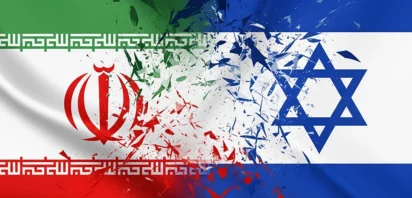
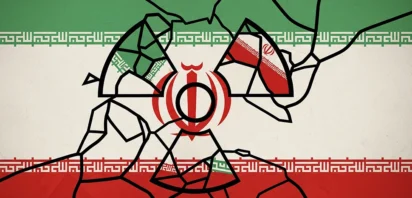
In the intensifying standoff between Israel and Iran, it is not the visible concern over uranium enrichment that defines the underlying strategic logic, but rather a deeper structural confrontation between state systems. What outwardly presents itself as a dispute over nuclear technology is, in essence, a clash between two irreconcilable strategic imperatives: Israel’s pursuit of regional preeminence and regime security, and Iran’s quest for deterrence and geopolitical autonomy. The nuclear file functions less as a genuine threat vector and more as a legitimating framework: a narrative instrument used to justify military and political actions that serve broader, unstated objectives.
At the center of the war lies a fundamental contradiction rooted in Israel’s perception of the Iranian regime. Under Prime Minister Benjamin Netanyahu, Israeli strategic thinking does not treat the Islamic Republic as merely a rival state with problematic capabilities; instead, it regards the very nature of Iran’s clerical-military regime as a permanent and existential threat to Israeli national security. This perception is not simply ideological but grounded in a long-term assessment that views any regime in Tehran with regional ambitions and autonomous military-industrial capacity as unacceptable. Accordingly, the Israeli security establishment has elevated the imperative of regime containment (if not regime destabilization) to a central pillar of its doctrine. The nuclear issue, in this context, is not treated as an end in itself but as a flexible tool of justification. It provides political and diplomatic cover for military operations that are fundamentally aimed at weakening or dismantling Iran’s state capacity.
This strategic logic is a direct outgrowth of the Begin Doctrine, first articulated in the early 1980s, which asserts that Israel will not allow hostile states in the region to acquire nuclear weapons. Initially applied in discrete surgical operations (such as the 1981 airstrike on Iraq’s Osirak reactor and the 2007 bombing of Syria’s Al-Kibar facility), the doctrine has, under Netanyahu, evolved into a far more expansive framework. What was once an operational guideline to prevent technical nuclear capability has become a programmatic approach to strategic denial; it is now focused not merely on destroying infrastructure but on undermining the institutional continuity of adversarial regimes. The operational shift from limited reactor strikes to broad-spectrum attacks on Iran’s command structure reflects this expanded scope.
That this strategy may or may not succeed is immaterial; what matters is that, structurally, Israel is not seeking to prevent a bomb: it is seeking to collapse the system that could order its construction.
Iran, for its part, has maintained a posture of deliberate nuclear ambiguity since halting its overt weapons program in 2003, following its exposure by international intelligence. This posture has been characterized by a careful balance: enough technical progress to keep bargaining leverage alive, but not enough to justify full-scale military retaliation or universal sanctions enforcement. This strategy of latency (preserving the technical infrastructure and knowledge base necessary for a rapid “breakout” without actually weaponizing) has served to contain external threats while preserving internal regime cohesion. Within Iran, the strategy reflects a compromise between factions: security hardliners who view nuclear deterrence as essential, and technocratic moderates who prioritize economic integration and sanction relief. However, Israel’s escalation threatens to upset this balance. By targeting individuals and institutions aligned with restraint, Israeli strikes may strengthen the position of those advocating for an overt nuclear deterrent.
The timing of Israel’s actions is equally instructive. With Hezbollah temporarily weakened from recent Israeli operations and the United States under an administration disinclined to restrain Israeli action, the regional balance of power has tilted in Israel’s favor. Netanyahu, facing little institutional resistance from within his cabinet or military hierarchy, has seized this permissive strategic window to impose a dilemma on the Iranian leadership: retaliate and risk a devastating regional war without guaranteed Russian or Chinese support, or refrain and suffer a reputational collapse that could jeopardize internal regime stability. The point is not merely to force a tactical decision but to stress the regime structurally (to exacerbate the contradictions between its strategic needs and operational constraints).
In this context, the nuclear narrative functions less as a genuine warning and more as an operational enabler. Netanyahu’s statements that Iran possesses enough enriched uranium for “nine atom bombs” are technically incorrect (Iran has not enriched uranium beyond 60% purity, while weapons-grade enrichment begins at 90%) but politically effective. These exaggerations serve to construct a sense of imminent threat, thereby authorizing sustained military action in the name of preemptive defense. They manufacture urgency, mobilize public support, and delegitimize diplomatic engagement, thereby clearing the political space necessary for escalation.
Iran’s response has been cautious but revealing. The regime continues to file “Design Information Questionnaires” with the International Atomic Energy Agency (IAEA) for newly constructed enrichment facilities, maintaining a thin veneer of cooperation. Simultaneously, it has scaled back substantive collaboration with IAEA inspectors, limiting visibility into its nuclear activities. This dual signaling strategy is designed to keep the diplomatic door ajar while communicating resolve to domestic and international audiences. But its effectiveness is diminishing. When adversaries regard a regime’s very existence as the problem, incremental compliance offers no relief.
Under such conditions, deterrence begins to reverse its function. Rather than dissuading Israeli strikes, Iran’s current lack of a nuclear deterrent invites them. The regime, acutely aware of the fate of leaders who lacked nuclear weapons (from Saddam Hussein to Muammar Gaddafi), may increasingly view weaponization as not merely desirable but essential for regime survival. This would mark a decisive shift from a strategy of calculated ambiguity to one of overt deterrence, driven not by ideological zeal but by material necessity. This potential shift mirrors the North Korean trajectory: a once-ambiguous program hardened into an overt deterrent capability in response to existential threat. Iran’s internal calculus may now be tilting in the same direction.
Meanwhile, international mechanisms designed to contain such escalation appear inert. The IAEA’s condemnations are diplomatically significant but lack enforcement power without consensus among major powers. Given China’s economic reliance on Iranian oil and Russia’s military-industrial cooperation with Tehran (particularly in the exchange of drones and military technology), neither is inclined to support further sanctions. The United States, for its part, has deprioritized reentry into the Joint Comprehensive Plan of Action (JCPOA), having ceded initiative in the region to Israel.
Thus, the logic of confrontation has become self-reinforcing. Israel is structurally compelled to maintain pressure through recurrent strikes to prevent Iran from regrouping and consolidating its position. Iran, in turn, is increasingly driven to pursue overt nuclear deterrence as its only viable path to regime security. This feedback loop reshapes internal political dynamics within both states. In Iran, decision-making is likely to shift in favor of factions advocating weaponization (not out of ideological zeal, but because every other model of survival has failed under pressure). In Israel, strategic inertia ensures continued escalation as the default policy, especially under a leadership that views containment as capitulation.
Negotiated solutions, once predicated on mutual behavioral modification, now appear structurally obsolete. Israel no longer accepts the premise that Iranian behavior can be reformed. Iran increasingly concludes that restraint yields only vulnerability. The conflict has become decoupled from the framework of diplomacy and integrated into the machinery of power politics. In such an environment, deterrence is not a stable equilibrium but a moving threshold, continually redefined by shifting threat perceptions and evolving military capabilities. What remains is not a roadmap to peace, but a strategic terrain governed by force, attrition, and the systemic logic of preemptive survival.
The views expressed in this article belong to the author(s) alone and do not necessarily reflect those of Geopoliticalmonitor.com.