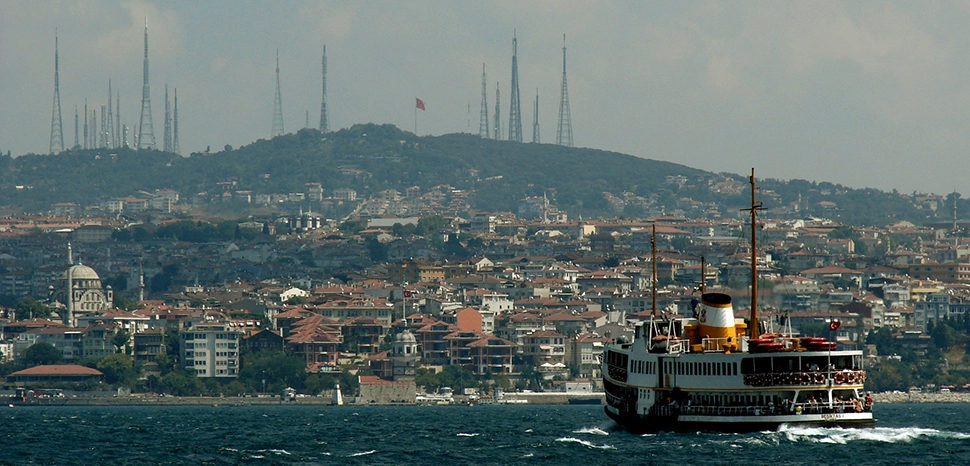
Türkiye’s trade strategy is fundamentally shaped by the geospatial realities of its territory, which lies at the intersection of three major economic regions: Europe, Asia, and the Middle East. This unique geography is not merely a passive advantage but a critical asset leveraged through deliberate infrastructure investments and political positioning. Türkiye’s expansive logistics architecture, including transcontinental rail corridors, strategic maritime chokepoints like the Bosporus Strait, and an evolving customs framework, serves to streamline the movement of goods across continents.
Central to this geographic calculus is Türkiye’s championing of the “Middle Corridor,” a transport route connecting China to Europe via Central Asia, the Caspian Sea, and Türkiye. This corridor bypasses the more volatile or sanction-heavy routes through Russia and Iran. The Marmaray rail tunnel under the Bosphorus and the Baku-Tbilisi-Kars railway exemplify Türkiye’s infrastructural commitment to this vision. These projects are not isolated upgrades but integral links in a new trade architecture that reinforces Türkiye’s role as a logistics and processing intermediary. By offering a dependable transit pathway in a fragmented international landscape, Türkiye positions itself to extract value from trade flows that must now navigate a more fractured geopolitical environment.
Thus, Türkiye does not merely facilitate trade; it embeds itself within global value chains as a processing and transit node, profiting from its capacity to absorb and redirect trade routes disrupted by geopolitical instability.
Export Link between East and West
The structure of Türkiye’s international trade is defined by a clear dual dependency. On the one hand, Türkiye’s export markets are overwhelmingly concentrated in the West, especially in the European Union. In 2024, 41 to 42 percent of all Turkish exports were destined for the EU, a reflection of the enduring industrial interdependence fostered by the 1995 Customs Union. Key sectors such as automotive, white goods, and machinery maintain tightly integrated supply chains with European manufacturers. This export concentration provides stable demand but exposes Türkiye to cyclical economic downturns in Europe and potential regulatory or tariff shifts.