The recently announced US-Vietnam trade deal can be understood as a calculated application of economic coercion by a dominant power. The United States, by threatening to impose a punitive 46% tariff on Vietnamese exports, deliberately exploited the significant asymmetry in trade dependence between the two countries. Vietnam’s economic model is export-oriented, with approximately 30% of its total exports directed toward the US market, making the United States its single largest trading partner. Conversely, Vietnamese goods account for only about 4% of US imports, which, while non-negligible in certain labor-intensive sectors such as garments, furniture, and electronics, does not constitute a strategic dependence for Washington.
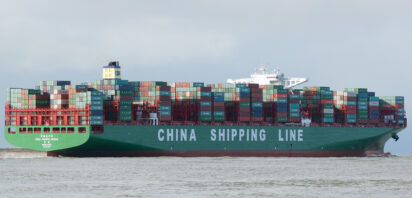
By ultimately imposing a 20% tariff, well above previous Most Favored Nation (MFN) rates but lower than the proposed maximum, the United States applied calibrated pressure to compel Vietnamese compliance while avoiding a full rupture in trade flows. The parallel 40% tariff on goods deemed to be transshipped through Vietnam, specifically targeting Chinese-origin goods rerouted to evade US tariffs, serves both as an enforcement threat and as a signal of strategic deterrence.
These unilateral tariff actions bypass traditional multilateral trade mechanisms such as the World Trade Organization (WTO), reflecting Washington’s shift toward direct bilateral leverage. Vietnam’s systemic vulnerabilities, namely its limited capital reserves, heavy reliance on foreign direct investment, and an imperative to maintain growth to ensure political stability, render it unable to mount significant resistance. Thus, key concessions made by Vietnam, including full elimination of tariffs on US goods, regulatory approvals for major US commercial projects, and commitments to crack down on transshipment, ended up being highly significant.
Regulatory Vagueness and Selective Enforcement
Central to the enforcement of the new trade regime is a deliberately engineered ambiguity surrounding rules of origin, tariff application criteria, and definitions of transshipment. This ambiguity is not accidental. Rather, it functions as a dynamic tool of control, allowing US authorities to wield compliance discretion in a way that aligns with shifting political and economic priorities.
For example, the absence of a clearly defined threshold for determining local value-added content (such as a fixed percentage requirement for Vietnamese-origin input to qualify for the 20% tariff rather than the punitive 40%) converts what could be a predictable compliance environment into a discretionary enforcement landscape. This could give US Customs and Border Protection (CBP) the latitude to reclassify goods post-entry, exposing exporters to retroactive penalties and increased regulatory risk.
The resulting uncertainty undermines standard investor risk models, forcing firms to allocate resources to legal consultation and supply chain traceability, all while lacking clarity on what constitutes full compliance. Crucially, this regulatory vagueness breaks with traditional US doctrines such as “substantial transformation,” which historically determined origin based on whether a good had undergone significant manufacturing in a given country.