Beyond its debilitating effect on businesses and equity markets across the globe, COVID-19’s economic impact has sparked debate on the future of globalized trade. Among the most frequently discussed consequences of COVID-19’s aftermath is the future of China’s dominance as a global manufacturing hub. As outlined in the Chinese Government’s “Made in China 2025” plan, the country’s motive in reorienting its industrial output toward higher value chain activities represents a shift toward economic self-sufficiency.
America’s reservations and, in some cases, outright objection to China’s growing involvement in sensitive areas such as telecommunications and robotics is best exhibited through the Trump administration’s hawkish policies. Efforts like the increase in tariffs, the US-led campaign against Huawei, and the expansion of the Committee on Foreign Investment in the United States (CFIUS) all serve as signals of a bifurcated global economy, pitting both powers against each other in a quest for economic supremacy.
Fears of such a scenario have only accelerated Beijing’s plans, as it seeks to independently fulfill its ambitions in emerging technologies such as artificial intelligence, aerospace & defense, and other sectors deemed critical to China’s technological prowess.
Yet China’s departure from low-cost manufacturing is not to be understood as a unilateral decision. Instead, Western leaders continue to pressure Multinational Corporations (MNCs) into redesigning their supply chains, shifting their overreliance on China in favor of repatriating manufacturing jobs to their home countries or selecting alternatives in the Asia Pacific (APAC).
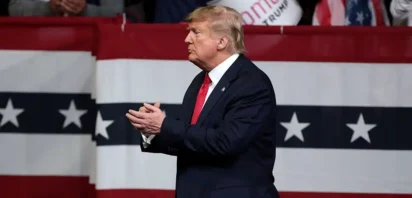
With COVID-19 threatening to further impair the relationship between the West and China, the impetus to diversify suppliers and explore exit options has seldom been stronger, and even before the pandemic reached the United States. For example, President Donald Trump published a tweet seven months ago ordering US businesses to “start looking for an alternative to China.”
Such conditions present new opportunities for emerging markets in the APAC region to establish rival manufacturing bases for the China-weary. Of these options, India, Vietnam, and Myanmar possess the greatest opportunity to siphon off manufacturing activity from China.
India
The bedrock of Indian Prime Minister Narendra Modi’s economic reform agenda is the “Make in India” initiative, a plea designed to entice investment and production offshoring within the country’s manufacturing sector. Given the size of its consumer market and workforce, India remains the most formidable rival to China’s industrial prowess. The country has a significantly large English-speaking population and churns out millions of college-level graduates in STEM fields. Yet these advantages are more noticeable within India’s services sector, which contributes nearly half of GDP, compared to just over 25% for manufacturing.
In 2015, following Modi’s ascension to the PM post, India saw its greatest surge in foreign direct investment (FDI) inflows. Promises of neoliberal reform, coupled with the shedding of India’s statist model, buoyed the bullish optimism for the country’s future. Though India may have reached a new apex in investor sentiment since Modi took office, subsequent policies enacted over Modi’s tenure have failed to materialize the level of investment needed to develop the manufacturing sector. Foreign investment in this space has decelerated in the past two years, a trend that is unlikely to let-up anytime soon due to the projected global slowdown precipitated by the COVID-19 pandemic.