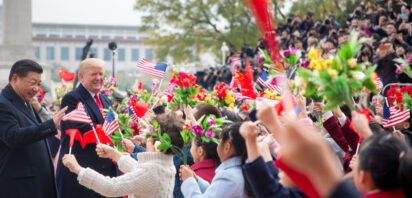
The Trump administration has announced plans to impose tariffs worth of $50 billion on Chinese imports, along with new restrictions on Chinese investment in the United States.
The move comes just weeks after Trump slapped blanket tariffs on steel and aluminum imports, angering allies in Europe and East Asia. Some of these concerns were allayed on Thursday when it was announced that Australia, Brazil, Canada, South Korea, and Mexico would be receiving a temporary exception.
The China tariffs usher in a trade showdown that has been long expected by President Trump’s base, whom were frequently told that China would be punished for its unfair trade practices during the 2016 presidential campaign. The $50 billion tariff package does just that, and perhaps more importantly for the long-term is that it shifts US-China relations to more openly antagonistic ground. Yet there are still concerns that tariffs aren’t the best tool available to President Trump if he wants to even the playing field of US-China trade.
Impact
- The nature of China’s trade cheating. China has an extensive record of circumventing global trade norms: it engages in state-sponsored corporate espionage to steal intellectual property and trade practices (sometimes via forced technology transfers and mandatory joint ventures); it skews its regulatory environment in favor of Chinese companies; it presides over a ‘National Team’ of massive state-owned enterprises that can distort markets at will and provide backdoor subsidies for Chinese companies; it is still a largely illiberal financial system that restricts foreign investment in a myriad of ways, and the list goes on. On this front, President Trump is absolutely right: China cheats in global trade. However, there’s one protectionist tool that’s relatively (but not totally) absent on China’s rap sheet, and that’s tariffs. Tariffs are the oldest and most unwieldly tool in the protectionist arsenal. They nearly always invite an in-kind response from the targeted country; they hurt consumers with price increases; they have unintended job impacts up and down the supply chain; and ultimately they’re challengeable in the WTO – the jewel in the crown of the international trade regime that the United States itself set up, and that the United States itself is now undermining. Although there’s no question of China’s cheating, there is a legitimate question of whether or not the Trump tariffs are the right way to deal with it.