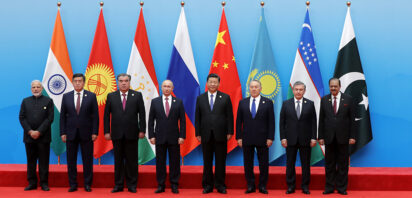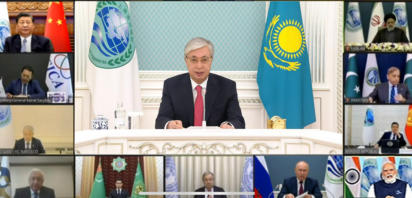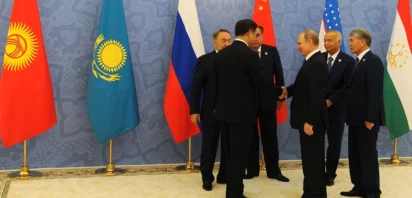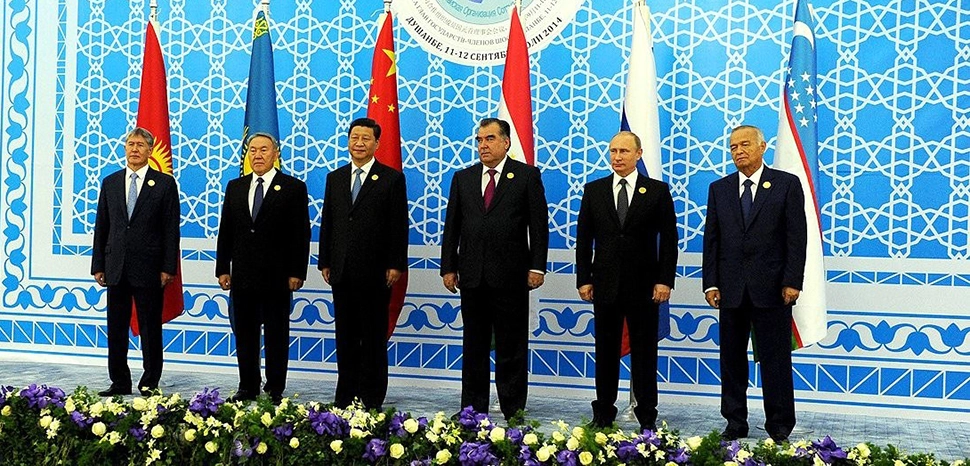
The Shanghai Cooperation Organization held its 14th annual summit from Sept. 11-12 in the Tajik capital Dushanbe, with the stated goals of expanding economic cooperation and containing threats of extremism among its members.
The organization includes Russia and China as well as four Central Asian republics: Kazakhstan, Kyrgyzstan, Tajikistan, and Uzbekistan. Isolationist Turkmenistan eschews international organizations but the Turkmen leader participated in discussions with China on the sidelines.
In addition to the member states, Afghanistan, India, Iran, Mongolia, and Pakistan attended the SCO as observer states, while ‘dialogue partners’ included Turkey, Belarus, and Sri Lanka.
Prior summit meetings rarely elicited much international coverage, but Russia’s recent invasion of Ukraine has generated more interest in the security and economy-focused bloc. The bloc represents half of the world’s population, one BBC News analyst noted last week.
It is also the first SCO meeting since China and Russia signed a gargantuan gas deal in May of this year, which will see Russia ship 38 billion cubic meters of natural gas over a 30-year period for an estimated $400 billion.
Though Russia and China both refused to reveal pricing mechanisms agreed in the deal, the agreement was seen as a loss for Russia, which was believed to have sold the fuel to China at bargain prices.
Details of the agreement remain fuzzy, but a Sept. 1 report from Geopolitical Information Service said Moscow offered Beijing several tax discounts which could lead to a loss of $30 billion in revenue over the 30-year period.
Construction on the gas pipeline began Sept. 1.
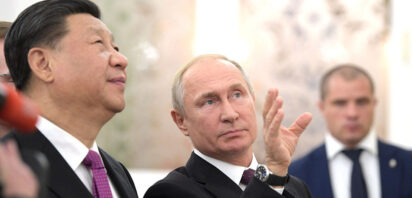
The gas deal is indicative of Russia’s declining influence and China’s increasing power in inner Asia, further evidenced by agreements struck over the course of the two-day regional gathering.