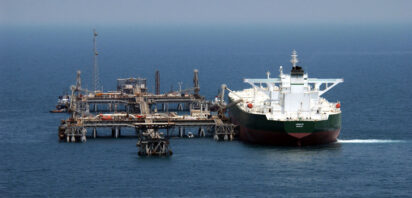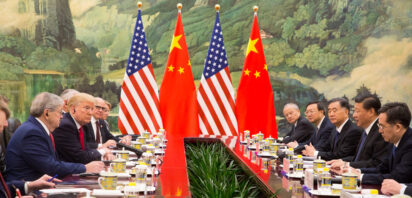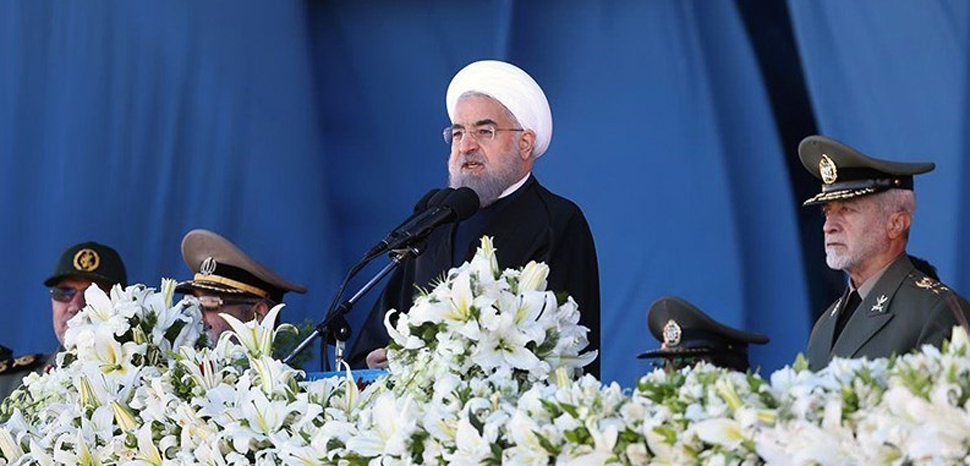
After a temporary, three-year reprieve, Iran sanctions will soon be back in place thanks to US President Donald Trump’s decision to withdraw from the Iran nuclear deal. Many of the new restrictions will come into force in November. It is to be expected that most (if not all) economic actors will be forced to comply or risk being locked out of the US financial system. Considering that oil is Iran’s primary export commodity and that it is an important source of revenue, the resumption of sanctions will have a profoundly negative impact on the country. But sanctions will also affect states that currently import oil from Iran, forcing them to adapt in order to ensure their continued energy security; and this will in turn benefit other oil-exporting countries that can pick up the slack. Moreover, the new restrictions will create opportunities for cooperation, and competition, between major powers.
Background
Since being revealed in 2003, Iran’s nuclear program has been one of the most hotly debated international issues. After a long and tense standoff, an agreement was finally reached in 2015 between Iran and the P5+1 group, which includes the five Permanent Members of the UN Security Council and Germany. Under the terms of the deal (officially known as Joint Comprehensive Plan of Action, or JCPOA), Iran renounced various elements of its nuclear program that could have a military dimension in exchange for relief from the comprehensive sanctions that had been crippling its economy for decades. Restrictions were gradually lifted after the deal, allowing Iran (among other things) to resume high-volume oil sales. However, the geopolitical situation became tense once again after Trump became president in early 2017. A vehement critic of the JCPOA since the electoral campaign, President Trump ultimately followed through on his original promise to scrap the deal. As a consequence, new sanctions will enter into force in November 2018. Under their terms, buyers of Iranian oil will have to stop purchasing it, otherwise they will be locked out of the US financial system and face large punitive fines. This will of course have important consequences on Iran’s already fragile and oil-dependent economy, but it will also impact countries that buy crude from Iran as well as third-party hydrocarbon producers.
Impact
To assess the geopolitical consequences of the upcoming sanctions, it is first necessary to the main buyers of Iranian oil. 2016 trade data from MIT’s Observatory of Economic Complexity serves as a good indicator for this.
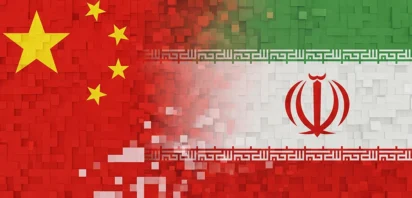
The most important client state is by far China, which is the destination for 33% or Iran’s oil exports. For the PRC, Iran represents an important source of supply, accounting to 8.2% of the total crude it buys. Since China imports oil from a diversified range of countries, in principle it can easily solve the problem by purchasing crude elsewhere. However, there is one factor that makes Iran a particularly attractive market for the Chinese: geography. China buys most of its oil from states like Saudi Arabia, the Gulf states, Angola, and other African countries. These imports are transported by sea, passing through the Malacca Strait. One of Beijing’s strategic nightmares is an interruption to the energy flow through Malacca, an event that could seriously compromise its entire economic system. Consequently, Beijing is actively trying to find alternative hydrocarbons supply sources to reduce its over-reliance on the vulnerable Malacca Strait chokepoint and on sea lines of communication (SLOC) in a more general sense. This quest for safe energy sources is also one of the main drivers of its ambitious “One Belt, One Road” initiative to interconnect the whole of Eurasia. Under this logic, Iran is a highly appealing alternative since it would be relatively simple to import its oil via pipelines passing through Central Asia. Other than Iran, only Russia is a valid (and even better) alternative in this geopolitical sense.
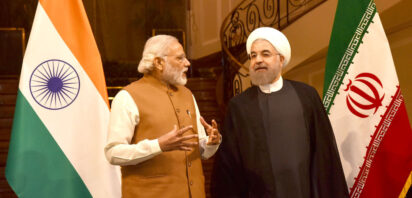
The second main buyer of Iranian oil is India, with a 23% share. New Delhi buys 11% of its crude from Tehran. Similar to China, India can also solve the problem posed by upcoming sanctions by purchasing oil from other countries. But, unlike China, its strategic situation is not so compromised and therefore it does not have the same degree of concern over SLOCs. Thanks to its position protracting toward the open ocean and its more constructive relations with the US, India is not threatened by blockade by a rival power, and therefore it does not have the same need to import oil by land. Still, New Delhi has strategic interests in Iran, which it hopes to nurture as an ally in order to pressure its nemesis Pakistan on two borders, much like what Pakistan has achieved vis-à-vis India with its close relations with China.