
Middle Corridor News & Analysis
Power TRIPP: The Trump Route and the Logic of Transactional Diplomacy

The Trump Route for International Peace (TRIPP) perfectly encapsulates the US president’s preferred style of foreign policy: power exercised through transactional deals rather than institutions, profits rather than principled values, and ultimately the erosion of the US-led liberal order.
Who Owns the Middle Corridor? Agency and Rivalry in Eurasia

No single actor owns the Middle Corridor, and its success will hinge not on great power interests, but on regional stakeholders whose collaboration will move the Eurasian trade route forward.
Türkiye Trade Strategy: Climbing the Value Chain in the Tariff Era
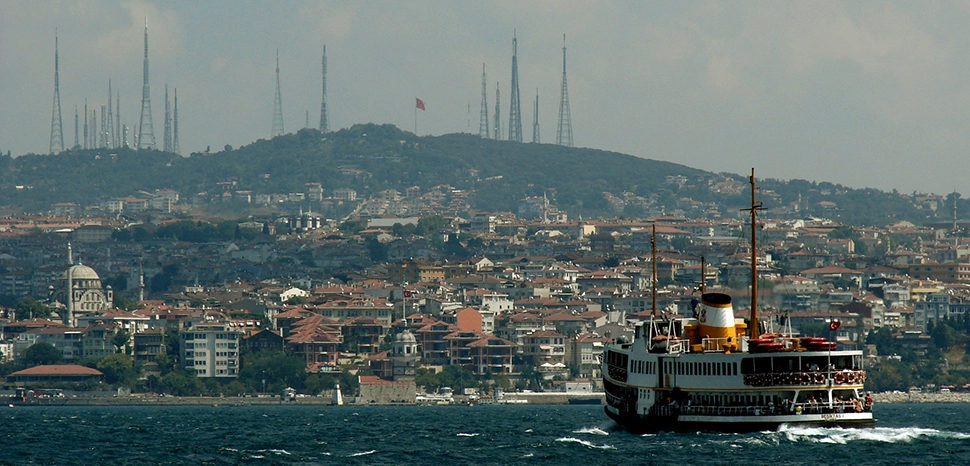
Türkiye’s strategic geography, expanding export focus, and manufacturing capabilities are positioning it as a key player in the reconfiguration of global trade, serving both as a bridge and a buffer amid the current era of tariffs, sanctions, and supply chain disruptions.
Middle Corridor: Shoring Up Germany’s Economic Security

In an environment of mounting geopolitical risk, alternative shipping routes like the Middle Corridor could be game-changers for Germany’s economic security, notably in diversified access to critical minerals.
The Middle Corridor: A Route Born of the New Eurasian Geopolitics

The Middle Corridor has risen to prominence as global supply chains adapt to new geopolitical realities. Yet challenges remain before the corridor can fully supplant traditional Eurasian routes.
Middle Corridor Looks to Insulate Global Supply Chains from Geopolitical Risk

Amid mounting geopolitical risk, the Trans-Caspian International Transport Route, or ‘Middle Corridor,’ is getting prepared to play a more central role in global trade.
Central Asia: The Once and Future Heart of Eurasia

A confluence of trade and geopolitical issues have endowed Central Asia with its historical diplomatic weight. Local governments must take advantage of the trend by evolving regional institutions that can unite in the face of outside attempts to divide and conquer.
The Middle Corridor: A Geopolitical Game-Changer in Eurasian Trade

In an era marked by rapidly evolving trade dynamics and escalating tensions, the rise of the Middle Corridor as a viable alternative trade route is a geopolitical game-changer.