In the turbulent landscape of contemporary geopolitics, established trade routes face unprecedented disruption, forcing major economies like Germany to reassess supply chain vulnerabilities and seek alternatives. Amidst this flux, the Trans-Caspian International Transport Route (TITR), or Middle Corridor, has emerged as a network of strategic significance. This multimodal corridor, combining rail, road, and maritime links, stretches from China across Central Asia (primarily Kazakhstan), traverses the Caspian Sea to Azerbaijan, crosses the South Caucasus via Georgia, and connects to Europe through Türkiye or Black Sea ports. It represents a complex network offering potential alternatives to traditional Eurasian trade arteries.
The surge in interest is linked to recent geopolitical upheavals. The Ukraine war and subsequent Western sanctions rendered the dominant Northern Corridor via Russia politically and economically precarious. Instability in other critical chokepoints, such as the Red Sea crisis, has further underscored the fragility of global maritime routes. Consequently, the Middle Corridor is increasingly viewed as a vital link and a mitigating factor in geopolitical risk management.
For Germany, an economic powerhouse heavily reliant on international trade, the rise of a viable alternative like the Middle Corridor holds profound implications. As Berlin seeks to bolster economic security, diversify trade, and secure access to critical resources, the TITR presents opportunities and challenges. The corridor’s development reflects and potentially reshapes Eurasian geopolitics, offering Central Asian and Caucasus nations avenues to reduce dependence on Russia and navigate China’s growing influence. Germany’s engagement is, therefore, inherently strategic.
Eurasian Trade in Transition: The Waning Northern Route
For years, the primary land bridge connecting China and Europe was the Northern Corridor, a rail network traversing Russia and Belarus, which long offered predictability and relative affordability.
However, the Ukraine war triggered a seismic shift. Western sanctions, security concerns, and the political imperative to distance from Russia rendered the Northern Corridor a liability. Cargo volumes plummeted as shippers sought alternatives bypassing Russian territory, leading to a redirection of flows towards southern routes.
While maritime transport remains dominant, it is significantly slower (45-60 days China-Europe vs. potential 10-18 days for the Middle Corridor) and vulnerable to chokepoint disruptions, like those in the Red Sea.
In this context, the Middle Corridor gained prominence as the main viable overland alternative circumventing a sanctioned Russia. The shift represents a forced diversification driven by geopolitical necessity, creating political momentum despite the corridor’s current imperfections. Embracing the TITR involves a trade-off: mitigating Russian geopolitical risk while accepting new operational complexities inherent in its multimodal nature (transshipment delays, port congestion, infrastructure gaps).
Germany’s Stake: Economic Vulnerability and Diversification
Germany’s export-oriented economy (trade is roughly 83% of GDP) makes it sensitive to trade route stability. Key sectors like automotive, machinery, and chemicals rely on intricate global supply chains. Major trading partners include the United States, China, and EU states.
Recent geopolitical shocks exposed vulnerabilities, prompting a policy shift towards economic security, diversification, and “de-risking.” A key concern is reliance on imports for critical raw materials (CRMs), essential for strategic industries and the energy transition. Germany imports many CRMs, with China dominating supply for numerous materials, including rare earth elements.
The Middle Corridor emerges as a potentially crucial instrument. It offers an alternative trade route bypassing Russia and unlocks potential access to the substantial natural resource wealth of Central Asian nations like Kazakhstan and Uzbekistan. These countries possess materials critical for German industry (beryllium, tantalum, titanium, phosphorus, lithium, cobalt, nickel, rare earths, copper, zinc, oil, gas). The German government has actively pursued resource partnerships, supported by high-level diplomacy.
Securing reliable CRM access via the Middle Corridor directly supports Germany’s green transition objectives. The corridor links foreign economic policy with domestic climate and industrial strategies. However, this involves navigating the reality that the corridor itself sees significant Chinese investment and usage. German policy must manage this interdependence.
The European Dimension: Global Gateway and Synergies
Germany’s engagement is amplified by the EU’s Global Gateway initiative, a strategy to boost sustainable global connections, often seen as a response to China’s Belt and Road. The Trans-Caspian Transport Corridor is a flagship project.
Substantial funding is committed, including €10 billion via Global Gateway. IFIs like the EBRD (ready to invest €1.5 billion) and the World Bank are major players, targeting port modernization, railway upgrades, digitalization, and border efficiency.
Operating within the EU framework offers Germany advantages: greater leverage and financial capacity; promotion of standards (sustainability, governance); and shared investment costs.
Navigating the Obstacles: Challenges and Risks Ahead
The Middle Corridor faces some challenges:
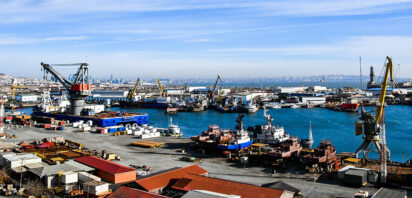
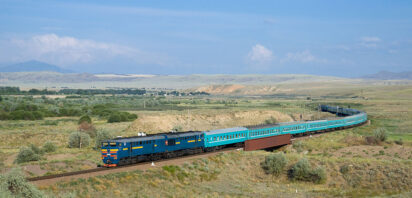
- Infrastructure Deficits: Key Caspian and Black Sea ports need upgrades. Vessel shortages exist on the Caspian. Railway constraints include single-track sections, electrification gaps, rolling stock shortages, and inefficient port links. Road infrastructure also needs work. Choke points cause delays
- Operational Issues: Lack of a single operator causes inefficiency. Multimodal transfers are complex. Digitalization is fragmented. Customs and tariffs are not harmonized. Costs remain high and transit times variable
- Capacity Constraints: Current capacity is a fraction (estimated 3-10%) of traditional routes. Even projected growth to 11 million tons by 2030 remains modest compared to the Northern Corridor or sea routes
- Geopolitical Risks: Regional instability (e.g., South Caucasus) is a concern. The risk of sanctions evasion regarding Russia exists and requires monitoring. Competing interests (China, Russia) and the need for consistent cooperation among corridor countries adds a layer of complexity
Looking Ahead
For Germany, the TITR offers compelling advantages: diversifying trade away from Russian transit, accessing vital Central Asian raw materials for industry and the green transition, and opening new markets and investment opportunities.
Realizing this potential requires navigating substantial challenges: infrastructure deficits, operational inefficiencies, coordination hurdles, capacity limitations, and geopolitical risk. Overcoming these demands sustained commitment and investment.
Despite hurdles, the strategic rationale for German and European engagement is strong. Investment fosters stability and connectivity in Central Asia and the Caucasus, potentially enhancing westward orientation and providing alternatives to Russian or Chinese dominance.
The cost of inaction could be significant, leaving Germany exposed to disruptions, ceding influence to competitors, and missing crucial resource and market opportunities. Continued political focus, financial investment via Global Gateway, and diplomatic engagement are essential. The Middle Corridor is not a panacea, but a vital, necessary undertaking for Germany’s future economic resilience.