The strategic conception of David’s Corridor rests on the recognition that geography is not a passive backdrop but a pliable instrument of power. Though never formally declared as an initiative, the corridor emerges as a discernible pattern of operations, alliances, and infrastructural ambitions that together suggest a coherent design. Its trajectory—stretching from the Israeli-occupied Golan Heights across southern Syria, through Daraa, Suwayda, Al-Tanf, and Deir ez-Zor, before bending northeast toward Kurdish-controlled regions in Syria and Iraq—takes shape as a contiguous belt of influence rather than a line of transit.
The Israeli rationale is straightforward: territorial discontinuity creates vulnerability, while continuity provides strategic insulation and lasting operational reach. By threading together this Levantine axis, Israel seeks to establish a framework that consolidates buffer zones, builds logistical depth, and sustains the capacity to maneuver in multiple directions.
What distinguishes David’s Corridor from simple border adjustments is its integration of multiple dimensions of statecraft into a single territorial form. It is intended not merely to facilitate movement but to reorganize the spatial order of the Levant, cutting across existing sovereignties and inserting itself as the connective tissue of a new geography. The result is an effort to deny adversaries seamless communication while granting Israel the advantage of geographic centrality.
This spatial logic functions in concrete terms by intercepting Iran’s land route to Lebanon, thereby altering the geometry of supply and command within the Axis of Resistance. It compresses adversarial forces into fragmented, non-contiguous compartments that are structurally weaker and more costly to sustain.
Military Depth and Buffer Zones in David’s Corridor
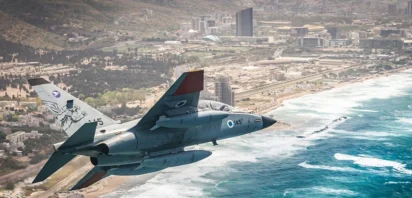
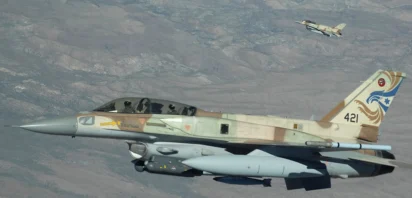
Israel’s sustained raids and air campaigns across southern Syria, particularly the systematic targeting of Suwayda and Quneitra, can be interpreted as preparatory moves to clear potential obstacles along the intended axis of control. By degrading Syrian military assets, Israel not only weakens local defenses but also signals that securing the corridor depends as much on denial as on control, whether exercised directly or through local proxies.
Control of key nodes such as Al-Tanf, already hosting a US military presence, transforms the corridor into a fortified hinge between Syria and Iraq. From this pivot, Israel can extend surveillance and project air power, while simultaneously blocking adversaries from consolidating uninterrupted east-west logistics. This produces an environment where hostile networks are perpetually dislocated, forced into indirect or circuitous routes that expose them to interdiction.