The current US–Iran dynamic in and around the Strait of Hormuz is increasingly being described as a contained confrontation: limited maritime incidents, proxy attacks, periodic negotiations, and measured retaliation. However, such a portrayal could be misleading. What is unfolding may not be a temporary deadlock, but the early stages of a modern war of attrition.
If so, the most useful historical analogy would be the War of Attrition between Egypt and Israel, rather than the Tanker War of the 1980s. The conflict began as manageable form of low-intensity violence, but with the passage of time, it evolved into a strategic environment that was particularly advantageous for the side best able to exploit time, exhaustion, and operational learning. At first, Israel treated the conflict as a tactical nuisance that was controllable primarily through superior military strength. Yet in practice, Egypt was utilizing the attritional phase as a means to reframe the theater for a future war.
Washington now risks making the same mistake.
Lessons from the War of Attrition
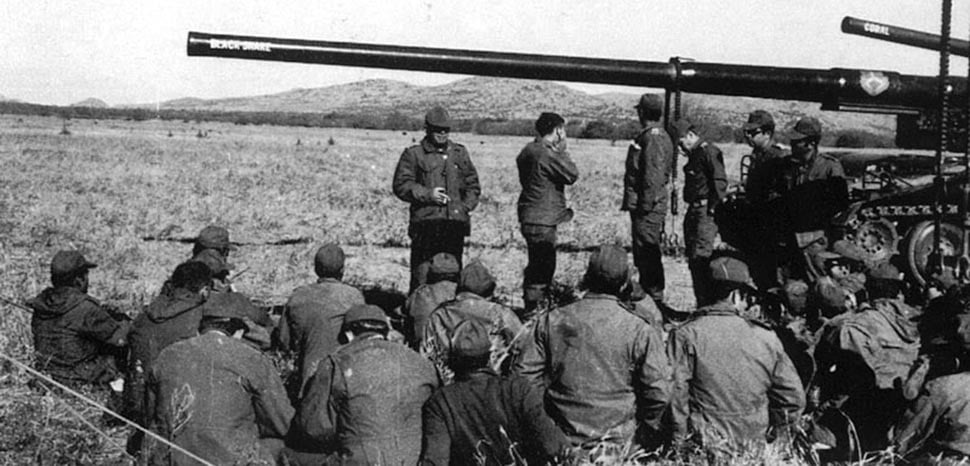
During the War of Attrition, Egypt understood that Israel could not be defeated by conventional methods, especially in the aftermath of the Six-Day War. Therefore, Cairo opted for a fundamentally different approach. Instead of aiming for a decisive battle, Egypt adopted a two-pronged strategy: pursuing sustained pressure through bombardment, surprise attacks, and political coercion while establishing the foundation for future escalation. Above all, Egypt expanded its Soviet-supplied surface-to-air missile coverage across the Suez Canal during the War of Attrition. As time elapsed, this development gradually constrained Israel’s air dominance, altering the operational environment.
The implication of such a shift was fully visible during the 1973 Yom Kippur War. In that context, attrition was the preparation for future war, rather than an alternative.
At the current juncture, Iran’s strategy is increasingly reflecting an analogous logic. Tehran seems to recognize that a direct conventional showdown with the United States would entail unbearably enormous costs. Thus, Iran is pursuing a calibrated campaign that is designed to secure time to improve its position in preparation for future conflict while imposing friction on its adversary. A series of activities in the Strait of Hormuz—maritime harassment, drone incidents, proxy attacks, cyber operations, and limited missile exchanges—all serve this broader objective. The reason why negotiation and confrontation are occurring at the same time is because they are not mutually exclusive. They are mutually reinforcing instruments within a long-term strategy.
An especially dangerous aspect is that Tehran may already be structurally succeeding. Similar to Egypt in 1970, Tehran is using the attritional phase to structure an operational environment that could constrain US freedom of action in a future conflict.
Iran’s expanding drone and missile production network can be considered the modern adaptation of Egypt’s SAM belt expansion. Instead of symmetrically defeating the United States, Iran is incrementally constructing a distributed denial architecture centered around drones, anti-ship missiles, fast attack craft, sea mines, proxy forces, and dispersed launch infrastructure. Its aim is not to achieve maritime dominance in a traditional sense. Rather, it is to create sustained disruption and an ample amount of uncertainty, eventually complicating US operations, increasing operational costs, and weakening political endurance over time.
Concurrently, there is a growing probability that the United States could fall into a cycle of strategic exhaustion similar to what Israel experienced. US efforts—by maintaining carrier strike groups, destroyer patrols, air defense operations, and regional deployments—to counter Iran’s relatively inexpensive systems would generate increasing cost asymmetry.
A single Iranian drone that costs tens of thousands of dollars could force the launching of interceptor missiles worth millions of dollars. Moreover, protracted deployments place burdens on maintenance cycles, personnel readiness, and ammunition stockpiles, especially at a time when Washington has to prepare against a potential contingency in the Indo-Pacific related to China.
This broader strategic context demonstrates why US allies in East Asia, particularly Japan and South Korea, can no longer treat the security of Hormuz as a secondary regional matter. For both countries, the Strait of Hormuz serves as an essential energy artery whose sustainment is critical to economic stability during a broader Indo-Pacific contingency.
Nevertheless, allied contributions remain limited and operationally disconnected.
A Path Forward
Washington should move beyond the currently existing ad hoc coalition model and establish a Hormuz Security Coordination Mechanism under the Combined Maritime Forces. This entity should assign operational responsibilities that go a step further than mere symbolic participation.
Meanwhile, Japan should expand the mandate of its Middle Eastern deployment beyond passive intelligence collection. The Japan Self-Defense Forces should integrate their P-1 maritime patrol aircraft and space-based ISR capabilities into the US Naval Forces Central Command maritime surveillance system. This would enable consistent tracking of Iranian fast attack craft movements, mine-laying activities, and drone launch platforms near the strait. In addition, Tokyo should establish a real-time ISR fusion cell together with the US Fifth Fleet headquarters in Bahrain to reduce attributable delays during maritime incidents.
South Korea’s role should equally be operationalized. The Republic of Korea Navy’s Cheonghae Unit, which has historically been concentrated on anti-piracy missions, should gradually transition toward limited convoy escort and maritime interdiction missions in coordination with the United States and other allied navies. Furthermore, such deployments would not only provide operational capabilities but also illustrate that energy disruption in the Gulf area affects Indo-Pacific security as a whole.
More importantly, Washington, Tokyo, and Seoul should jointly embark upon a trilateral maritime attrition preparedness initiative focused on low-cost, high-volume systems. The key lesson from both the War of Attrition and the Ukraine war is that a protracted conflict becomes fundamentally industrial. Currently, the United States lacks surge capacity that would be sufficient to conduct a sustained missile-centric conflict across multiple theaters.
For that reason, South Korea’s comparative advantages—rapid shipbuilding and scalable munition production—should be incorporated into US contingency plans. Seoul could expand licensed production of interceptor missiles and loitering munitions, while Japan could focus on advanced sensors, counter-drone technology, and autonomous maritime surveillance systems. Alongside this, pre-positioned stockpiles of interception systems, counter-drone systems, and mine-sweeping equipment should be established not only in the Gulf region, but also in Guam and Japan in order to support dual-contingency operations.
Operational focus should also be changed. The United States should no longer consider its carrier strike groups as the crucial means of deterrence in Hormuz. Large naval vessels remain symbolically meaningful, yet they are increasingly becoming inefficient for persistent attritional competition against distributed threats. Conversely, the US Fifth Fleet should structure a multi-layered unmanned surveillance and interdiction network in and around the strait by using armed unmanned surface vehicles (USV), MQ-9 maritime ISR patrols operating from regional air force bases, and distributed coastal surveillance systems that are integrated with allied assets. Its key objective would be sustained visibility and rapid attribution, instead of overwhelming dominance. Iran’s strategy is heavily reliant upon ambiguity and calibrated deniability. Naturally, reducing this ambiguity would attenuate the effectiveness of attritional coercion.
Washington must also redefine the way it deals with escalation. During the War of Attrition, one of Israel’s critical strategic failures was allowing Egypt to incrementally normalize escalation pressure without imposing consequential strategic costs. If the United States treats Iran’s multifaceted provocations as isolated events—instead of interpreting them as part of a cumulative campaign—it risks repeating the same pattern.
To avoid falling into the trap, Washington should convey a clear threshold, at least unofficially, for escalation related to specific types of Iranian activities. Repetitive events—such as mine deployment, organized proxy attacks against maritime infrastructure in the Gulf region, and drone attacks against allied naval vessels—should trigger proportional and predictable retaliation against supporting infrastructure such as IRGC naval facilities, drone launch networks, and maritime logistics hubs.
Arguably, the most dangerous aspect of attritional conflict is that it often appears manageable even after the strategic balance has shifted. Israel realized this reality in a belated fashion. By 1973, Egypt had already altered the strategic environment through years of gradual preparation under the veneer of limited conflict.
Today, the United States is faced with a similar risk in the Strait of Hormuz. What seems to be a contained skirmish may actually represent the shaping phase of a future regional war. If Washington continues to treat attritional pressure as temporary tactical friction, instead of a long-term strategic challenge, the United States risks inheriting a far more dangerous battlefield in which Iran has already spent years preparing conditions for escalation, while the United States remains focused on day-to-day crisis management.
Thus, the quintessential lesson of the War of Attrition is not simply historical; it is operationally urgent. A limited confrontation could alter the strategic landscape before it is officially considered a war.
The views and opinions expressed in this article are those of the author alone and do not represent those of Geopoliticalmonitor.com