President Trump has signaled a willingness to expand the Iran war, declaring that it could last four weeks or ‘far longer,’ and alluding to possible boots on the ground. Such statements are the kind of positioning one would expect against the backdrop of a conflict threatening to grind out longer and reverberate further than anyone expected or planned for. Yet three factors suggest that time may actually be on the Iranians’ side: interceptor and ordinance shortages (well-documented long before the conflict broke out), domestic political pressures amid an unpopular war, and cascading economic volatility from upended global energy markets. This article explores the latter.
Energy Market Upheaval: All Part of the Plan
Scattershot strikes against US allies and regional energy infrastructure should come as no surprise to US or Israeli officials. It falls under Iran’s long-held ‘active deterrence’ paradigm, which distills down into the idea of maximizing costs for any aggressor across all available domains: economic, military, cyber, information warfare, etc., and across different jurisdictions via proxies in the ‘Axis of Resistance.’
Global energy supply chains are one such domain that is highly exposed to Iranian reprisals. Apart from the considerable oil and gas production Iran itself represents, the country is situated on the Persian Gulf, through which around 30% of all maritime oil shipments 20% of global liquefied natural gas (LNG) traverse. What’s more, the immediate neighborhood includes other major energy producers from Qatar to Saudi Arabia, many of which quite comfortably fall within range of Iranian drone and missile strikes.
The first few days of war produced few surprises in this regard, with Iranian ‘active deterrence’ targeting energy infrastructure throughout the region:
- March 1: Operations at Dubai’s Jebel Ali Port – a key hub in global energy logistics – were temporarily shut down after a downed Iranian drone caught fire.
- March 1: Chevron declares force majeure, temporarily shutting down the Leviathan natural gas field in Israel – the country’s largest.
- March 2: Kuwait’s Mina Al Ahmadi Refinery was targeted but suffered minimal damage and has maintained production.
- March 2: Iranian drones targeted Saudi Aramco’s Ras Tanura refinery, one of the largest in the region with a capacity of 550,000 bpd. Satellite images indicate significant damage, resulting in a temporary partial shutdown.
- March 2: QatarEnergy’s Ras Laffan Industrial City halted production indefinitely for LNG and associated products following an Iranian attack. The shutdown removes about 20% of global LNG supply and has triggered soaring LNG prices in Europe and elsewhere.
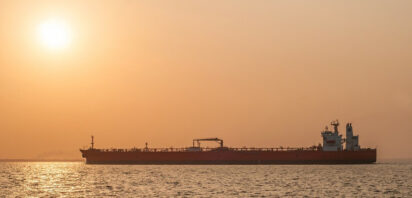
- March 2: Tehran declares that it will fire on any ship attempting to traverse the Strait of Hormuz. Several tankers have reportedly been damaged attempting to pass the Strait, some seriously. President Trump has since suggested that the US military could start escorting shipping through the Strait.