Dr. Ju Hyung Kim

Dr. Ju Hyung Kim, President of the Security Management Institute—a defense think tank affiliated with the South Korean National Assembly—is currently in the process of transforming his doctoral dissertation, titled “Japan’s Security Contribution to South Korea, 1950 to 2023,” into a book.

Able Archer 83 and the Dual-Contingency Trap: Lessons in Effective Deterrence

cc PH2 David B. Loveall, USN, modified, The U.S. Navy aircraft carriers USS Coral Sea (CV-43), left, and USS Midway (CV-41), center, and the nuclear-powered aircraft carrier USS Enterprise (CVN-65), right, underway during CINCPAC Exercise FLEETEX '83. The US Navy, Air Force, Coast Guard and the Canadian navy were participating in the exercise near the Aleutian Islands of Alaska. / https://commons.wikimedia.org/wiki/File:USS_Midway_%28CV-41%29_Coral_Sea_%28CV-43%29_and_Enterprise_%28CVN-65%29_off_Alaska_1983.JPEG

Able Archer 83 showed how a routine Cold War military exercise could escalate toward nuclear confrontation. The US, Japan, and South Korea can learn from it when preparing for a dual contingency in the Indo-Pacific.

Europe’s EPAA: A Blueprint for Northeast Asia Missile Defense
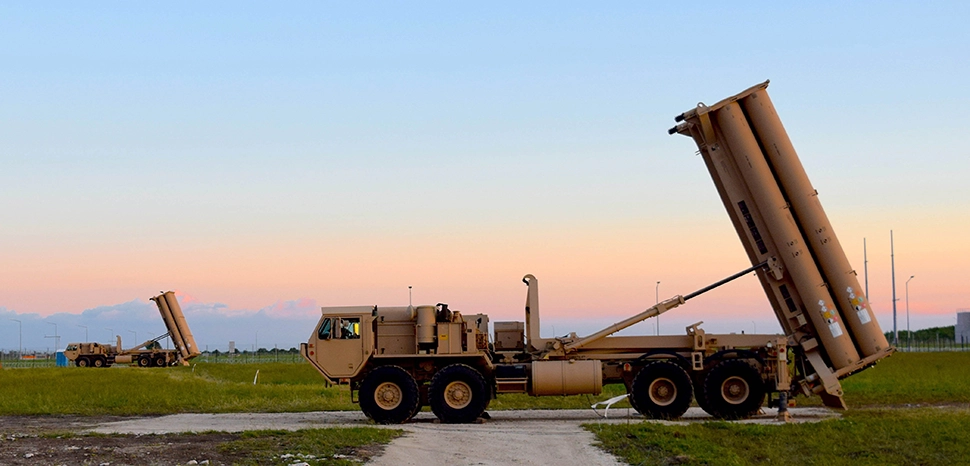
NAVAL SUPPORT FACILITY DEVESELU, Romania (Sept. 1, 2019)– The sun sets over the U.S. Navy base in Romania, home to NATO's Aegis Ashore Ballistic Missile Defense System (AABMDS) site, after completing a long-planned systems update Aug. 9, 2019. During the maintenance period, the U.S. fulfilled its commitment to NATO's Ballistic Missile Defense(BMD) by the temporary deployment of a Terminal High Altitude Area Defense (THAAD) system to the Naval Support Facility in Deveselu, Romania. The deployment of the U.S. Army’s THAAD battery to Romania lasted about six weeks while Aegis Ashore software and other equipment was updated. In April, the task force deployed to NSFD where they integrated into the existing NATO BMD architecture during a period of routine maintenance and upgrade of the Aegis Ashore Missile Defense System located there.“The successful deployment of THAAD to Romania demonstrates our commitment to support our Allies and the NATO Ballistic Missile Defense mission,” said U.S. Army Brig. Gen. Gregory Brady, commander of 10th Army Air and Missile Defense Command. “Missile defense is a vital element to the collective defense of Europe and is one of the U.S. military’s top priorities. This deployment shows that we stand ready to surge combat credible air and missile defense forces when needed.”The THAAD system re-deployed back to the U.S. and NATO's Aegis Ashore has resumed full functionality and remains focused on potential threats from outside the Euro-Atlantic area. (Photo by U.S. Navy Lt. Amy Forsythe, Public Affairs Officer, Naval Support Facility Deveselu)

In an era of precision saturation attacks and resource restraint, missile defense will be defined less by the number of interceptors than by the coherence of the regional architecture behind them.

To Stabilize Korean Peninsula, Look to Nuclear Lessons of the Cold War

Richard Nixon meets Leonid Brezhnev June 19, 1973 during the Soviet Leader's visit to the U.S.

By applying insights from the height of Cold War nuclear competition – prioritizing survivability, ambiguity management, and alliance institutionalization—South Korea can build a deterrence structure capable of stabilizing the Korean Peninsula, even as North Korea expands its nuclear arsenal.

From Guam to Camp David: Nixon-Era Lessons for the US-Japan-ROK Trilateral

Flags representing the United States, Japan and the Republic of Korea are displayed during a trilateral meeting with Japanese Foreign Minister Tarō Kōno and Republic of Korea's Foreign Minister Kang Kyung-wha on July 7, 2018 in Tokyo, Japan. (State Department photo/ Public Domain), modified, https://commons.wikimedia.org/wiki/File:Secretary_Pompeo_Participates_in_Trilateral_Meeting_in_Tokyo_%2828400351467%29.jpg

The Nixon era not only offers ambiguous lessons, but practical guideposts for strengthening trilateral US-Japan-ROK security cooperation, made all the more relevant by growing concerns of a ‘dual contingency’ in Taiwan and the Korean Peninsula.

Gaming a Taiwan-Korea Dual Contingency: Falkland Lessons for the US-Japan-ROK Alliance

At Sea - 230716-N-CD453-1132 (July 16, 2023) Se Jong Daewang class destroyer ROKS Yul Gog Yi I (DDG 992) (left) of the Republic of Korea Navy and Atago class destroyer JS Maya (DDG 179) (right) of the Japan Maritime Self-Defense Force sail alongside Arleigh Burke-class guided-missile destroyer USS John Finn (DDG 113) (center) while conducting a trilateral ballistic missile defense exercise, July 16. John Finn is assigned to Commander, Task Force 71/Destroyer Squadron (DESRON) 15, the Navy’s largest forward-deployed DESRON and U.S. 7th Fleet’s principal surface force. (U.S. Navy photo by Mass Communication Specialist 2nd Class Samantha Oblander) / https://www.usfj.mil/Media/Images-Internal/igphoto/2003260018/

The Falklands War was a reminder that alliances succeed or fail on the basis of political imagination and practical enablers, not just treaty text, and military planners must bear these lessons in mind when preparing for a Taiwan-Korea dual contingency in East Asia.

Rethinking South Korea’s Naval Strategy for a Taiwan Strait Contingency

WATERS EAST OF THE KOREAN PENINSULA - Republic of Korea Navy (ROKN) destroyer ROKS Gwanggaeto the Great (DDH 971), ROKN destroyer ROKS Seoae Ryu Seong-ryong (DDG 993), and USS Chancellorsville (CG 62), steam in formation in waters east of the Korean Peninsula, Sept. 29. The Ronald Reagan Carrier Strike Group (CSG) is participating with the ROK Navy in Maritime Counter Special Operations Exercise (MCSOFEX) to strengthen interoperability and training. The U.S. routinely conducts CSG operations in the waters around the ROK to exercise maritime maneuvers, strengthen the U.S.-ROK alliance, and improve regional security.

Making the ROK Navy fit for task in a conflict surrounding the Taiwan Strait requires a total strategic rethink, from core capabilities to asymmetric sea denial.

More Stories
Back to Top
Keep Pace with a Changing World
Sign up to our mailing list for weekly reports and discounted subscription rates.
Use Code:
0
0
0
0
Act now for a limited-time deal on an annual subscription.
GPM99
: