Missile defense has never been a mere technical undertaking. Rather, it is a matter of alliance management, escalation control, industrial coordination, and political signaling. When the United States introduced the European Phased Adaptive Approach (EPAA) in 2009, the initiative was presented as a practical response to Iran’s growing ballistic missile production capability. In reality, it became something far more consequential: a blueprint for structuring a multinational missile defense architecture under unfavorable conditions where strategic uncertainty and alliance sensitivity coexist.
Today’s Northeast Asia faces a structurally similar – albeit bigger – challenge. The possibility of a dual contingency—China commencing a Taiwan invasion and escalating tensions on the Korean Peninsula simultaneously—has emerged as one obvious constraint that decision-makers in the region cannot ignore: that US resources for missile defense are finite. In those circumstances, the US would have to distribute its high-end military assets across multiple theaters. Therefore, Japan and South Korea cannot remain parallel actors operating adjacent missile defense systems. By drawing carefully from Europe’s experience, they should advance toward structured alignment.
The question is not whether it is politically difficult to achieve. Rather, the question is whether deterrence can be maintained without it.
The European Phased Adaptive Approach (EPAA)
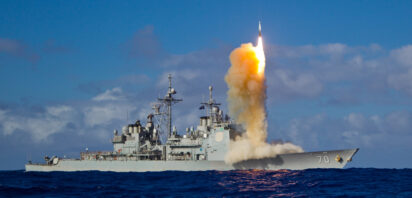
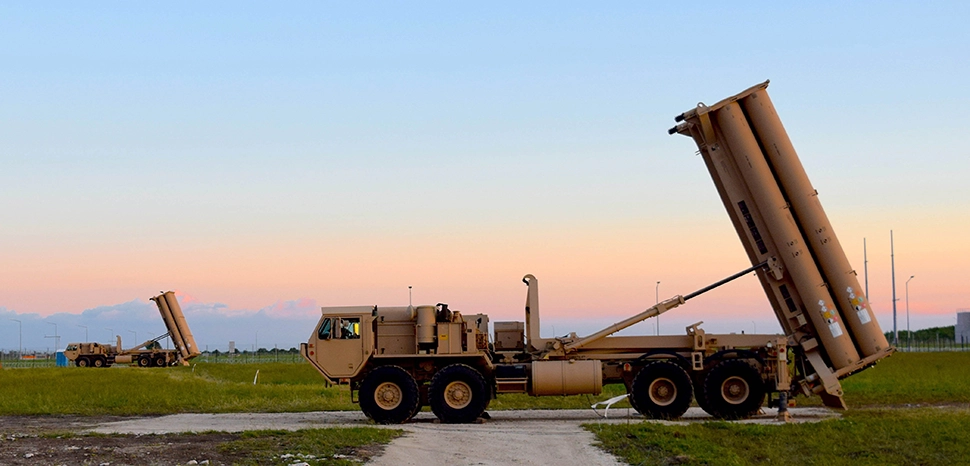
The EPAA, which was announced under the Barack Obama administration, replaced the pre-existing US missile defense plan in Europe with a phased architecture centered on Aegis systems. Instead of immediately deploying a fixed central ground-based interception system, the EPAA was incrementally unfolded: initially, it started with sea-based Aegis destroyers and forward-deployed radar, and later expanded to Aegis Ashore in Romania and Poland, while more ambitious interceptor plans were either adjusted or canceled as necessary.
The importance of the EPAA lies more in the political architecture surrounding it than in the interceptor itself. The initiative reassured the NATO alliance, distributed responsibilities among host countries, and gradually integrated command-and-control networks; it was advanced in a phased manner to minimize domestic backlash within Europe while reducing the perception of sudden escalation against Russia. Most notably, it emphasized data sharing and engagement coordination over the visible deployment of hardware.
Three structured lessons can be extracted from this experience. First, integration should be gradual rather than abrupt. Second, distributed and multi-layered systems enhance survivability against saturated attacks. Third, command-and-control integration is decisive. Hardware without real-time data fusion remains a fragmented defense.
The Northeast Asia Context
These experiences strongly resonate in Northeast Asia, where the missile environment is more complex than the one the EPAA confronted. China’s modernization of its missiles has been both quantitative and qualitative. China’s People’s Liberation Army Rocket Force operates anti-ship ballistic missiles including the DF-21D, medium-range systems like the DF-26, and increasingly sophisticated maneuverable and hypersonic systems. In a Taiwan contingency, Chinese doctrine would likely prioritize neutralizing US and Japanese bases through precision saturation strikes. Even in the absence of direct hostilities with South Korea, Beijing could employ signals in order to deter Seoul’s involvement.
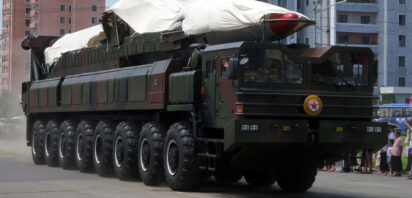
At the same time, North Korea is continuously refining quasi-ballistic missiles like the KN-23, emphasizing maneuverability and low-altitude flight trajectories that make interception difficult. Pyongyang’s growing tactical nuclear posture adds additional instability. In a dual crisis situation, North Korea could exploit US distraction and escalate regional tension.
Unlike Europe in the early 2010s, Northeast Asia faces both peer competitors and revisionist nuclear-armed states that operate within overlapping geographical areas. The scale and diversity of potential missile saturation would test even well-integrated systems.
Both Japan and South Korea possess advanced missile defense capabilities. Japan currently operates Aegis destroyers equipped with SM-3 interceptors and PAC-3 batteries, and is investing in next-generation Aegis platforms—the Aegis System Equipped Vessel (ASEV) —after withdrawing the Aegis Ashore plan. Meanwhile, South Korea has developed the Korea Air and Missile Defense (KAMD) system within the context of the three-axis defense system, which includes domestically built L-SAM and KM-SAM interceptors, and operates Sejong the Great-class Aegis destroyers. Nevertheless, these systems exist in parallel despite recent improvements in trilateral cooperation. Although data-sharing mechanisms exist, real-time fusion and coordinated engagement authority are limited.
Such separation may seem manageable during peacetime. However, in a saturation environment where hundreds—if not thousands—of missiles are inbounding simultaneously, fragmentation becomes a vulnerability. If US assets are massively introduced for Taiwan defense and the protection of US forward-deployed forces, Japan, and South Korea should assume a greater burden for their own defense. Without structured coordination, a defense vacuum could occur when cohesion is most needed.
Adapting the EEPA Model
Europe’s experience illustrates that immediate and wholesale integration is not necessarily needed and is politically unrealistic. In that regard, Northeast Asia could benefit from its own phased adaptive path. The first phase should be comprehensive sensor fusion; it should ensure that Japan and South Korea’s radar systems continuously send data to a trilateral command node under Indo-Pacific Command. No missile track should be confined within national silos. Real-time situational awareness is the very foundation of credible defense.
The next phase includes the establishment of coordinated engagement doctrine. If detection and engagement responsibilities cross national boundaries, there needs to be a clear protocol on how interception decisions would be made. Cross-queuing, where one country’s sensors guide another’s interceptors, could substantially increase efficiency against saturated attacks. With the passage of time, limited fire-control integration mechanisms for high-intensity crisis situations can be introduced; this could form a shared intercept responsibility area without full-fledged political integration.
As for the United States, the priority task is institutionalization. Establishing a constant trilateral missile defense coordination cell under Indo-Pacific Command could transform episodic cooperation into an internalized norm. Also, Washington should encourage industrial cooperation between Japanese and South Korean defense firms in the field of interceptor production and sensor technology. Above all, US doctrine should clarify that in a Taiwan contingency, regional alliances would assume greater responsibility with respect to missile defense. Architecture, not unilateral US deployment, would define deterrence.
Meanwhile, Japan needs a conceptual shift, featuring its missile defense as a regional stabilization mechanism rather than a mere national shield. In an era of saturation attacks, an increase in interceptor inventories is essential. Tokyo must also recognize that mutual defense coverage could reinforce the credibility of deterrence by accepting conditional cross-engagement authority during extreme crisis scenarios. Since Japan’s formal introduction of enemy-base strike capability has potentially blurred the theater distinction between the Korean Peninsula and Japanese, partial alignment between Japan’s missile capability and South Korea’s three axis system could be seriously discussed.
Although South Korea faces a more delicate political environment, it should evolve. The KAMD should become theater-aware and interoperable beyond the Korean Peninsula. Meanwhile, the role of sea-based missile defense should be expanded. Strategic messages should underscore the defensive and responsive nature of integration. Framing these efforts as containment against China would be counterproductive; it would be more sustainable if presented as stability management.
In Northeast Asia, missile defense alignment would almost certainly incur criticism from Beijing and Pyongyang. Nevertheless, Europe’s experience illustrates that step-by-step implementation, transparency, and restrained messaging could alleviate perceptions of instability. The EPAA was preserved despite continuous Russian opposition because it was structured, limited, and politically managed. The greater risk lies not in integration itself but in fragmentation under crisis.
Key lessons that could be gathered from Europe are ultimately structural. Missile defense alignment becomes successful when it is incrementally advanced, politically coordinated, and institutionally internalized. Northeast Asia is approaching a strategically similar inflection point at this juncture. A dual contingency would pressure US capabilities while exposing the very limits of parallel national defense. Immediate, wholesale integration between Japan and South Korea does not need to be pursued. Yet they should head toward structured alignment that goes beyond mere coexistence.
In an era of precision saturation attacks and resource restraint, defense will be defined less by the number of interceptors than by the coherence of the architecture behind them.