France recently confirmed its intention to pursue a billion euro, medium-range ballistic missile (MRBM) project. The program, known as Missile Balistique Terrestre (MBT), is led by ArianeGroup, which also produces France’s submarine-launched intercontinental ballistic missile (ICBM).
The missile plans to have a 2,000 km range and will be maneuverable during the terminal phase with potential for a hypersonic glide vehicle (HGV). For its development, the 2026 budget allocates €15.6 million for a feasibility study, €20 million for 2027, €44 million for 2028, and then jumps to €820 million through the end of 2030.
ArianeGroup has been negotiating with French army officials for almost a year, so perhaps the most surprising part of the announcement is the lack of European reaction to it. Why? Because while France has recently signed various bilateral and multilateral initiatives and agreements to cooperate on developing armaments with long-range, deep strike capabilities (DPS), as prioritized by NATO and EU member states facing a Russian threat, this project will not include any foreign partners. Moreover, France and the rest of Europe agreed that DPS is needed sooner rather than later (2030 being late).
France’s budget deficit is its largest since WWII and as defense is not expected to be cut, choices will need to be made. This should worry France’s European partners because Paris might not have money or political capital left to invest in other ongoing joint European projects to develop DPS capabilities – projects that are less expensive, able to be mass-produced, and are interoperable across countries and needs (land, air, sea). Especially since the ballistic program is seen as a “matter of national prestige” with one IISS article noting, “it will likely continue even without external partners, despite industrial constraints, and a lack of long-term commitment from other European countries to develop such weapons.”
A Choice of Pride, not Practicality
However, not everyone is so gun-ho. When questioned on October 22 by the National Defence and Armed Forces Commission, General Mandon, France’s Chief of Staff of the Armed Forces, said “I think that in the future fight, the ability to reach the command posts, logistics centers, production centers, energy centers of an enemy will remain essential… However, I remain very cautious about the strategic aspect that would suggest that a capital, in particular a nuclear power, is being dissuaded by threatening it with ballistic missiles.”
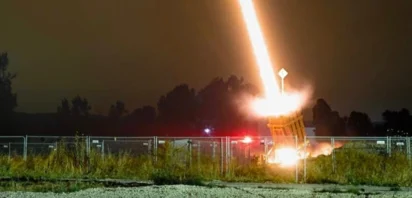
The hesitance is partly because ballistic missiles have shown their limits in recent conflicts. When Iran responded to Israel’s attacks in June with a barrage of ballistic missiles (150 launched the first night), Israeli air defense systems intercepted 90% of them. In Ukraine, Patriot and SAMP/T systems are concentrated on protecting strategic sites which has enabled Russia’s Iskander-M and KN-23 missiles to inflict significant damage on the front. A very large number of “simple” ballistic missiles are needed to overwhelm air defenses and make impact, or the missiles need to be extremely complex, equipped with maneuvering re-entry vehicles (MaRV), thus making them extremely costly. Plus, air defense systems will only get more sophisticated, meaning missiles will need to adapt as well: the US Army’s Dark Eagle weapon system, a hypersonic missile with MRBM-like range, will cost $41 million per missile unit.
In addition to being expensive to produce and maintain, military journalist Chloe Anderson explains, “Their launch platforms—whether underground silos, mobile trucks, or submarines—require extensive infrastructure and high readiness.” Advanced ground-launched ballistic missiles are massive and require a fleet of mobile transporter-erector launchers (TEL) and air defense batteries to protect them. North Korea’s Hwasong-19 MRBM requires a 30m, 11-axle TEL and, while impressive, is cumbersome.
This effects potential launch from other vectors. China’s DF-21D medium-range anti-ship missile with a MaRV has a 14,700 kg launch weight. Impossible to fire from European fighter jets: the Rafale has a maximum external load capacity of 9,000 kg and the Eurofighter Typhoon’s maximum is 7,500 kg. Such dimensions also make them difficult to adapt to French submarines and frigates equipped with A70 and A50 Sylver vertical launchers and 533 mm torpedo launch tubes. During 2026 budget discussions, France’s Defence Commission confirmed the next two Defence and Intervention Frigates will double the A50 Sylver vertical launchers, which a new MRBM would certainly not be compatible with.
A ballistic project like MBT would give France bragging rights, but not necessarily practical capabilities its army needs right now. Even Matthieu Bloch and Jean-Louis Thiériot, the project’s staunchest supporters on the National Assembly’s Defence Commission, recognize the impracticalities. In their report supporting the program, the deputies “issued cautionary observations regarding program costs and acquisition quantities. They note that exclusive French procurement of a long-range ballistic missile system risks producing prohibitively expensive unit costs, potentially limiting stocks to strategically significant missions rather than enabling operational-level employment… France must expand its ballistic missile production capacity to accommodate the program, presenting significant industrial challenges in the absence of substantial international partnership participation.”
What About European Cooperation?
EU member states have the prerogative to spend defense budgets how they see fit, but because French leaders have pushed and pursued European cooperation, this independent project feels deceptive. Unless France provides concrete reassurances, European nations should be concerned for agreements they have already signed.
In July, Poland signed a letter of intent with the French armament agency (DGA) to increase cooperation on land-based cruise missiles. Days before, France and the UK signed the Lancaster 2.0 Agreement, with a pledge to “continue to work closely on current and future long-range strike capabilities through the European Long Range Strike Approach (ELSA initiative).” And in August, the Franco-German Defence and Security Council met and agreed, “France and Germany will further coordinate on cooperation options regarding Deep Precision Strike capabilities, initiated in the framework of the ELSA initiative…”
ELSA was formed in 2024 by France, Germany, Italy and Poland, joined by Sweden and the UK shortly after, with the goal of, “creating a coalition to develop DPS capabilities in order to bolster European defense, strengthen the continent’s defense-industrial base and reduce European NATO allies’ reliance on the U.S.” At the time, Sébastien Lecornu, then France’s Minister of the Armed Forces, said the ‘idea is to open [ELSA] up as widely as possible’.
Several potential projects are under development, but ELSA participants have not yet announced a first model. While France might want to promote MBT, this is unlikely given no other participating country has industrial experience in ballistic technology. Furthermore, Timothy Wright of IISS argues that, “as ELSA participants intend to develop a new capability ‘within adequate time, cost and volume’, a new design may not be feasible because of these constraints… Developing an affordable system will be necessary if European countries’ ambition is to procure the missile on a large scale whilst fulfilling pre-existing orders for stand-off weaponry.”
France’s plans for a MRBM might be a source of national pride but could also be a point of contention with its European partners. France should either focus its resources and energy on multilateral commitments already made or, at least, propose something radically new like a hypersonic glide vehicle based on its VMaX, which would not compete with existing projects. Otherwise, what’s the point of spending a billion euros during a budget crisis?
The views expressed in this article belong to the author(s) alone and do not necessarily reflect those of Geopoliticalmonitor.com.