North Korea’s rapidly evolving nuclear program—ranging from tactical nukes, mobile short-range missiles, to experiments that indicate MIRV developments—has created one of the most unstable regional environments in the post–Cold War era. While South Korea is strengthening its precision strike capabilities and discussing the possibility of building a nuclear-powered submarine, Seoul is encountering a similar strategic dilemma that reflects the elements of the 1970s global nuclear rivalry between the United States and Soviet Union.
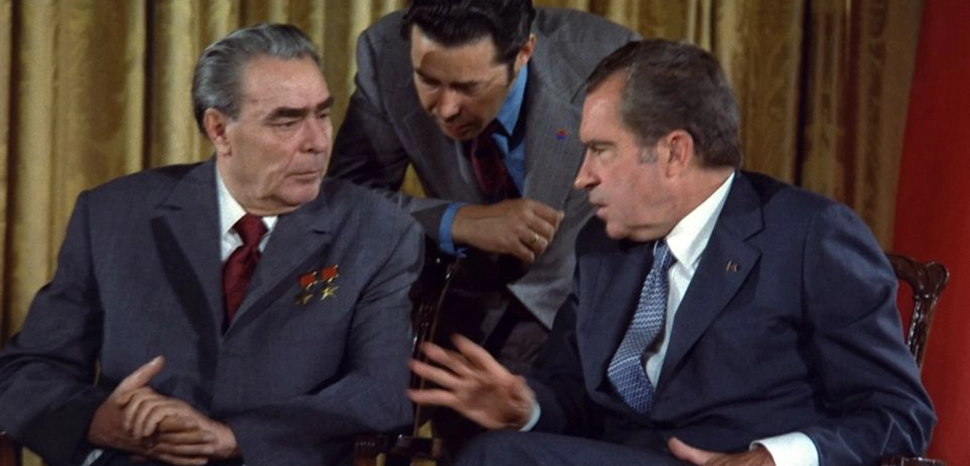
At the time, Washington was grappling with Moscow’s expanding nuclear arsenal, MIRV deployment, discussions on Backfire bombers, and the introduction of cruise missiles that blurred the difference between strategic and tactical systems. Under such complex debates lay a core question that deeply resonates with today’s Korean Peninsula: namely, when adversaries are developing capabilities that are explicitly designed to erode confidence and destabilize crisis decision-making, how should states maintain credible deterrence?
To be sure, such an analogy is far from perfect. South Korea does not possess nuclear weapons, and its deterrence posture heavily relies on US extended deterrence. Nevertheless, the underlying logic—survivability over symmetry, credibility through institutionalization, and cautious management of ambiguity—is highly relevant to today’s world.
MIRV and the Necessity of Survivability
The first lesson originates from the MIRV revolution. When the Soviet Union started to deploy MIRVed ICBMs, US policymakers recognized that an attempt to intercept Moscow’s warheads one by one would be exorbitantly costly and strategically unwise. Since a single MIRVed missile could strike multiple reinforced targets, it increases the incentives for a preemptive attack. Instead of pursuing numerical superiority, the U.S. accepted that survivability—not through interception or preemptive strike—is the genuine foundation of deterrence. In that regard, what mattered was the capability to conduct retaliation after absorbing the initial attack.
South Korea is now facing a similar strategic environment. Even North Korea’s rudimentary MIRV capability could complicate interception, increase the probability of a salvo-based saturation attack, amplifying the psychological shock impact. The lessons of the 1970s are that Seoul should avoid investing in illusions that missile defense or a preemptive strike could neutralize every North Korean nuclear warhead or launcher. Instead, the main focus should be centered on ensuring the survivability of key command and control structures, assets enabling alliance retaliation, and alliance decision-making mechanisms, even after North Korea’s surprise attack. North Korea should believe that any type of preemptive strike—including nuclear—would trigger the destructive response of the U.S. and South Korea.
Managing Ambiguity: The Age of Cruise Missiles
The second lesson is related to managing ambiguity that emerged with the spread of cruise missiles in the 1970s. Since cruise missiles could load conventional or nuclear warheads and were difficult to detect and verify, the two superpowers feared misinterpretation. South Korea is now confronted with a similar strategic landscape. The expanding arsenal of precision missiles—ground-to-ground cruise missiles, ballistic missiles, and submarine-launched missiles—offers formidable non-nuclear strike options. Yet at the same time, it raises the question of how North Korea would interpret their employment during a crisis.
The 1970s demonstrated that deterrence could be strengthened if ambiguity is calibrated, but weakened if it is left to chance. Therefore, South Korea should articulate a clear conventional doctrine on how its weapons would be utilized in neutralizing North Korea’s nuclear-related infrastructure and command centers in the event of aggression. At the same time, integrating such precision strike capability into the comprehensive US–ROK response mechanism could establish a customized escalation ladder that is akin to the “flexible response” option that the U.S. developed during the Cold War. Precision strike is not a substitute for nuclear deterrence but should be understood as a complement that has a stabilizing function in nuclear deterrence.
Alliance Credibility and the Political Character of Deterrence
The most enduring insight from the 1970s is that the credibility of deterrence is not only a matter of technology but also a political one. Once the Soviet Union reached nuclear parity, US allies in Western Europe questioned whether Washington was willing to defend them even at the risk of the US homeland. In response, the US solved the delicate issue by creating institutional mechanisms, including the NATO Nuclear Planning Group, visible deployment of strategic platforms, and regular consultations.
South Korea is now faced with a similar credibility dilemma. North Korea’s growing capability that could strike the continental United States engenders anxiety that Washington might hesitate during extreme circumstances. The creation of the Nuclear Consultative Group (NGC) was undoubtedly an important step, yet the mechanism should further develop into something closer to NATO’s integrated planning structure. This means deepening operational coordination between US nuclear and South Korean conventional forces, institutionalizing regular joint planning, and maintaining predictable rotations of US strategic assets to demonstrate shared risk.
Lastly, the 1970s offer lessons on managing risky competition. Although SALT I and SALT II did not end the arms race, they did establish rules of the game, setting the boundaries of action and improving crisis stability. The probability of pursuing formal arms control on the Korean Peninsula is low in the foreseeable future; unofficial or implicit agreements might still be useful. A clear red line on nuclear use, revitalized communication channels, and a low-profile US–ROK dialogue with China on North Korea’s destabilizing activities could contribute to lowering the chance of catastrophic miscalculation. In that way, even adversaries with deep ideological hostility can benefit from such safety mechanisms.
South Korea is now at a serious crossroads. With the passage of time, North Korea’s nuclear capabilities would evolve into a more precise, direct, and survivable form; this does not obviate South Korea’s ability to shape the strategic environment. By applying the insights—gained from the US–Soviet Union’s negotiation process during the 1970s, prioritizing survivability, responsible management of ambiguity, and reinforcement of alliance credibility through institutionalization—South Korea can build a deterrence structure capable of stabilizing the Korean Peninsula even amidst North Korea’s evolution of its nuclear arsenals.