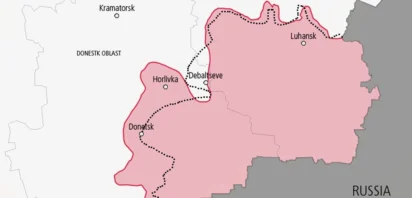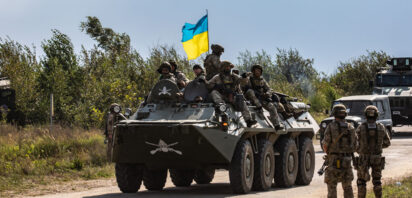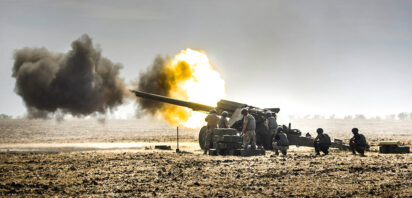
Daily reports from the OSCE Special Monitoring Mission (SMM) in Ukraine are available for all to read on the organization’s website. On any given day, take March 31 for example, one might come across the following laundry list of violations from both sides: SMM heard distant explosions, heavy machinegun fire, and light artillery in the area around Donetsk airport; heard 125mm tank rounds around DPR-controlled Spartak; heard 25 high-caliber artillery rounds hitting Shyrokyne near Mariupol, in addition to tank fire; heard 17 distant artillery explosions and machine-gun fire near government-controlled Putylyne; and of course “monitoring was… restricted by third parties and by security considerations.”
This course of events is extremely similar to that which preceded the breakdown of Minsk I. Violations are widespread on both sides, and heavy weapons have not been completely pulled back from key conflict zones. During the long and steady decline of Minsk I, rebels were able to slowly expand their territory under the wary watch of an international community with no appetite for direct conflict with Moscow (the EU in particular). It remains to be seen whether this will be the case once more. While the West should “know better” by now given recent experience, the political will to stand up to Russia is still lacking. Thus it’s quite possible that, once again, the rebel separatists will succeed in slowly pushing the borders outward. Should the SMM become aware of such developments, the ringing of the alarm bell would be blunted by their own incomplete information, counter-misinformation from the opposing side, and/or willful deafness on the part of Western leaders.
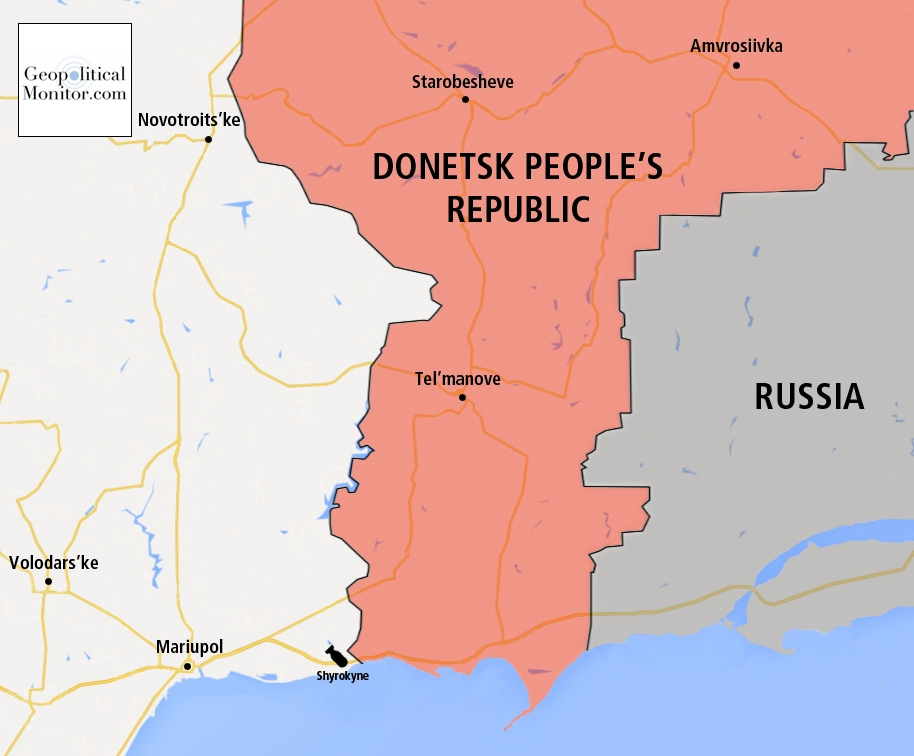
Separatist rebels have already attempted to whittle away at government-held territory near the strategic city of Mariupol. The tiny village of Shyrokyne between Mariupol and the Russian border has seen intermittent shelling over the past week, and the shelling is ramping up according to recent SMM reports.
Yet it’s very unlikely that Minsk II would survive a sustained push to take Mariupol. The city is symbolically important to both sides – to Kiev as a major port and steel-producing hub, and to the rebels as a critical gateway to the Sea of Azov (in an otherwise nearly landlocked territory) – and neither party will stand down without a fight. Some believe that the city plays into Russian plans to establish a land bridge to Crimea, but on this it must be said that there would need to be a monumental collapse on the part of the Ukrainian armed forces in order for rebels to take and hold the over 300 kilometers of coastline between Mariupol and Novooleksiivka.
The city of 500,000 over residents, which is part of Ukraine’s Donetsk Oblast, is also split down the middle in terms of support between Kiev and the rebels, with 40% still ‘undecided’ as to who they’d support in the event of an attack. Any fighting in Mariupol proper would be hugely destructive, bloody, and prone to stalemate as the dense housing blocks and narrow city streets are a nightmare for either side to secure.