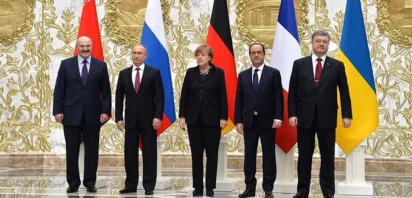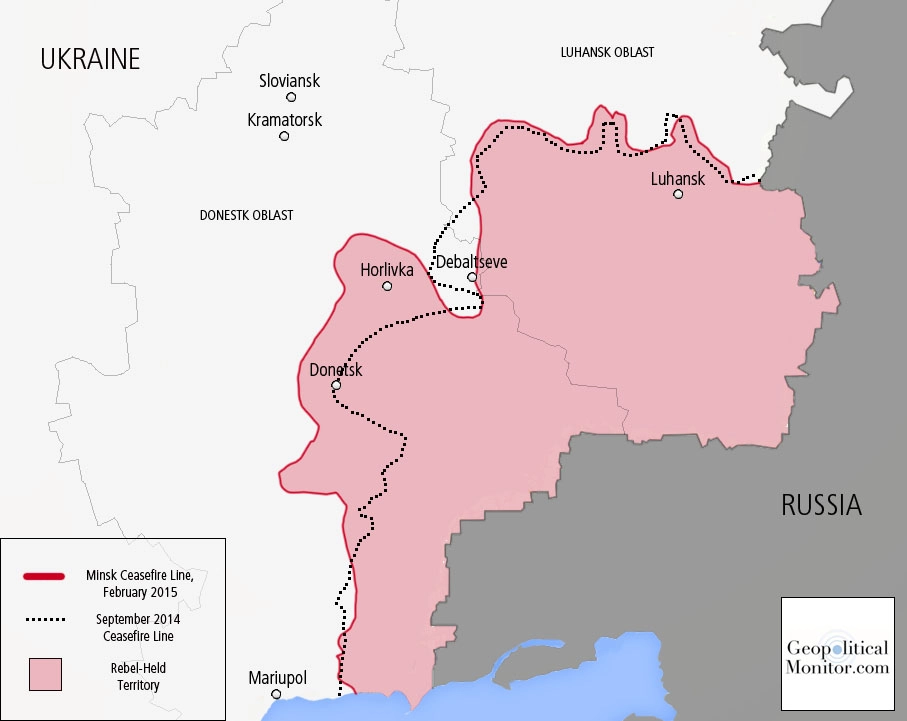
The main points of the ceasefire agreed upon in Minsk by leaders from Germany, France, Ukraine, and Russia are as follows:
- A total ceasefire to begin on February 15, 2015.
- A withdrawal of heavy weapons by both sides, 50 km – 140 km from the frontline depending on the weapon type.
- Day-one monitoring of the ceasefire terms by the Organization for Security and Cooperation in Europe (OSCE)
- A full pardon and amnesty for combatants held on both sides.
- The launching of a dialogue on self-rule in the rebel-held east.
- Restoration of social and economic interactions with war-torn areas.
- Full withdrawal of mercenaries and foreign troops from eastern Ukraine.
- The launching of a process of constitutional reform in Ukraine, to be completed by the end of 2015.
- Kiev to regain control of state borders and international border with Russia.
Outlook
German Chancellor Angela Merkel characterized the ceasefire agreement as a “glimmer of hope” upon return to Germany – an apt description given reports of intensified fighting for Debaltseve and new movements of Russian armor into the east after the accord was signed.
The agreement on paper looks sound, but this as before is a matter of political will and not technical detail. For example, though the inclusion of a robust OSCE-led monitoring mechanism is meant to avoid the same kind of slide witnessed in the last ceasefire, the fundamental problem was never one of awareness. Governments across the continent knew that the prior ceasefire was not being adhered to, they just lacked the political will to do anything about it. A similar situation may unfold this time whereby the OSCE rings the alarm bell only for it to fall on deaf ears.