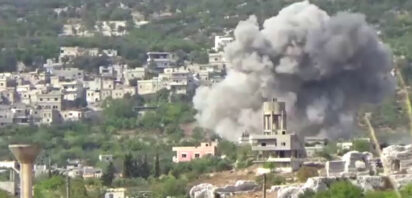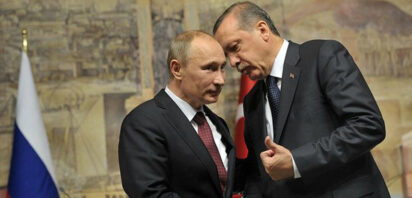
The bombing of a Turkish military convoy in rebel-held Idlib province this week sheds some light on the frayed and contentious geopolitics underpinning the final phase of the Syrian civil war. Simply put, Turkey-Russian cooperation in the Syrian theater always appeared stronger than it actually was. Now that Turkey-aligned proxies are squarely in the crosshairs of pro-regime forces, it has become much harder to smooth over the disparate interests of various regional players. And as this week’s airstrikes and subsequent war-of-words clearly illustrate – this is a conflict that could quickly spin out of control, and to disastrous effect.
Analysis
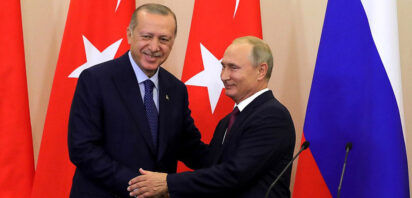
The recent history of Russia-Turkey relations has been one of relative harmony, and the Syrian theater has been no exception. The two governments agreed to a key deal in 2018 that established a buffer zone around Idlib province, originally meant to forestall a large-scale invasion of the rebel enclave. In return for a delay of the planned assault, Turkey pledged that it would clear out the more extremist factions that were fighting alongside the moderate opposition in Idlib.
Part of the terms of this deal were that Turkey could keep the observation posts it had already established in the territory. It was one of these very observation posts in Morek – a strategic town that has recently fallen to pro-Assad militias – that was being resupplied when the Turkish convoy was hit by airstrikes, at least according to the official line from Ankara.