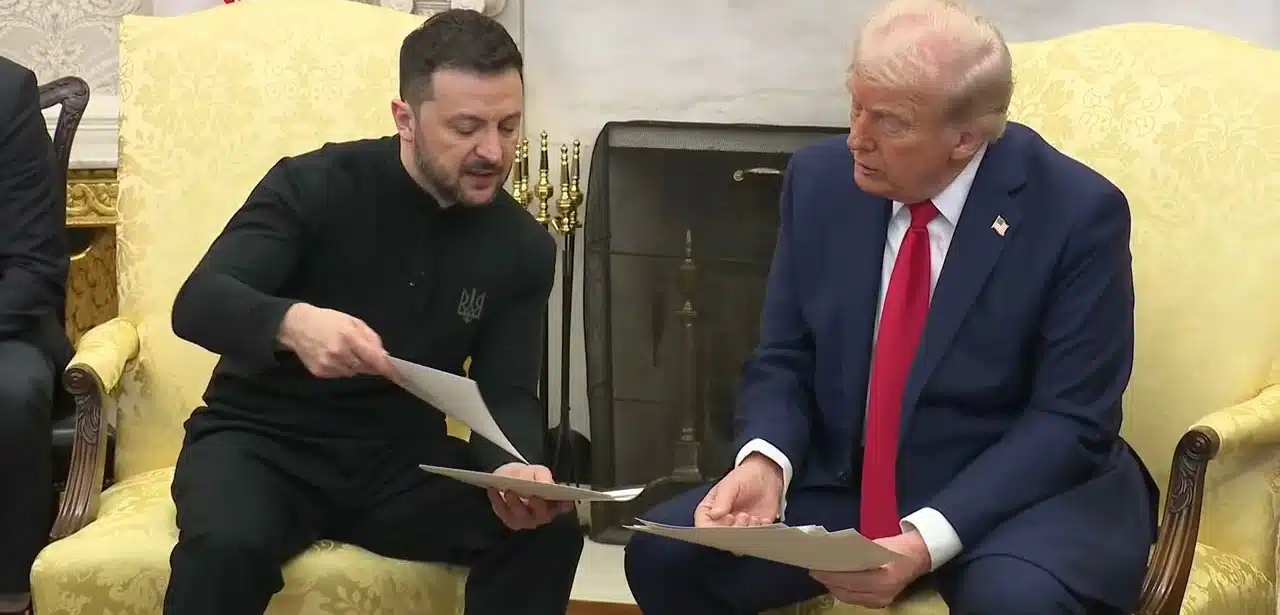
The economic agreement signed on April 30, between the United States and Ukraine marks a turning point in the West’s strategic engagement with Eastern Europe following Russia’s 2022 invasion of Ukraine. Although the deal is formally focused on developing Ukraine’s critical mineral sector, financing infrastructure, and advancing postwar reconstruction, its broader importance lies in the underlying strategic consequences.
Kyiv Secures Concessions on the Economic Front
The US-Ukraine economic agreement operates as both a financial commitment and a strategic tool for influence. While the investment fund at the heart of the deal features equal representation, with three board members from each country, the United States possesses a structural advantage due to its far greater economic capacity, access to capital, and long-standing role in supporting Ukraine’s defense and intelligence operations. These factors enable Washington to exert meaningful influence over Ukraine’s economic planning, especially in sectors tied to resource extraction and infrastructure modernization.
Earlier versions of the agreement were more explicitly favorable to the United States, notably provisions that would have allowed Washington to count past military aid as a form of financial contribution and to appoint a majority of the fund’s board members. These proposals were ultimately removed following Ukrainian objections. Kyiv also succeeded in securing language that preserves its ambitions to join the European Union and excludes any explicit obligations to repay US aid. Taken together, the changes are highly significant and suggest an ability on the part of Ukraine to fruitfully negotiate despite the aforementioned structural power imbalance. Moreover, the deal would seem to reflect some of Washington’s long-term strategic goals of maintaining Ukraine’s political and economic viability in the post-war context.
Yet despite all this, the agreement does not explicitly enhance Ukraine’s security via any security guarantees. Rather, the deal creates a perception that US interests are now tied to Ukraine’s economic future. Yet perception is not necessarily commitment, and economic stakes cannot realistically be seen as a substitute for a defense pact.
Economic Windfall May Not Live Up to Billing
A stated objective of the agreement is to reduce US dependence on China-controlled supply chains for critical minerals by tapping into Ukraine’s untapped mineral wealth. Ukraine is believed to have commercially significant deposits of 22 of the 50 minerals deemed essential to US national security by the US Geological Survey. These include strategically vital materials such as lithium, cobalt, titanium, graphite, and manganese, which are used in technologies ranging from batteries and semiconductors to aerospace components and military systems.
However, substantial obstacles limit the near-term viability of this strategy. Many of Ukraine’s mineral reserve assessments are based on Soviet-era geological surveys, which may be outdated or lack modern validation. Compounding the problem, some of the most promising deposits are located in the country’s eastern and southern regions, which remain contested or under Russian control. Security threats, landmine contamination, and damaged infrastructure, including a severely degraded power grid, further inhibit large-scale investment. Ukraine also lacks domestic mineral processing capabilities, meaning any extracted materials would still require external refinement, much of which currently occurs in China. Few Western companies are prepared to take on the investment risks in these conditions without clearer security guarantees.