The years ahead will bring massive structural shifts as economies around the world transition away from fossil fuels. These changes have already given rise to new strategic commodities, such as rare earth minerals, cobalt, nickel, and lithium to name just a few. The extent to which great powers are willing to clash over these strategic commodities in order to secure reliable domestic supply chains remains to be seen, and will largely be a function of the global trade system going forward. However, supply chain security is an issue that policymakers no longer have the luxury of ignoring.
This article examines factors impacting lithium supply over the next decade.
Background
How lithium is bought and sold
Lithium is a commodity that is notoriously difficult to assign an accurate price to. One reason for this is the various concentrations and inputs involved; however, the fact that lithium doesn’t have a futures market also complicates matters, as there remains no central frame of reference for market players to refer to when setting price expectations.
How is lithium sold then? Through direct contracts between suppliers and consumers. The terms of these contracts are often opaque – again thwarting any consensus on market prices – and the negotiating process can be slow going due to wildly divergent price expectations on each side. Moreover, this lack of price certainty can negatively affect investment inflows into the sector as investors face an uncertain rate of return.
How is lithium produced?
There are two ways in which producers recover extract lithium: ore-based and brine-based methods.
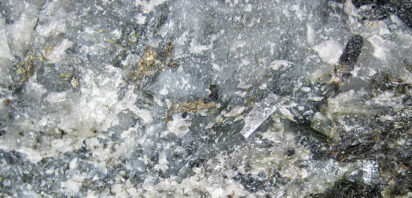
Ore-based extraction is focused on pegmatite granite-sourced lithium minerals such as spodumene, apatite, lepidolite, tourmaline, and amblygonite, of which spodumene is the most commonly occurring around the world.
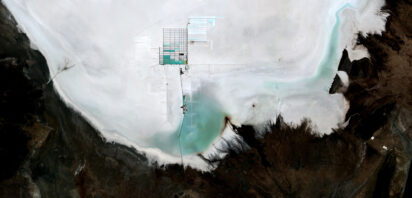
Ore extraction dominated global lithium supply through to the beginning of the 1990s, when China started employing brines, which extracted a purer concentrate at a reduced cost. The brine extraction process involves groundwater being pumped into man-made pools on the surface, and then evaporated, leaving lithium behind. The process benefits from hot, arid climates with flat expanses and little to no tectonic activity. It also requires large amounts of groundwater for the evaporation pools, which can exacerbate local water scarcity issues. The brine evaporation process sees some 95% of pumped groundwater ultimately lost to the atmosphere, and the brine that remains or is pumped back underground risks contaminating the water table. Furthermore, the very climactic characteristics that are ideal for lithium brine extraction tend to overlap with those of water-stressed countries, resulting in a one-two punch of water pressures from lithium extraction and global warming.