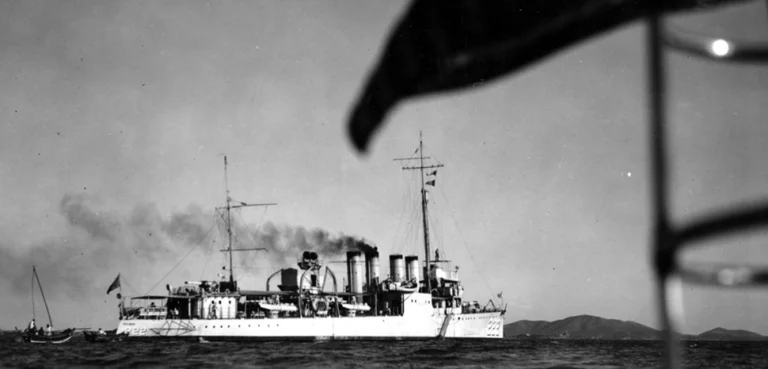
In the early twentieth century, Theodore Roosevelt advised the United States to “speak softly and carry a big stick.” Diplomacy backed by visible capacity to compel, with naval squadrons rather than legal texts guaranteeing outcomes. This approach shaped US intervention across Latin America over a century, from Panama to Nicaragua to the Dominican Republic. The doctrine eventually faded from vocabulary, displaced by institutional multilateralism and sovereignty norms. But in November 2025, the Trump administration formally revived it, announcing a “Trump Corollary to the Monroe Doctrine” in its National Security Strategy that explicitly authorizes military force to “restore American preeminence in the Western Hemisphere.” It shows that the logic behind gunboat diplomacy never disappeared, but simply lay dormant.
The United States intervention in Venezuela marks a clear inflection point. When Donald Trump declared Washington would “run” Venezuela following Nicolás Maduro’s capture on January 3rd, he offered minimal details. At his Mar-a-Lago press conference, Trump said the U.S. would “run the country until such time as we can do a safe, proper and judicious transition” but declined to elaborate. He named no transition team, outlined no governance structure, specified no exit strategy, but the pattern was unmistakable. US forces conducted a large-scale strike on Caracas, seized Maduro and his wife from Venezuelan territory, flew them to New York to face narco-terrorism charges. Venezuelan Vice President Delcy Rodríguez was sworn in as interim president and, according to Trump, had a “gracious” conversation with Secretary of State Marco Rubio offering cooperation. The message was clear: comply with American expectations or face Maduro’s fate. This was coercive diplomacy enforced by overwhelming military action rather than regime change framed as democratization. In other words, it is gunboat diplomacy adapted to the twenty-first century.
The Mechanism: Control Without Governance
Gunboat diplomacy relied on maritime supremacy to compel weaker states without resorting to full-scale war. European powers and the United States employed it throughout the nineteenth century to enforce debts, secure concessions, and impose compliance. The mechanism was simple: warships offshore created asymmetric bargaining where refusal carried immediate costs, and control over outcomes was sufficient without formal annexation.
The contemporary return of this logic is selective and systematically prepared. The Trump administration has not announced a doctrinal revival of gunboat diplomacy. Instead, it acted opportunistically, targeting spaces where sovereignty is hollowed out, institutions brittle, international consensus fragmented. Venezuela fits precisely. Years of sanctions, economic collapse, and diplomatic isolation had reduced Caracas’ strategic autonomy. The January 3 strike was not the beginning of coercion, but its culmination.
Since September 2025, US forces conducted at least 35 strikes on alleged drug vessels in the Caribbean and Eastern Pacific, killing more than 115 people. In November, the carrier USS Gerald R. Ford deployed with its strike group. By December, Coast Guard forces were seizing oil tankers carrying Venezuelan crude. What Secretary of State Marco Rubio later called an “oil quarantine” was already in effect.
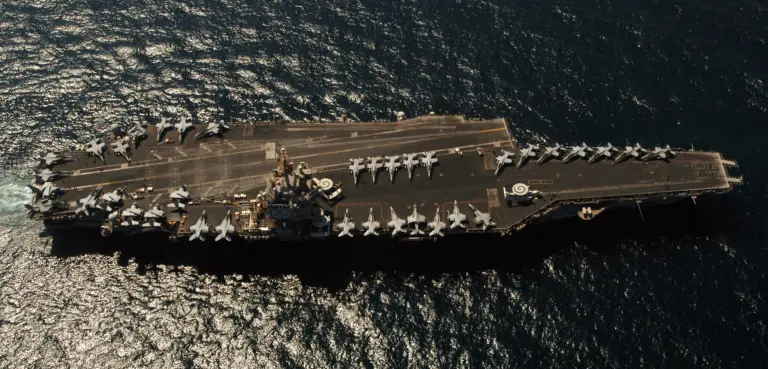
The visible concentration of overwhelming force offshore (carrier strike groups, amphibious vessels, submarines, F-35 fighters in Puerto Rico, strategic bombers on call) was deliberate staging, not rapid deployment. The prolonged presence created a paradox where escalation was inevitable but timing remained uncertain. Venezuelan forces watched US ships for months, and when action came, they were unprepared. The strike turned months of maritime coercion into regime seizure.
The operational reality reveals the logic behind Trump’s vague pronouncement. The January 3 strike targeted facilities in Caracas. Maduro and his wife were seized, transferred to USS Iwo Jima, and flown to New York to face narco-terrorism charges. Dan Caine, Chairman of the Joint Chiefs of Staff, claimed the operation had been “planned for months” while Trump recalled he personally urged Maduro to surrender beforehand.
The demands placed on interim president Delcy Rodríguez have not been formally published, but Trump’s press conference made the framework explicit. She had spoken with Rubio and was “essentially willing to do what we think is necessary to make Venezuela great again.” The pattern included counter-narcotics cooperation, expulsion of foreign intelligence operatives, and US access to energy infrastructure, with Trump emphasizing that US oil companies would ‘fix the badly broken oil infrastructure and start making money for the country.’ Rodríguez can govern domestically so long as compliance is delivered on security and resources, but if she steps out of line, she faces Maduro’s fate.
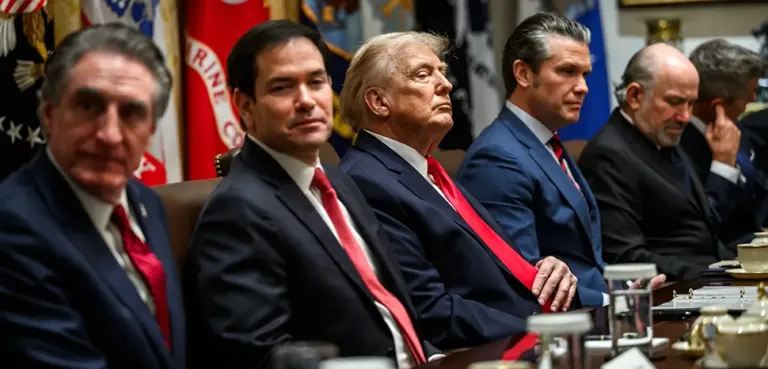
The administration offered no blueprint for governance beyond naming the Mar-a-Lago group (Rubio, Defense Secretary Pete Hegseth, CIA Director John Ratcliffe, Chairman of the Joint Chiefs General Dan Caine, Deputy Chief of Staff Stephen Miller) as overseers. Trump’s statement about “running” Venezuela was assertion without elaboration. There is no plan to rebuild ministries or manage public services. Gunboat diplomacy is not about ruling territory but about controlling decision space. In this setup, Rodríguez functions as a transmission mechanism, not a sovereign actor. She has little alternative than to govern within parameters defined by Washington’s threat of force.
Economic Coercion Meets Naval Power
This approach reflects broader erosion of confidence in rule-based international management. Multilateral institutions function best when power asymmetries are muted by shared norms. In moments of sharp rivalry and declining trust, states revert to more legible instruments of control. A carrier group offshore communicates intent unambiguously without relying on enforcement committees or compliance mechanisms.
Contemporary gunboat diplomacy operates through economic chokepoints, not colonial administration. Control over oil exports, tanker movements, infrastructure security replaces seizure of customs houses or ports. Rubio made this explicit in a Sunday television appearance, describing US policy as an “oil quarantine,” Cold War terminology repurposed to enforce nineteenth-century style coercion. Sanctions enforcement becomes a naval task. When Treasury Department designations are backed by Coast Guard interdiction, financial pressure gains kinetic weight. Ships bound for sanctioned entities can be boarded, diverted, tracked. As a consequence, economic statecraft and maritime coercion merge into single instrument. The result is pressure that remains technically short of war while being unmistakably coercive.
Rubio articulated the mechanism in clear terms: “The one I would point everyone to is that our military is helping the Coast Guard conduct a law enforcement function, which is not just the capture of Maduro, but the enforcement of our sanctions. We go to court, we get a warrant, we seize the boats. And we think this is tremendous leverage – incredible, crippling leverage – which we intend to continue to use until we see the changes that we need to see that are a benefit to the American people – and by the way, we believe to the people of Venezuela as well.” This is offshore military power enabling economic control to compel political outcomes.
While traditional blockades aimed to starve economies into submission, contemporary maritime coercion aims to reshape decision-making by controlling specific transactions, targeting networks that sustain regime autonomy while leaving other flows intact. It is subtle. Washington claims restraint while maintaining structural pressure.
The Sunday after the strike, Rubio clarified what Trump’s vague claim to “run” Venezuela meant. Not direct governance but what Rubio called “running policy.” The United States would not administer Venezuela through occupation forces but through financial leverage on the remaining allies of former-President Nicolas Maduro. When pressed, Rubio refused to rule out prolonged US military presence or provide a withdrawal timeline. The framework is actually control without administration, precisely the distinction that defines gunboat diplomacy. Venezuelan authorities remain in place but they have no choice but to cooperate within parameters enforced by offshore power and economic pressure.
Why Now? The Permissive Environment
Three conditions made 2025 a permissive moment for overt coercion. First, the multilateral system that might constrain such action has fragmented. The Organization of American States is paralyzed by internal division. The UN Security Council remains gridlocked on Venezuela, with Russia and China blocking meaningful action but equally unable to impose costs on US intervention. Regional powers that might object (Brazil, Mexico, Colombia) are either tacitly supportive or preoccupied with domestic challenges.
Second, the Trump administration had formally announced this approach months earlier. The November 2025 National Security Strategy explicitly declared a “Trump Corollary to the Monroe Doctrine,” authorizing targeted military deployments and lethal force against cartels designated as foreign terrorist organizations. The document called for “a readjustment of our global military presence to address urgent threats in our Hemisphere” and vowed to “deny non-Hemispheric competitors the ability to position forces or threatening capabilities” in the region. Venezuela’s trajectory created the opening. Maduro’s capture was the catalyst rather than the cause. The regime had lost effective control over territory, economy, international legitimacy. What remained was a hollow apparatus sustained by external patrons. The escalation pattern built systematically: December 17 began the partial blockade, and December 24 brought limited strikes on port infrastructure. Each action tested response capacity and international tolerance. When decisive force came, there was no robust alternative authority. Washington just stepped into a vacuum it had systematically created.
Third, the Trump administration’s broader posture signaled traditional restraints no longer applied. Trump acknowledged he did not notify Congress before the strike, justifying this by saying “Congress has a tendency to leak. It would not be good if they leaked.” This bypassed the War Powers Resolution. In November 2025, a bipartisan Senate resolution that would have required specific congressional approval for military action in Venezuela had been defeated 49-51. The “Gang of Eight” (top congressional leaders normally briefed on sensitive operations) received no advance notification. Congressional Democrats were told only after operations began. When pressed on constitutional authority, Rubio framed the strike as “law enforcement” with military support, arguing it fell within presidential inherent authority to protect personnel executing an arrest warrant. Senator Mike Lee initially questioned the legal basis, then reversed position after speaking with Rubio, accepting the US Constitution Article II defense.
Withdrawal from multilateral commitments, explicit prioritization of transactional relationships, and willingness to bypass Congressional war powers created an environment where vague assertions of control became acceptable. The declaration that Washington would “run” Venezuela breaks with decades of diplomatic practice. It abandons partnership language and replaces it with command language. Trump’s refusal to elaborate is purely tactical, using ambiguity to preserve full political flexibility. In a different international context, such action would trigger unified backlash. In 2026, it provoked condemnation from UN officials, Brazil’s Lula, various allies, but no coordinated response or consequences.
Precedent and Risk
This logic is not unique to the United States. China’s maritime presence in the South China Sea, Russia’s naval signaling in the Black Sea and Eastern Mediterranean, Turkey’s deployment of naval assets to protect energy interests all reflect similar instincts. What differs in the American approach under Trump is that explicit military action is followed by vague governance claims. The press conference offered no policy document, legal framework, or transition plan. The strike on Caracas and Maduro’s seizure provide the only policy statement that matters. US oil companies will enter Venezuela, Rodríguez will cooperate, and non-compliance will be met with force.
Even within Trump’s political base, the oil dimension drew notice. Representative Marjorie Taylor Greene questioned the counter-narcotics justification, asking why the administration had not taken action against Mexican cartels if drugs were truly the priority. She called the Venezuela operation “a clear move for control over Venezuelan oil supplies.” The critique went unanswered. Trump stated explicitly that US oil companies would invest billions to repair Venezuelan infrastructure and “start making money for the country.” Gunboat diplomacy has always involved economic extraction. What changed was willingness to say so openly.
The risks are substantial. Once leverage is asserted through military strikes and regime seizure, retreat becomes costly, and US credibility is now tied to Rodríguez’s compliance. Her position is precarious: she spoke cooperatively with Rubio while also appearing on state television demanding Maduro’s ‘immediate liberation.’ Failure to deliver on US demands would require escalation or backtracking. Escalation risks deeper entanglement and confrontation with Cuban or Russian security personnel on the ground. Backtracking signals that overwhelming military action cannot guarantee outcomes.
The framework excludes even figures the U.S. previously supported. When asked about opposition leader María Corina Machado (who won the 2025 Nobel Peace Prize and maintains 72 percent approval among Venezuelans) Trump dismissed her, claiming she “doesn’t have the support or the respect within the country.” This reveals the narrowness of acceptable outcomes. Compliance with US demands delivered through compliant intermediary, rather than democracy or popular legitimacy. The risks multiply when governance is reduced to this logic.
If great powers openly embrace outcome-driven coercion, smaller states may accelerate hedging or seek countervailing patrons. Cuba may deepen ties with Russia. Nicaragua might invite Chinese facilities. The erosion of sovereignty norms produces adaptation rather than stability. Gunboat diplomacy solves immediate problems at the cost of long-term predictability.
Domestically, Senate Majority Leader Chuck Schumer, along with Tim Kaine, Rand Paul and Adam Schiff, announced plans for a war powers resolution requiring congressional approval for further Venezuela operations. With Republican Senator Rand Paul’s support and needing only three Republican defections, the measure could pass. Congressional tolerance for executive unilateralism seems to have limits.
Structural Shifts in Order Maintenance
This development reflects a structural trend. The post-Cold War assumption that economic interdependence and institutions would steadily replace coercion was always contingent. As great power rivalry intensifies and global governance fragments, visible power returns to the foreground. The seas become again the arena where hierarchy is enforced.
Roosevelt’s dictum was never about silence or aggression in isolation but was about alignment between rhetoric and capability. Speak softly because the stick speaks for you. What changed is not the stick but willingness to acknowledge its use. The United States is no longer pretending outcomes emerge solely from consensus. In Venezuela, it demonstrated that when interests are defined narrowly and leverage is overwhelming, persuasion gives way to coercion.
Nothing new here, as the mechanics are classic. An aircraft carrier strike group sat offshore for months alongside amphibious forces and strategic bombers on call. Each asset communicated overwhelming capability without words. The Gerald R. Ford did not need to fire every weapon to make the point. Its presence offshore, combined with systematic escalation (strikes on boats, tanker seizures, port attacks) compressed Venezuela’s decision space until compliance became the only viable option. This is gunboat diplomacy in purest form, a display of visible capacity to compel maintained until compliance happens.
However, the return of gunboat diplomacy signals a shift in how order is maintained rather than a collapse of international order. Where institutions fail to constrain behavior, power resumes its traditional role. In 2026, maritime power, long treated as background infrastructure, is again a primary instrument of statecraft.
The key question is whether this remains opportunistic or becomes doctrinal. If Venezuela proves successful (if authorities comply, rival actors withdraw, energy flows stabilize) the template may spread to Haiti, Cuba, other fragile Caribbean states. Cuba has already been warned. The events off Venezuela’s coast are indeed a reminder rather than an exception. The big stick never disappeared, it simply waited for a moment when speaking softly no longer seemed necessary. Trump called it the “Don-roe Doctrine.” The echo of Roosevelt was intentional.