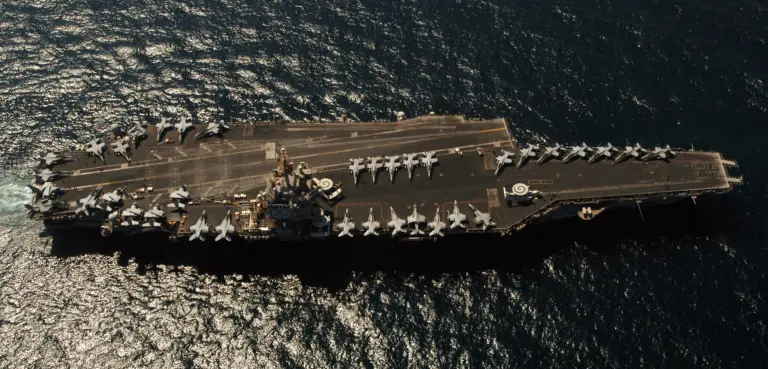
The renewed confrontation between Washington and Tehran marks more than another cycle of military escalation. It signals the return of a familiar strategy under President Donald Trump: combining military deterrence with intensified economic pressure to compel changes in the theocratic regime’s behavior. Whether this approach succeeds, however, depends on answering a more fundamental question. Can external pressure alone produce meaningful political change inside Iran?
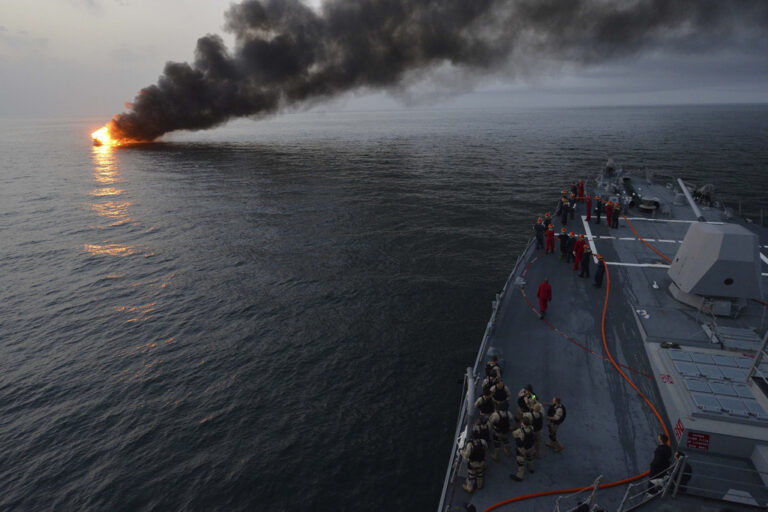
The recent US military strikes against Iranian targets and the restoration of tougher sanctions demonstrate that Washington has concluded that limited diplomatic engagement has failed to alter Tehran’s regional conduct. From the administration’s perspective, a combination of military strength and economic pressure offers the best opportunity to deter further aggression and reestablish American credibility.
Yet the effectiveness of this strategy cannot be measured solely by the number of military targets destroyed or the severity of sanctions imposed. Iran’s long-term political trajectory will ultimately be determined by developments inside the country.
Iran’s theocratic regime enters this new confrontation while facing one of the most serious crises of legitimacy in its forty-seven-year history. Years of economic mismanagement, systemic corruption, inflation, environmental degradation, and political repression have steadily eroded public confidence. Successive nationwide protests have demonstrated that dissatisfaction extends well beyond economic grievances. Increasingly, many Iranians are questioning the legitimacy of the political system itself.
This distinction is critical. Military strikes may weaken strategic capabilities, and sanctions may reduce the regime’s financial resources, but neither automatically creates democratic change. History demonstrates that external pressure can expose the vulnerabilities of an authoritarian regime without producing a viable political alternative.
That lesson is particularly relevant in Iran. For decades, the country’s theocratic regime has relied on external confrontation to justify internal repression. By portraying itself as the defender of national sovereignty against foreign adversaries, the regime has repeatedly sought to suppress dissent in the name of national security. Whether this strategy remains effective is becoming increasingly doubtful. Many Iranians have demonstrated that they distinguish between loyalty to their country and support for the government that rules it.
This is why the international debate on Iran remains incomplete. Discussions too often revolve around two competing approaches: military action or negotiations. Both are important instruments of statecraft, yet neither addresses the central political question: what follows if the current system can no longer sustain itself?
Experience from democratic transitions around the world offers an important lesson. Authoritarian systems rarely evolve into democracies simply because they come under greater external pressure. Democratic transitions require preparation. They require organized leadership, political legitimacy, institutional capacity, and a credible vision for governing after authoritarian rule ends. Without these elements, the collapse of an authoritarian government can create instability rather than democracy.
A successful Iran policy should therefore pursue three complementary objectives. It should continue to deter regional aggression and protect international security. It should maintain pressure on the institutions responsible for repression while minimizing unnecessary hardship for the Iranian people. And it should engage seriously with the organized democratic opposition that has developed a coherent ten-point platform, leadership structure, and vision for a democratic transition based on constitutional governance, political pluralism, equal rights, and the rule of law.
This final objective deserves far greater attention than it currently receives. Policymakers frequently debate how to pressure the regime, but devote comparatively little attention to the political future of Iran. A strategy focused exclusively on weakening the current regime, without considering who is prepared to lead a democratic transition, leaves a critical gap in long-term policy planning.
Ultimately, neither military action nor diplomacy should be viewed as ends in themselves. They are tools designed to shape political outcomes. The enduring objective should be the emergence of a stable, democratic Iran that respects the rights of its citizens, contributes to regional stability, and lives peacefully with the international community.
The current escalation may prove to be another turning point in US-Iran relations. Whether it becomes a turning point in Iran’s political history, however, will depend on more than military operations or sanctions. It will depend on whether policymakers recognize that lasting democratic change requires not only pressure on an authoritarian regime, but also serious engagement with the organized democratic alternative capable of leading Iran toward a constitutional and democratic future.
The views and opinions expressed in this article are those of the author alone and do not represent those of Geopoliticalmonitor.com