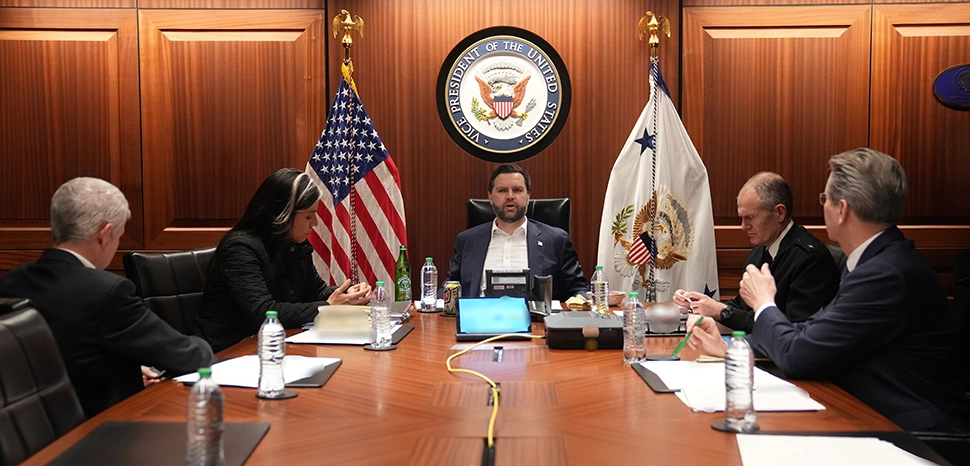
The international community was watching closely whether the US and Iran could reach an agreement through diplomatic negotiations in Geneva. However, the planned talks have already been called off, underscoring the fragility of the current diplomatic process and the difficulty of translating military pressure and back-channel negotiations into a sustainable political settlement. The cancellation does not eliminate the possibility of future diplomatic engagement, but it demonstrates that the central challenge of the conflict extends beyond the immediate question of whether Washington and Tehran can prevent further escalation.
The war has demonstrated a central paradox of American power in the Middle East: The US retains unmatched military capabilities and remains capable of shaping regional dynamics, but military superiority alone has proven insufficient to create a stable political order. Rather than representing the decline of American influence, the Iran war illustrates the limits of American power and the growing role of regional actors in managing the security environment.
One form of diplomacy continues to be conducted behind the scenes, mostly through intermediaries, notably Pakistan and Qatar—now re-engaged in the process—along with Egypt, Saudi Arabia, and Turkey. This remains a less visible domain; President Donald Trump frequently made inconsistent assertions, at times suggesting that an agreement is forthcoming, while at other times denouncing the Iranian government for its refusal to accept limitations on its nuclear program. The collapse of the diplomatic track demonstrates the uncertainty surrounding the current crisis, as both sides continue to use pressure, deterrence, and negotiation as interconnected instruments of statecraft.
Escalation, Deterrence, and Armed Bargaining
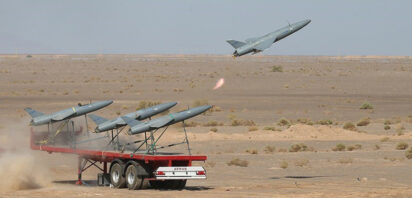
In the last fortnight, the US has conducted multiple targeted strikes, particularly against locations near the Strait of Hormuz. Consequently, the port city of Bandar Abbas, situated in a geostrategically significant region and considered a base for the Iranian navy, has experienced multiple waves of American assaults. Washington consistently intercepts Iranian drones that have, on multiple occasions, been deployed to target vessels transiting the Strait of Hormuz.
Iran promptly retaliated in each case by launching attacks against commercial vessels and American interests in Bahrain, Kuwait, and Jordan. The objective of Iran’s calculated retaliatory actions is to demonstrate regime resilience and to escalate the repercussions of an American attack. It is indeed debatable whether such a strategy alone acts as a deterrent for Washington.
Trump has repeatedly used escalation rhetoric as a bargaining instrument, only to pursue de-escalation during subsequent diplomatic exchanges. Last week, Iran downed an American Apache helicopter, an action that the US could not ignore. The US Air Force conducted strikes on Iranian targets for two days, but, on the third day, it deferred additional attacks, considering favorable developments in diplomatic negotiations.
The US strikes may have had a deterrent effect by demonstrating Washington’s willingness to target critical infrastructure, including facilities connected to water supply for approximately 20,000 residents in Shirak. For both parties, sustaining a condition of uncertainty is considerably onerous and expensive; thus, de-escalation combined with deterrence serves the interests of both sides.
Recent developments indicate that neither Washington nor Tehran is pursuing decisive military victory. Rather, both appear engaged in a process of coercive diplomacy and armed bargaining in which strikes, drone interceptions, and maritime incidents are used to improve negotiating leverage and shape the diplomatic environment ahead of the Geneva talks. Military pressure and diplomacy have thus become complementary instruments of statecraft, allowing both sides to maximize bargaining leverage while avoiding the costs and risks associated with a wider regional war.
Toward a Post-America Middle East?
In recent weeks, the conflict has neither produced a decisive military outcome nor generated a sustainable political settlement, while increasing costs for all parties involved. The US, for example, used approximately 1,000 Tomahawk missiles during the conflict with Iran, despite a production capacity of only around 90–100 missiles per year. Given the estimated $2–2.5 million cost per missile, the operation imposed substantial financial costs while also exposing a deeper strategic vulnerability: replenishing depleted US missile inventories could require years, highlighting the limits of even overwhelming military capabilities when faced with prolonged conflict demands. The conflict has thus demonstrated both the continuing military predominance of the US and the difficulty of converting that advantage into decisive political outcomes.
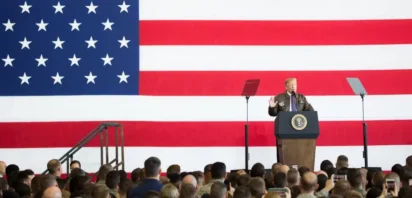
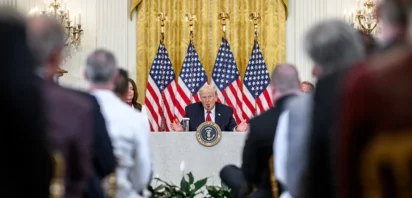
From Washington’s standpoint, the purpose of Operation Epic Fury was to prevent Iran from acquiring a nuclear weapon and to construct a regional order that could function without continued reliance on American security guarantees. Trump explicitly stated in his recent speech that the US cannot function as a security provider without compensation; nevertheless, if regional states are unable to attain peace independently, Washington is willing to engage, contingent upon their oil revenues.
The conflict has accelerated the emergence of a post-America Middle East—not because US power has disappeared, but because Washington’s ability to translate military superiority into a durable regional order has become increasingly limited. This constitutes a paradox: the Iran war necessitated an unparalleled American military presence while simultaneously exposing the limits of that presence. In this increasingly complex regional environment, the US cannot alone be expected to construct and maintain a durable regional order.
The conflict has therefore accelerated the transfer of greater responsibility for regional security management to local powers in a region historically shaped by external intervention. Previously, it seemed that Washington would be able to establish regional order by eliminating the Iranian threat, based on the Abraham Accords signed in 2020. The extent to which the Iranian nuclear program represented an existential threat remains contested. On its own, it does not necessarily constitute an existential threat; at the same time, Tehran’s forward defense strategy prevents the envisioned regional order from taking shape.
The problem, however, is that the war did not resolve the issue of the balance of power. Middle Eastern regional disorder, as a structural characteristic of the region, will remain with us for a long time. The persistence of coercive diplomacy highlights this reality. Military action has altered the regional balance but has not produced a stable political order. Instead, the principal actors continue to rely on calibrated pressure, deterrence, and limited escalation to advance their interests while avoiding a wider conflict. In this context, we see ad hoc, short-term alignments that often compete with one another. Examples of such fault lines include the Turkish-Israeli geopolitical rivalry in Syria and other countries in the region, as well as the recently emerging Saudi-UAE rivalry, for instance, in Yemen.
Nevertheless, GCC countries face growing pressure to develop more independent defense capabilities, as reliance solely on US military bases has not eliminated their vulnerability to Iranian military retaliation. There is increasing skepticism about Washington’s role as a security provider in the region, although Trump himself acknowledges that relying solely on American superiority has become too costly. A future agreement between Washington and Tehran may reduce immediate tensions and create mechanisms for crisis control, yet the underlying contest over regional order, influence, and security architecture will remain unresolved. This raises the broader question of who will address these unresolved security challenges. The conflict highlights the potential need for GCC states to establish a security mechanism in the Persian Gulf that includes Iran and to reconsider their reliance on US military bases in the region.
The GCC states also face a more complex regional environment, with Iran having been both weakened militarily and strengthened politically through its conflict with the US and Israel. In this sense, the war against Iran has superseded the previous security model, with the United States, as the security provider, ensuring adequate protection. Iran emerged from the conflict militarily weakened; at the same time, it strengthened its political position by demonstrating its ability to disrupt regional stability—particularly through the prolonged blockade of the Strait of Hormuz—and has effectively compelled the GCC states to enter de-escalation negotiations with Tehran one by one.
The GCC states appear increasingly willing to use economic incentives and reconstruction assistance as instruments of de-escalation with Tehran. Press reports have indicated that UAE private firms were among the first to transfer $3 billion in reconstruction aid to the regime, which is in dire need of financial assistance (Abu Dhabi has denied the reports). According to the 14-point memorandum, a fund worth $300 billion has been established to support reconstruction efforts in Iran. Iran failed to receive the $270 billion in war compensation it had demanded from the US; however, this reconstruction fund, which is expected to be supported primarily by private companies, could still contribute to the regime’s economic survival.
Israel’s Regional Strategy in the Levant
Prime Minister Benjamin Netanyahu had a significant influence on President Trump on February 28, 2026, in the decision that led the US to intervene against Iran for the second time in a year. The so-called ‘40-day war’ unfolded largely according to Israel’s plans: key elements of the Iranian leadership were neutralized, Iran’s air-defense network was severely degraded, and its naval capabilities were significantly weakened.
Although Israel achieved significant military objectives against Iran, the political outcome is less clear. A negotiated settlement between Washington and Tehran could constrain Israel’s freedom of action and leave elements of Iran’s regional influence intact. From Jerusalem’s perspective, military success does not necessarily translate into a transformed regional order. While the war weakened Iran’s conventional military capabilities, it did not eliminate the structural sources of instability that have shaped the regional balance of power for decades.
Indeed, as tensions between Trump and Netanyahu have become increasingly visible in recent days, parts of the Israeli press have begun portraying the war as a potential strategic disappointment. From this perspective, the military campaign succeeded in degrading Iranian capabilities but failed to produce a decisive geopolitical outcome. If Washington ultimately prioritizes de-escalation and regional stability over continued pressure on Tehran, Israel may find itself operating within a regional environment that remains fundamentally contested.
Moreover, the war has highlighted the limits of military power in shaping regional order.
Even a weakened Iran retains important political, economic, and diplomatic instruments of influence across the Middle East. Tehran’s ability to maintain relations with regional actors and leverage its strategic position in the Persian Gulf demonstrates that military setbacks do not automatically translate into political marginalization.
For Israel, the central challenge remains unresolved. The weakening of Iran may have improved Israel’s short-term security environment, but it has not produced a sustainable regional order favorable to Israeli interests. The prospect of a US-Iran agreement therefore presents a strategic dilemma: while reducing the risk of a wider regional war, it could simultaneously preserve aspects of Iran’s regional role that Jerusalem has sought to dismantle. In this sense, the conflict underscores a broader reality of the contemporary Middle East: military victories can alter the balance of power, but they rarely resolve the underlying political contests that sustain regional disorder.
De-escalation Without Resolution: The Limits of Diplomatic Breakthroughs
The cancellation of the Geneva talks demonstrates that even when diplomacy creates opportunities for crisis management, it does not necessarily produce a sustainable political settlement. The conflict has shown that military pressure can create incentives for negotiation, but it cannot by itself resolve the deeper questions surrounding regional order, deterrence, and security governance in the Middle East.
The war has revealed both the continuing military predominance of the US and the limits of that power in shaping political outcomes. It has also accelerated the transition toward a more fragmented regional order in which local powers bear increasing responsibility for their own security. In this environment, the logic of coercive diplomacy and armed bargaining is likely to persist even after a formal agreement is reached.
The most probable outcome, therefore, is not the resolution of the conflict but its management. Any future agreement between Washington and Tehran may reduce immediate tensions and establish mechanisms for crisis management; however, the broader contest over regional order, influence, and security architecture will likely persist. Such a settlement would represent not the end of the crisis but the beginning of a new phase in the politics of a changing Middle East, where American influence is increasingly contested.
László Csicsmann: Full Professor and Head of the Centre for Contemporary Asia Studies, Corvinus Institute for Advanced Studies (CIAS); Department of International Relations, Institute of Global Studies, Corvinus University of Budapest; Senior Research Fellow, Hungarian Institute of International Affairs (HIIA), Hungary.
Scott N. Romaniuk—Senior Research Fellow, Centre for Contemporary Asia Studies, Corvinus Institute for Advanced Studies (CIAS); Department of International Relations, Institute of Global Studies, Corvinus University of Budapest, Hungary.