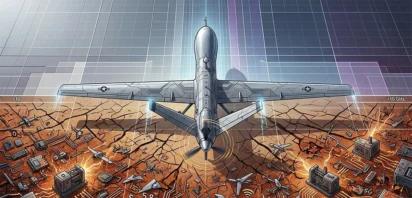
The war that began with US-Israeli strikes on Iran on February 28 has expanded into a regional contest in which Gulf Cooperation Council states are both targets and potential belligerents. Iran has retaliated across the region and has used pressure on shipping through the Strait of Hormuz as a central lever, amplifying global energy and supply chain disruption.
Over the next one to three weeks, the most likely GCC posture is still “active defense” plus enabling support for US-led operations, rather than overt Gulf offensive strikes inside Iran. That posture can hold if Iranian attacks remain intermittent, limited in lethality, and avoid sustained damage to desalination, power generation, major ports, and core oil and gas processing nodes. But the political threshold for direct GCC participation is falling as Iran’s strikes increasingly hit Gulf territory and as Gulf leaders debate whether deterrence has eroded beyond repair.
The highest-probability pathway to wider GCC entry is not a sudden decision to bomb Iran, but a stepwise shift: broader basing and overflight permissions, more integrated air and missile defense operations, maritime participation in a Hormuz security mission, and only then limited retaliation if Iran causes mass casualties or cripples critical infrastructure.
The risk is that even limited Gulf entry produces Iranian escalation against Gulf critical infrastructure, creating a longer, more destructive conflict and a more permanent, openly hostile GCC-Iran relationship.
The View from the Gulf
After the February 28 opening strikes, Iran has demonstrated that it can sustain missile and drone launches despite extensive US-Israeli targeting, adapting by dispersing launch operations and striking less defended sites. This has prolonged the conflict and increased pressure on Gulf states that sit within range and host major commercial and military nodes.
The Strait of Hormuz has become both a battlefield and a bargaining chip. Iran’s ability to restrict transit has raised energy prices sharply and injected uncertainty into global shipping and insurance markets, while encouraging discussion of multinational maritime measures to reopen the waterway.
Inside the GCC, leaders are balancing three imperatives that increasingly collide: protecting domestic stability, preserving economic continuity, and restoring deterrence against Iran without triggering a spiral of infrastructure-to-infrastructure escalation. Public anger over regional violence and the legacy of the Gaza war complicate any overt alignment with Israel, even when leaders privately want Iran’s missile and drone capacity curtailed.
Recent reporting indicates widening Gulf impatience with Iran and a willingness, in at least some capitals, to consider more direct participation if Iranian attacks cross critical red lines such as large-scale destruction of power or desalination systems.
Background
The GCC has never functioned as a fully unified security bloc, and its members’ Iran policies have varied according to geography, leadership preferences, domestic political constraints, and economic exposure. That structural fragmentation matters now because an attack on one Gulf state does not automatically produce a bloc-wide military response, even when shared fears are intense.