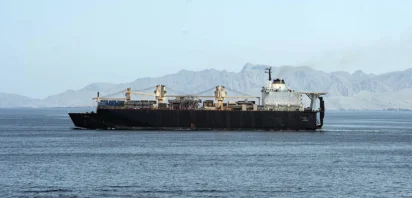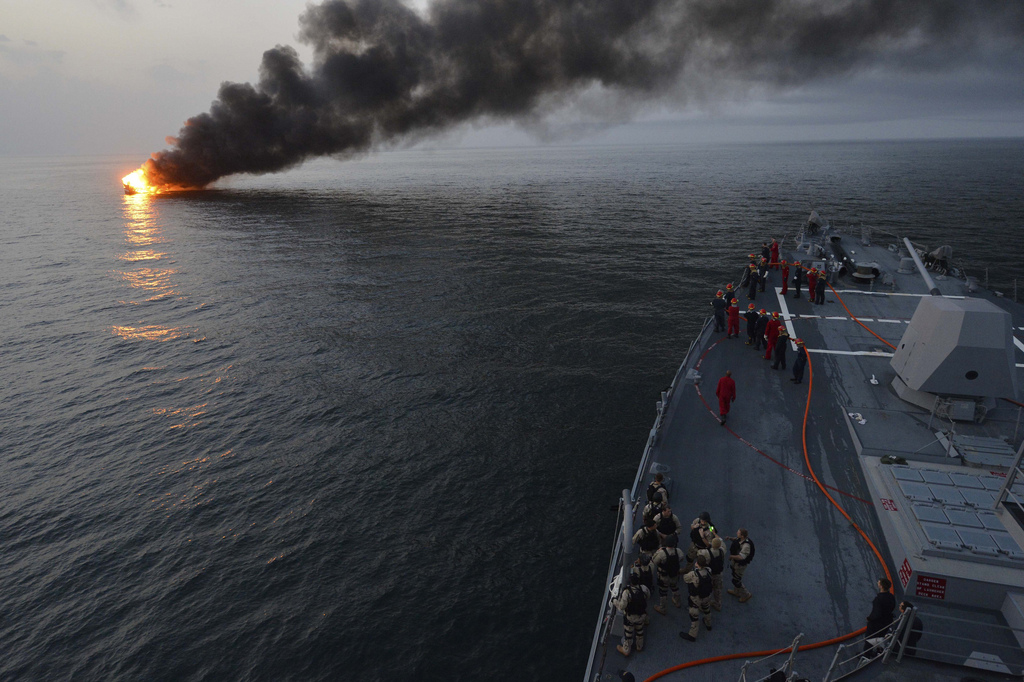
Renewed confrontation in the Strait of Hormuz just days after the June 17 US-Iran interim framework exposes the central weakness of Washington’s approach to Gulf security. The question is not whether the United States can deploy more ships, launch more patrols, or defeat individual Iranian attacks. It can. The harder question is whether it can keep commercial traffic moving normally, safely, and at an acceptable political and economic cost when Iran chooses to raise the risk. The latest disruption, in which shipping again slowed after attacks and conflicting transit arrangements, shows why those are not the same thing.
The lesson is not that Iran can permanently close Hormuz or exercise lawful control over one of the world’s most important international waterways. It cannot. Nor does Iran’s proximity cancel the United States’ technological, intelligence, air, or naval advantages.
The more precise conclusion is that US military superiority does not automatically create strategic control.
In Hormuz, control means more than putting warships on the water. It means assuring insurers, shipping companies, energy buyers, Gulf governments, and crews that passage will remain predictable. That cannot be achieved by naval presence alone.
Geographic Asymmetries
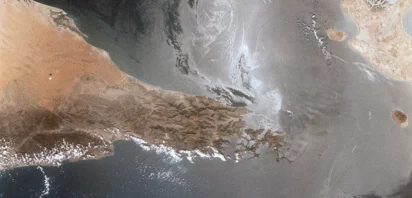
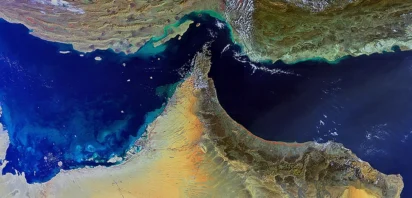
Geography is the starting point. Iran sits along the northern shore of the Gulf and near the approaches to the strait, with access to coastal territory and islands that matter for surveillance, targeting, and disruption. External powers can bring formidable forces into the region, but they cannot alter the physical setting in which a crisis unfolds. A narrow waterway rewards local knowledge, short response times, dispersed assets, and the ability to create uncertainty. That is why Iran’s importance is structural, not rhetorical. It is built into the map.
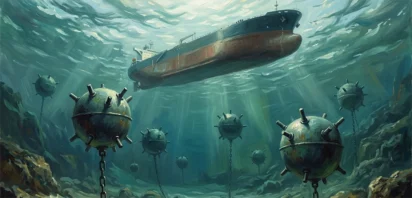
This does not give Tehran a durable capacity for sea control. Iran cannot administer international commerce, guarantee safety for all vessels, or sustain a conventional naval contest against the United States. Its relevant capability is sea denial: the ability to make a route dangerous, slow, expensive, or politically difficult to use. Shore-based missiles, drones, small boats, mines, electronic warfare, and a dense targeting network do not need to defeat the US Navy in a decisive battle to matter. They only need to raise the probability and cost of disruption high enough that commercial actors pause, divert, or demand guarantees that military escorts alone cannot provide.
Recent events made this distinction visible. US forces have demonstrated that they can protect warships and support efforts to restore freedom of navigation. Yet mine clearance, escorts, and retaliatory strikes are not the same as a return to ordinary commerce. Even after the ceasefire framework, ships moved through the strait only under carefully managed arrangements, while many vessels remained delayed and exposed to high insurance and operational risk. The gap between a waterway that is technically open and one that is commercially usable is exactly where Iran retains leverage.
The economic stakes magnify that leverage. Before the latest crisis, Hormuz carried roughly 20 million barrels per day of oil and petroleum products, as well as more than one-fifth of global LNG trade. A disruption does not need to become a total blockade to have global economic consequences. Delays can tighten energy markets, lift freight and insurance costs, complicate refinery planning, and expose governments from East Asia to Europe to higher prices. The result is that Washington’s partners have an interest not merely in American protection but in a durable reduction of risk. They do not want a recurring cycle in which every tactical incident becomes a global economic alarm.
Reestablishing Deterrence
Supporters of a more forceful US posture will argue, reasonably, that accepting this reality should not be confused with conceding an Iranian veto. The United States still possesses unmatched capabilities in maritime surveillance, air power, undersea warfare, coalition command, and precision strike. It can organize escorts, keep some channels open, and impose serious costs on Tehran for attacks on commercial shipping. Those advantages are real, and any policy that dismisses them would be as detached from reality as a policy that dismisses Iran’s geography.
But this is precisely the point: deterrence must be judged by the standard that matters. The test is not whether the United States can win an exchange of fire. The test is whether normal commercial passage can continue without an open-ended military campaign, extreme insurance premiums, stranded vessels, or the constant risk of a wider regional war. Recent traffic patterns after the formal reopening show that a military announcement does not automatically restore confidence. Shipping companies make their decisions according to risk, not presidential declarations.
The Islamabad framework should therefore be read as more than a pause in hostilities. Its treatment of Hormuz confirms that navigation cannot be separated from the broader political relationship between Washington and Tehran. A maritime arrangement that ignores sanctions, escalation incentives, communications failures, and competing understandings of regional security will remain fragile. Conversely, diplomacy that treats the strait only as a bargaining chip will fail because it overlooks the practical needs of crews, insurers, port operators, and energy consumers.
A more realistic US strategy would preserve deterrence while building mechanisms that reduce the chance that a local incident becomes a global shock. That means reliable military-to-military deconfliction channels, clearer transit rules, multilateral coordination with Gulf states and Oman, agreed procedures for investigating attacks, and a diplomatic track capable of addressing the political disputes that repeatedly spill into the waterway. None of this requires Washington to endorse Iran’s regional policies or abandon freedom of navigation. It requires recognizing that the stability of Hormuz cannot be imposed through force alone.
Hormuz offers a hard but useful lesson for US policy. America remains the stronger naval power. Iran remains the actor best positioned to make that power costly and incomplete in this particular geography. Lasting security will come neither from an Iranian claim to command the strait nor from an American claim to manage it alone. It will come from a balance in which deterrence prevents coercion, diplomacy limits miscalculation, and both sides understand that the economic consequences of another crisis will reach far beyond the Gulf.
The views and opinions expressed in this article are those of the author alone and do not represent those of Geopoliticalmonitor.com