Maximum Pressure Alone Will Not Change Iran
Lasting democratic change requires not only pressure on an authoritarian regime, but also serious engagement with opposition forces that will ultimately pick up the pieces.
Sofey Saidi, PhD, is a geopolitical analyst specializing in Iranian affairs, democratic transitions, Middle East security, and international relations. She earned her doctorate from the Geneva School of Diplomacy and International Relations and pursued graduate studies at George Mason University's Carter School for Peace and Conflict Resolution and Duke University. She has taught international relations and world cultures at the University of Baltimore and has published extensively on Iran, regional security, democratic governance, and U.S. policy toward the Middle East. Her work focuses on the political dynamics of democratic transition and the intersection of security, governance, and human rights. She is fluent in English, Farsi, and Spanish.
Lasting democratic change requires not only pressure on an authoritarian regime, but also serious engagement with opposition forces that will ultimately pick up the pieces.
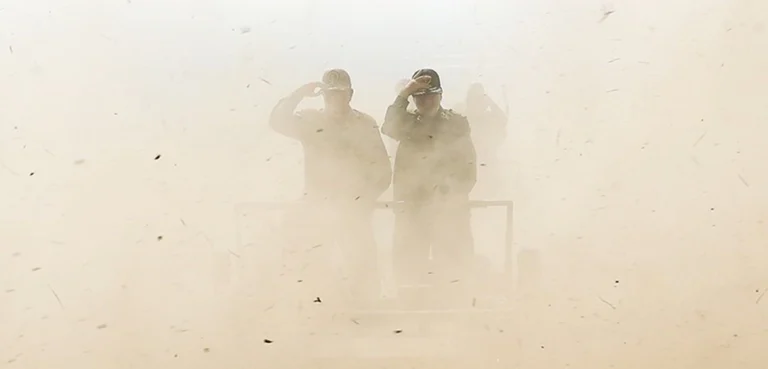
The growing visibility of the IRGC does not signal a clean transfer of power from clerics to generals. Rather, it reflects the Iranian regime’s increasing dependence on coercive institutions as other sources of authority weaken.
Iran has demonstrated an ability to operate across a broad regional landscape and to absorb external pressure, but this should not be conflated with the emergence of a stable, rising global power.
Political change in Iran is likely to be driven primarily by internal actors, if it happens at all.
Washington’s diplomatic outreach will discover to its detriment that there is no ‘right’ regime insider to work with in Iran.
In-depth analysis and intelligence briefings delivered straight to your inbox — no credit card required.
We use cookies to analyse site traffic and improve your experience. See our Privacy Policy.