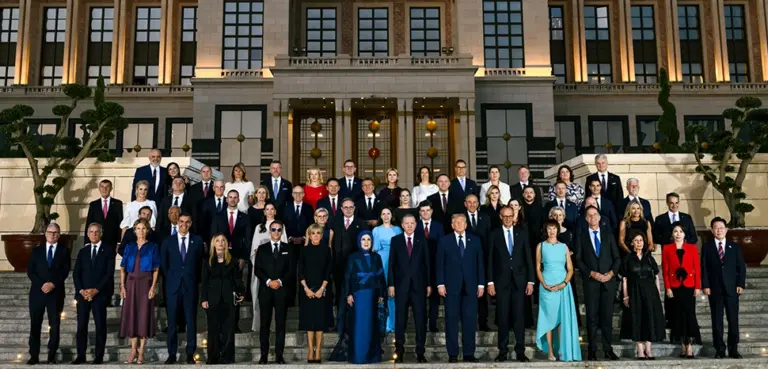
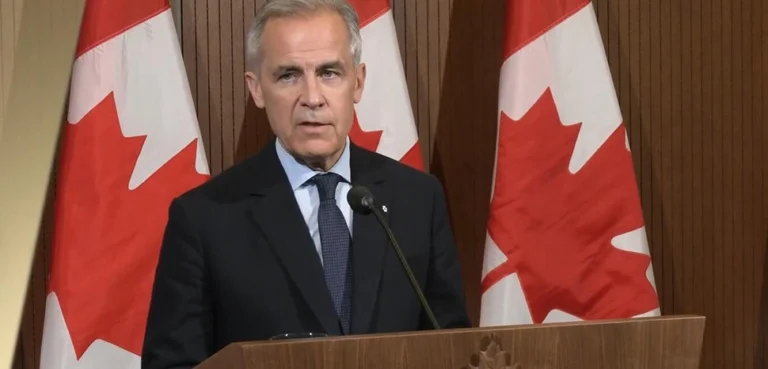
Canada’s push to formalize a multilateral Defence, Security, and Resilience Bank (DSRB) at the July 2026 NATO summit in Ankara represents the first attempt to build a standing financial institution dedicated exclusively to allied rearmament, and its fate will reveal whether NATO’s capital issues are a matter of supply or coordination.
The proposed mechanics follow the established multilateral development bank template. Members would contribute paid-in capital under a 20 percent paid-in, 80 percent callable structure that backs bond issuance in international markets. Proceeds would finance sovereign lending for procurement, credit guarantees for commercial banks, lending to defense firms, and working capital support for lower-tier suppliers. Each function targets a documented failure point, and the analytical questions that will determine the institution’s relevance sit one level deeper.
The DSRB concept responds to a structural mismatch between NATO’s new spending commitments and the fiscal capacity of the governments expected to meet them. The Hague summit pledge of June 2025 committed allies to 5 percent of GDP on defense and defense-related spending by 2035, split between a 3.5 percent core requirement and a 1.5 percent resilience component.
For heavily indebted European members, meeting that trajectory through national budgets alone implies tax increases, cuts to social expenditure, or expanded sovereign borrowing at elevated debt service costs. A multilateral balance sheet that borrows at AAA rates and on-lends to members carrying lower ratings offers an arbitrage on the spread between the institution’s cost of funds and each member’s own.
European defense firms, particularly smaller suppliers, have reported persistent difficulty accessing commercial banking services as ESG screening frameworks classified defense exposure as restricted. The problem is most acute for sub-prime contractors producing components, munitions inputs, and specialized subsystems: firms too small to issue bonds and too sector-concentrated for risk-averse lenders.
A guarantee facility that absorbs a defined first-loss position changes the risk calculus for commercial banks without requiring the multilateral institution to originate thousands of small loans. This guarantee architecture, rather than direct sovereign lending, is arguably the proposal’s most distinctive design element, because no existing institution performs that function for defense at scale.
Canada’s Political Calculus
Ottawa’s sponsorship merits its own analysis, because Canada is an unusual champion for an institution whose primary beneficiaries would be European treasuries and European suppliers. Three motives are visible in the record.
First, Canada enters the summit under sustained pressure over its burden-sharing record after years below the prior 2 percent guideline. Championing a financing institution allows Ottawa to claim alliance leadership on a dimension where it holds genuine comparative advantage (financial statecraft and multilateral institution-building) rather than on force generation.
Second, Carney’s background as a former central bank governor gives the proposal a credibility anchor and gives Carney a signature alliance initiative in his first full year in office.
Third, a defense bank with meaningful Canadian participation would institutionalize Canadian relevance in a European rearmament cycle from which Canadian industry might otherwise be excluded, particularly as EU instruments increasingly carry European-content requirements.
The counterparty problem is that the states whose participation matters most have hedged. The United States is not among the reported backers, and Washington’s absence removes the deepest capital market and the largest defense industrial base from the founding structure.
The United Kingdom has told Parliament it has no current plans to join, prioritizing instead the Multilateral Defence Mechanism it announced with Finland and the Netherlands in March 2026, and Germany is participating in DSRB talks only as an observer. To date Luxembourg is the only publicly committed partner, slated to serve as the bank’s European base.
A founding cohort composed primarily of smaller and mid-sized allies can establish the institution legally. Whether it can establish the institution financially is a different question, examined below.
The Credit Rating Problem and the Duplication Problem
The AAA aspiration is the load-bearing assumption of the entire model, and it faces two structural complications. Rating agencies assess multilateral lenders on the quality of their callable capital, meaning the ratings of the sovereigns standing behind the commitments. A founding membership without the United States, Germany, or the United Kingdom concentrates the callable base in lower-rated sovereigns, which either compresses the institution’s rating or forces a higher paid-in ratio to compensate.
The precedent record cuts both ways: the Asian Infrastructure Investment Bank achieved a AAA rating without US membership, but with China’s balance sheet at the center and a portfolio in infrastructure, an asset class with established recovery characteristics. Defense lending has no comparable default history for agencies to model, and a portfolio concentrated in one sector, correlated to a single geopolitical scenario, is precisely the concentration profile that rating methodologies penalize.
The duplication question is equally material. Since 2024 the institutional landscape has crowded rapidly: the European Investment Bank has loosened its restrictions on defense-adjacent lending, the EU’s SAFE instrument mobilized 150 billion euros in loans for joint procurement, and the broader ReArm Europe framework targets roughly 800 billion euros in mobilized spending.
Skeptics contend the binding constraints lie elsewhere: a Bruegel policy brief on rearmament governance identifies procurement fragmentation, low production scale, and fiscal fragmentation as the structural obstacles, and proposes a treaty-based European Defence Mechanism to address them. Under that reading, a new lender adds a coordination layer without relieving the actual bottleneck.
The counterargument holds that SAFE and the EIB are EU instruments that non-EU allies such as Canada, Norway, and Turkey access only partially or through negotiated third-country arrangements, and that a NATO-adjacent bank is the only architecture financing the alliance rather than the union. The DSRB’s viability may hinge less on its financial engineering than on whether non-EU members constitute a sufficient client base for a standing institution.
Outlook
Three benchmarks will indicate whether the DSRB becomes an operating institution or joins the inventory of announced but unbuilt alliance initiatives. The first is the composition of the founding ten: a cohort containing at least one large, highly rated European sovereign would materially change the credit arithmetic, while a cohort of smaller allies would signal a pilot vehicle awaiting anchor shareholders.
The second is the paid-in capital schedule. Signature declarations cost nothing, and the institution becomes real only when treasuries appropriate first tranches through national budget processes, a step that will expose the gap between summit communiqués and parliamentary follow-through.
The third is the relationship with the UK, Dutch, Finnish, and Polish Multilateral Defence Mechanism: London has reportedly explored aligning or merging the two vehicles, and consolidation would concentrate the available callable capital, while parallel development would fragment a capital pool that is already thin without Washington and Berlin. The mechanism’s expansion to four members, with Poland joining ahead of the summit, indicates it is accruing rather than shedding partners, which sharpens the choice between consolidation and a divided capital pool.
The deeper significance of the initiative is independent of its near-term success. The DSRB proposal marks the migration of rearmament debates from fiscal policy (how much to spend) to financial architecture (how to structure, price, and distribute the cost of spending across members and over time).
That shift will outlast any single institution, because the arithmetic behind it, a 5 percent commitment set against constrained national balance sheets, does not resolve on its own. Whether the answer runs through Ottawa’s bank, the Multilateral Defence Mechanism, or a successor design, the alliance’s capital structure is becoming as consequential a subject of negotiation as its force posture.