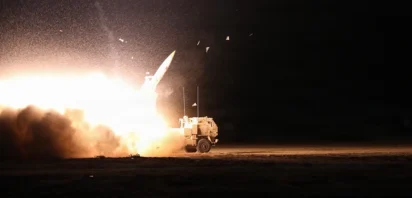
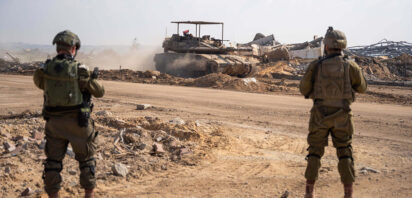
The Iran war has pushed the Gulf into a different category of risk, one in which commercial exposure can no longer be cleanly separated from geopolitical conflict. Strikes on critical infrastructure, including South Pars and Ras Laffan, were part of that shift, but they are no longer the whole story. For years, many companies treated Gulf instability as background noise. It was a serious and persistent issue, certainly, but often compartmentalized: the delicate balance of power in the region was a matter for diplomats, security advisers, and specialist risk teams, but not terribly relevant for mainstream commercial decision-making.
That mindset is now obsolete. What was once discussed as contingency has become a live operating environment, with consequences that run from boardrooms to ports, payment systems, and insurance contracts. The line between geopolitical tension and ordinary business exposure has become increasingly difficult to draw.
This seismic shift matters well beyond the region. The Gulf is not a peripheral theatre in the global economy. It is a corridor for energy, shipping, finance and logistics, and a crucial node in wider trade between Europe, Asia and Africa. When instability takes hold there, the fallout does not remain local. It travels through supply chains, commodity markets, financing channels and the compliance burden carried by firms far from the missile range or far removed from the immediate conflict.
While much coverage and analysis has focused on the looming global energy crisis and the serious disruptions to shipping caused by Iran’s leverage over the Strait of Hormuz, this is too narrow a read on the situation. Several layers of risk are now converging at once: sanctions pressure is rising, cyber threats are being folded into physical confrontation, shadow shipping networks remain active, and anti-money laundering controls are likely to come under greater strain as capital seeks speed, cover and deniability.
Once gas infrastructure itself comes under direct pressure, the risk is no longer confined to price volatility or nervous tanker traffic. It becomes a question of physical disruption to vital assets whose repair may take months or years; of LNG supply chains that cannot be rerouted without significant cost; and of Gulf states whose domestic stability and international influence are closely tied to their role as reliable energy producers. Recent reporting has underlined the scale of that exposure: Qatar estimates that damage at Ras Laffan is expected to cut 17% of Qatar’s LNG export capacity for up to five years, with direct consequences for buyers in Europe and Asia.
Qatar’s LNG disruption this spring put a significant share of the country’s export capacity at risk, and analysts warned that prolonged disruption would tighten an already stressed market.
Sanctions are the most immediate way in which this new environment will make itself felt. In periods of escalation, governments do not simply add names to sanctions lists. They widen enforcement, sharpen scrutiny and look harder at indirect links, beneficial ownership chains, intermediaries and facilitators. In practice, this means companies can no longer rely on a narrow procedural view of compliance. Screening a counterparty is not enough if the real exposure sits elsewhere in the chain, buried in ownership structures, transit routes, financing arrangements, or service providers. That is especially true in a conflict environment where sanctioned activity may be routed through proxies, intermediaries or complex commercial channels that obscure the ultimate beneficial owner.
Sanctions are often presented as precise instruments, aimed at bad actors while leaving legitimate commerce broadly intact. In practice, their effects are far less containable. As sanctions enforcement hardens, exposure extends well beyond those initially in regulators’ sights. Banks grow more cautious, transactions are delayed or blocked even where the legal picture is ambiguous, and the paper trail required to satisfy compliance teams grows by the week. Professional service firms, insurers, brokers and logistics players begin retreating from areas they might previously have tolerated. Risk appetite contracts before the law formally changes, because no serious institution wants to become the case that proves a regulator’s point.
The strain is already visible in the banking sector across the Gulf. Reuters reported recently that Citi and Standard Chartered evacuated their Dubai offices, while HSBC closed its Qatar branches amid rising fears over the conflict. Citi then kept most of its UAE branches closed indefinitely, and the Emirati central bank responded with a liquidity support package designed to reassure markets and steady lenders. Even if those measures are not the same as sanctions screening, they show how quickly financial institutions in the region are being pushed into a more defensive posture.
The result is a form of economic chilling effect that rarely makes headlines but can be deeply consequential. A payment that does not clear, a vessel that is reflagged at the wrong moment, a client relationship that suddenly looks opaque, a cargo route that acquires sanctions exposure, a cloud dependency that seemed efficient in calmer times but brittle in crisis: these are the granular ways in which conflict enters commercial life and is what will shape business behavior in the coming months.
Other important risks are emerging, as well. Cyber risk deserves particular attention because it is still too often treated as a parallel issue. It is not. In fact, cyber activity is part of the conflict picture itself. The threat is not confined to ransomware or phishing. It includes state- linked intrusion, denial-of-service attacks, destructive malware, supply-chain compromise, disinformation and fabricated claims of breach intended to spread confusion and distort decision-making. In order to manage this risk effectively, we have to recognize that it is not merely an IT problem, but a governance one as well. The challenge lies as much in validating information and making sound decisions under pressure as in technical defense.
At sea, the same logic applies. Iran’s shadow fleet, used to export oil secretly despite international sanctions, is not a niche concern for sanctions specialists. It is where sanctions risk, trade opacity and financial crime increasingly overlap, with opaque ownership, AIS manipulation, and ship-to-ship transfers creating a setting in which legal and commercial exposure are unusually hard to disentangle.
History offers some calibration. The Gulf has absorbed serious geopolitical shocks before, the Iran-Iraq War, the 1990-91 Gulf conflict, and repeated episodes of Strait of Hormuz tension, and in each case markets adapted, infrastructure was restored and the commercial relationships that underpin the region’s standing in the global economy proved more durable than crisis-period analysis often suggested.
That record does not diminish the gravity of the current situation, nor does it counsel complacency. What it does counsel against is treating disruption as automatically irreversible. The Gulf’s role as a critical node in global energy and trade was not built on an assumption of permanent calm, it was built on a demonstrated capacity to absorb external pressures, recalibrate where necessary, and continue operating with consistency, underpinned by strong governance, diversified economic structures, and deep integration into global markets. Over the past decade in particular, Gulf economies have actively diversified beyond hydrocarbons, with non-oil sectors such as logistics, tourism, finance, and technology playing an increasingly central role in driving an uptick in growth statistics. Taken together, these factors reflect a model that is intentionally designed to sustain continuity and confidence even amid external volatility, reinforcing the Gulf’s standing as a dependable center within the global economic system.
Despite the current complex and challenging risk landscape, the Gulf is hardly on the verge of systemic breakdown. Gulf economies entered this period from a position of relative strength, underpinned by substantial reserves, more diversified economic bases and long-term development programs that remain intact despite short-term disruption.
Nevertheless, whatever happens with the current ceasefire, the region is facing a harsher operating climate in which resilience and exposure will coexist – something that’s critical for companies and policymakers around the world to grasp. The old separation between geopolitics, compliance, and commercial strategy has broken down. For European businesses in particular, this should be a moment of overdue realism. The Gulf can no longer be approached as a market shaped by geopolitics at the margins. Geopolitics is now part of the operating environment itself, and those who fail to adapt their risk frameworks accordingly will be exposed not only to disruption, but to strategic miscalculation.
The views and opinions expressed in this article are those of the author alone and do not represent those of Geopoliticalmonitor.com