Geopolitics Weekly contextualizes emerging geopolitical trends around the world, distilling the cacophony of global events into one easy reader. It lands in the inbox of Geopolitical Monitor subscribers every week. This week’s edition has been made available to all our readers.
North America
Trump Clears Way for US Drones to Compete in Global Arms Markets
What Happened
Reuters is reporting that the Trump administration is planning to change the classification of drones from missiles to aircraft, thus skirting the restrictions of the Missile Technology Control Regime (MTCR) and paving the way for the sale of advanced drones to new state buyers.
Why It Matters
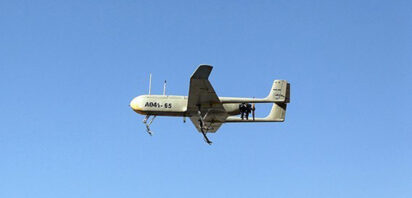
- Expanding the Global Market for US Drones. Advanced MQ-9 Reaper drones have already been sold in various iterations to close partners like France, United Kingdom, Spain, Canada, Taiwan, India, and others. However, under the (non-binding) no-undercut policy of the MTCR, export restrictions by one signatory cannot be undercut by another. By re-classifying drones as aircraft, the Trump administration can free the US drone industry from MTCR regulations without eroding the regime’s utility elsewhere in curbing the proliferation of missile technology. The pivot would help US drones compete with rival platforms in global arms markets, notably Turkey’s Bayraktar TB2, China’s Caihong, and Iran’s Mohajer and Shahed lines. New export markets allow for greater economies of scale with the hope of eventually eroding the price advantages that rival producers now enjoy.
- Further Warming in US-Gulf Relations. US Gulf allies stand to immediately benefit, specifically Saudi Arabia and the UAE. President Trump signed a high-profile deal with the Kingdom back in May, pledging some $142 billion in weapons sales in exchange for $600 billion in Saudi investment. The Saudis reportedly requested a huge order of over 100 MQ-9 drones around this time.
- Relic of a Past Era? Concerns over the proliferation of US drone technology are fading into the background because – now in service since 2007 – the MQ-9 Reaper is no longer considered bleeding edge. At least 15 of them have been shot down by the Houthis in Yemen since October 2023. Moreover, the War on Terror-era paradigm of high-cost, premier platforms has given way to the drone swarm tactics of the Ukrainian front.
Asia
Royalist Anutin Charnvirakul Takes over as Prime Minister in Thailand
What Happened
Thai lawmakers have voted in Anutin Charnvirakul as the country’s new prime minister. Charnvirakul, the leader of the conservative Bhumjaithai Party, takes over from Paetongtarn Shinawatra following her ouster over a border conflict with Cambodia.
Why It Matters
- A Temporary Posting? Charnvirakul secured the support of the progressive People’s Party – the remnants of the now-banned Move Forward Party (MFP) – in exchange for a promise to hold a constitutional referendum and elections within four months. Whether this promise is kept however remains to be seen. It’s one thing to offer vague promises of reform; quite another to get down to the constitutional details, especially when the change being sought by the MFP strikes at the heart of Charnvirakul’s royalist sensibilities.
- Thai Politics in Flux. The plot continues to thicken in Thai politics. Paetongtarn Shinawatra secured her premiership after the populist Pheu Thai joined with its conservative and military former opponents in coalition following the 2023 elections, sidelining a MFP party that had received the most votes. Just two years later, Paetongtarn has been removed, her father Thaksin has fled the country (again), and Pheu Thai’s political future is clouded with uncertainty. The progressive-royalist schism has only widened in the meantime, which doesn’t portend well for the short-term stability of Thai politics.
Death Toll Mounts as Afghan Earthquakes Destabilize Afpak Frontier
What Happened
Southeastern Afghanistan has been devastated by a series of powerful earthquakes, resulting in at least 2,200 deaths.
Why It Matters
- A Sensitive Area. The earthquakes have hit Nangarhar and Kunar provinces the hardest – mountainous and remote regions bordering Pakistan which are difficult to access under normal circumstances. The area was front and center in clashes between the NATO-backed government and Islamic State and many villages have never been rebuilt. Yet despite inadequate local infrastructure, housing, and basic necessities, hundreds of thousands of refugees had been flooding back to the area after being expelled from Pakistan and Iran, many of whom crossed at the Torkham border post northwest of Peshawar. The earthquake will compound geopolitical risk factors on both sides of the border, notably in Pakistan, where security forces have been launching attacks against Tehreek-e-Taliban Pakistan (TTP) militants in and around Bajaur through August.
- Afghanistan’s Compounding Crises. Earthquakes aren’t the only disaster destabilizing the Afpak frontier. Months of downpours and flash flooding have wreaked havoc in Nangarhar and Kunar Yet paradoxically, the Taliban government is also grappling with a years-long drought centered on the northwest. On the economic front, the dual pressures of reduced foreign aid and returning refugees are causing unemployment to skyrocket and draining scarce foreign reserves ($9 billion of which remain frozen in US banks).
Looking ahead, two outcomes are likely. The first is destabilization over the short-term as the manifold challenges facing the Taliban regime outstrip its institutional and economic capacity to respond, with predictably corrosive effects for internal security and stability along the Afpak border. Second is a further warming of ties with external players who might be able to offer fiscal relief. Given the open wounds of the NATO era and, more recently, the USAID pullout and the regime’s crackdown on women’s rights, this assistance will likely originate outside the West. Two candidates are Russia, which was first out of the gates in recognizing the regime in July, and China, which has been investing in the Afghan mineral resources and assessing new direct links via the Wakhan Corridor.
India Unveils New Military Modernization Roadmap
What Happened
The Indian Ministry of Defence has released its 15-year plan to modernize and expand the Indian armed forces, entitled The Technology Vision and Capability Roadmap.
Why It Matters
The plan furthers New Delhi’s evolution as a strategic player in the Indo-Pacific, envisioning new blue water operational capacities far from India proper. Some notable inclusions are:
- A Nuclear Carrier. The plan calls for domestic research and development into nuclear propulsion systems for eventual use in an aircraft carrier. The Indian Navy currently operates two aircraft carriers: the Soviet-era INS Vikramaditya and the domestically built INS Vikrant. New destroyers and corvettes are also earmarked for development with an eye on expanding the navy’s range beyond the Indian Ocean.
- Emphasis on Drones. Citing the importance of drone warfare in Operation Sindoor and the Ukraine war, the plan places a clear emphasis on drone platforms, calling for the procurement of 120 medium altitude long endurance (MALE) drones along with 50 stealth drones by 2040.
- A Homegrown Carrier Aircraft. The plan calls for the development of a new fighter jet capable of being launched from Indian Navy carriers. It also foresees some 62 Rafale jets entering into service by 2030.
- Modernizing the Tank Corps. The plan calls for 1,800 new tanks to replace India’s aging Soviet-era stock of T-72s under the Future Ready Combat Vehicle (FRCV) initiative.