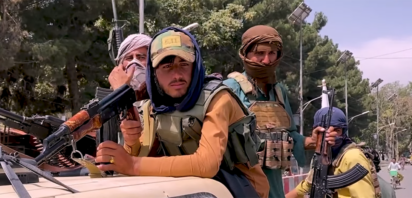
The Russian Federation’s formal recognition of the Taliban government on July 3 may fundamentally reshape the international community’s approach to Afghanistan. Since the Taliban’s return to power in August 2021, the regime has made notable diplomatic gains over nearly four years. Unlike the first Taliban government (1996–2001), which received recognition primarily from within the Islamic world, the current recognition by a major non-Islamic power underscores a new, more pragmatic and proactive direction in the Taliban’s foreign policy – what might be termed “Taliban 2.0.”
Impacts of Russia’s Taliban Recognition
The appointment of a Taliban ambassador to Moscow, the raising of the Taliban flag on Russian soil, and the official recognition of the Taliban as Afghanistan’s legitimate government carry significant geopolitical implications.
First, the Taliban have secured recognition from a major global power not on the basis of religious or ideological affinity, but through strategic, political, and economic considerations. This constitutes a significant diplomatic victory for the Taliban and suggests that the regime exhibits core features of statehood and sovereign governance.
Second, this recognition comes from a leading representative of Slavic civilization – a region with which Afghanistan has historically had adversarial relations, particularly during the Soviet era. Yet, both sides have demonstrated the ability to move beyond historical grievances, engaging instead in forward-looking diplomacy driven by realism and mutual interests.
Third, Russia’s move may shift the global framing of Afghanistan – from a problem primarily viewed through the lens of regional security to one integrated into the broader geopolitical tensions between East and West. As Western powers continue to disengage from Afghanistan, Moscow’s recognition could pave the way for greater partnerships between Kabul and Eastern capitals.
Why Russia?
The Russian side had been steadily preparing for this step. In December 2024, the President of Russia signed a decree removing the Taliban from the list of terrorist organizations, a decision that was formally upheld by the Supreme Court in April 2025. On July 3, Taliban envoy Gul Hassan officially assumed his post as ambassador. Just days earlier, on July 1, Russia’s Special Presidential Representative for Afghanistan, Zamir Kabulov, announced that the seventh round of the “Moscow Format” talks would be held in autumn 2025, with Afghanistan participating “as a full-fledged member.” This high-level statement served as a clear indication of the beginning of the official recognition process.
The rationale behind Russia’s shift can be explained by several factors:
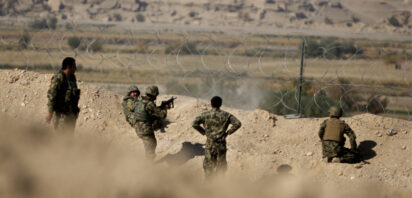
First, Russia seeks to strengthen its position in Central Asia, viewing Afghanistan as an integral part of the region. Security developments in Afghanistan have a direct impact on Russia’s regional interests, particularly in Tajikistan. In July of this year, Moscow announced the start of arms exports to Afghanistan as part of its counterterrorism strategy. Arms trade remains one of the central pillars of Russia’s foreign policy toolkit. Cooperation in this domain may pave the way for broader military-industrial collaboration, potentially elevating bilateral relations to a new strategic level.
Second, Afghanistan represents a new export market for Russian goods. Bilateral trade has already reached $1 billion, with a target of $3 billion set for 2025. During the St. Petersburg International Economic Forum in June 2025, Russia announced an expansion of its labor market to include Afghan specialists. This marks the deployment of a second core element of Russian influence – labor migration – now extended to the Afghan direction.
Third, under the pressure of international sanctions, Russia is increasingly pivoting toward the Global South. South Asian markets, particularly India and Pakistan, have emerged as key importers of Russian oil and wheat. In this context, Afghanistan serves as a critical transit corridor for Moscow’s continental ambitions. In early April, Russia and Uzbekistan signed agreements to launch the Trans-Afghan Railway, reaffirming the strategic importance of Afghanistan in regional connectivity.
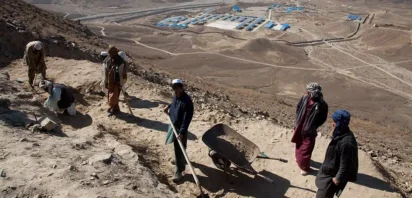
Fourth, Russia has entered the competition for influence in Afghanistan and aspires to become a major external power in Afghan foreign affairs. Among the major powers, China was one of the first to make a diplomatic gesture toward the Taliban: in February 2024, President Xi officially accepted the credentials of the Taliban’s appointed envoy. Since then, Chinese firms such as Xinjiang Central Asia Petroleum and Gas Company (CAPEIC) and China Metallurgical Group Corporation (MCC) have become leading players in oil and copper extraction. Additionally, Chinese companies have made significant inroads in lithium mining, driven by the global demand for electric vehicles. These successes may have spurred Moscow to intensify its own efforts to secure diplomatic and economic footholds in Eurasia.
A Domino Effect?
Russia’s actions may fundamentally reshape the global community’s stance on Afghanistan. Until now, most countries have adopted a wait-and-see approach. Uzbekistan has been one of the few exceptions, pursuing proactive diplomacy on the Afghan track. On several occasions, Tashkent has called at high levels for a coordinated international approach to Afghanistan and emphasized the need to acknowledge the reality of Taliban authority. Nevertheless, no collective recognition has taken place. Key regional actors such as Iran, Pakistan, and various Arab states have also remained silent. Russia’s move may now trigger a bandwagoning effect, both at the regional and continental levels, with more countries reconsidering their positions on recognizing the Taliban-led government.
On the same day that Russia officially recognized the Taliban, the President of Uzbekistan held his first-ever meeting with Deputy Prime Minister of Afghanistan Abdul Ghani Baradar on the sidelines of the 17th ECO Summit. Mullah Baradar, representing the so-called Kabul faction of the Taliban, is seen as one of the key proponents of pragmatic state-building in Afghanistan. This meeting signals both sides’ commitment to pragmatism; however, it is difficult to conclude that Uzbekistan will automatically align itself with Moscow’s position. Tashkent’s policy toward Afghanistan remains independent and is guided by the country’s own geopolitical interests. Any potential recognition of the Taliban by Uzbekistan will likewise be shaped by a strategic calculus specific to its national priorities.
With regard to another of Afghanistan’s neighbors, Iran, it is difficult to expect that Tehran will follow Moscow’s lead. Amid its conflict with Israel, Iranian intelligence reportedly suspected the presence of Afghans with ties to Israeli operatives. This was one of the key factors behind Iran’s mass deportation campaign targeting Afghan nationals. In June 2025 alone, Iran expelled over 250,000 Afghans. Against this backdrop, bilateral relations have continued to deteriorate.
Pakistan, traditionally seen as one of the key candidates to recognize the Taliban, also maintains a complicated relationship with Afghanistan. Islamabad has been conducting mass deportations of Afghan refugees and has periodically shut down border trade crossings. However, following an informal trilateral meeting of the foreign ministers of China, Afghanistan, and Pakistan held in Beijing on May 21, a noticeable thaw has emerged in Kabul-Islamabad relations. This recent rapprochement, combined with Russia’s diplomatic shift, may soon encourage Islamabad to move toward formal recognition of the Taliban.
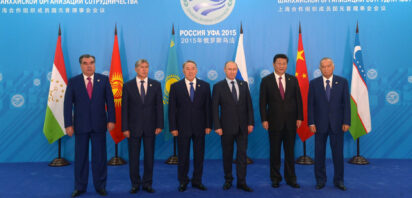
China is unlikely to base its actions on Russia’s lead. Beijing has already established its own Afghan agenda within its foreign policy and primarily views Afghanistan through a South Asian lens – particularly in the context of the Belt and Road Initiative (BRI) and the China-Pakistan Economic Corridor (CPEC). It is highly likely that China will give special attention to the Afghan issue at the 25th Shanghai Cooperation Organization (SCO) Summit, scheduled to take place in Tianjin in late August and early September 2025. Should China officially recognize the Taliban, this move could generate a broader wave of recognition – both within the SCO framework and in the international arena more broadly.
Russia’s decision may resonate with certain Central Asian states. Kazakhstan appears to be a potential candidate for recognizing Taliban authority. Almaty has already taken meaningful steps in this direction; in June of the previous year, Kazakhstan removed the Taliban from its list of terrorist organizations. Kazakh officials have also conducted multiple high-level visits to Kabul. At present, there seem to be no significant barriers preventing Kazakhstan from initiating formal recognition.
Tajikistan, which maintained a “cold” stance toward the Taliban from the outset, may now reconsider its approach in light of Russia’s diplomatic signal. While Dushanbe is still some distance from recognition, signs of warming ties with Kabul have begun to emerge.
In addition, Belarus – Russia’s closest ally – is likely to follow suit. While Minsk’s recognition may not significantly deepen bilateral relations with Kabul, it would bolster Moscow’s diplomatic efforts and contribute to a bandwagoning effect under Russian leadership.
Looking Ahead
Russia’s recognition of the Taliban regime may signal the beginning of a new phase in international engagement with Afghanistan. On one hand, recognition by a major global actor like Russia could trigger a domino effect, initiating a broader process of normalization. On the other hand, it could also intensify competition among global and regional powers over spheres of influence within Afghanistan.
In addition, the diplomatic perseverance of the Taliban deserves attention. Through sustained effort, the movement has secured recognition not from a spiritual ally or regional power, but from a state of global significance. This marks an evolution in both the state-building trajectory and foreign policy conduct of the Taliban regime – an actor often overlooked in international discourse. The upcoming SCO Summit in Tianjin is highly likely to open a new chapter of diplomatic engagement on the Afghan file.
*This article was originally published on July 9, 2025.