Many believed that a Taliban takeover of Afghanistan was only a matter of time, but few thought it would happen this quickly following a US pullout. Here is a rundown of what a Taliban-controlled Afghanistan means for US foreign policy and the geopolitics of a highly strategic region:
Analysis
Recognition: the million-dollar question
As yet no one knows the level of diplomatic recognition that will be extended to the Taliban regime, and this is a variable that carries significant geopolitical consequences. After two decades of war, it follows that the Taliban would prefer widespread recognition, as the alternative – relative isolation – leaves the regime dependent on regional players that are more liable to be pursuing their own agendas; i.e., Pakistan. Thus, there is some leverage here for NATO countries, namely the United States, which itself will be desperate to extract something resembling a win from its colossal investment into Afghanistan. Perhaps a globally recognized and ‘responsible’ Taliban regime would fit the bill. However, such an outcome remains unlikely given the human rights violations inherent to the Taliban’s style of governance, violations that will be all the more difficult for Western governments to ignore after leaning so heavily on a nation-building narrative to justify NATO’s long-term presence in the country.
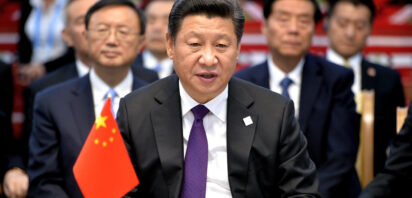
The China factor could also have Western governments considering recognition. It’s generally assumed that China will join with Iran and Russia to recognize the Taliban government once the dust settles in Kabul. Ongoing non-recognition by Western countries not only carries significant economic costs, but also allows gifts China a valuable foothold in a highly strategic region. Incidentally, recognition in order to deny China a clear geopolitical victory would be further evidence of a return to the zero sum dynamic of the Cold War era.
Risk of a refugee exodus
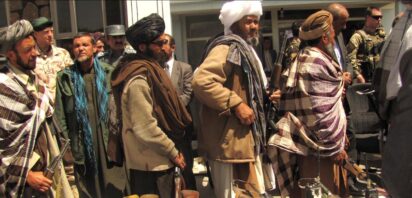
Recognition will largely be determined by what happens in the weeks ahead, namely whether the Taliban seeks revenge against those who worked closely with NATO, the government, and civil society organizations, and whether the Islamist group facilitates or impedes the frenzied rush-for-the-exits that’s currently playing out at Kabul airport. Regardless, there will be a spike in refugees seeking to leave the country (currently around 3 million Afghans are internally displaced and another 3 million reside in neighboring Pakistan). The swiftness of the Taliban’s military victory may represent cause for optimism on this front. With organized opposition to their rule evidently non-existent, and now armed-to-the-teeth with billions of dollars’ worth of seized NATO hardware, the Taliban is sufficiently equipped to occupy the moral high ground should it choose to. A magnanimous track is being projected by the group’s PR wing, which has promised no revenge killings or property seizures in Kabul; how it all plays out in practice remains to be seen, but historical precedent are enough to give pause.
The end of an era for US foreign policy
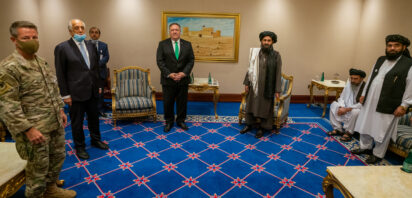
US President Joe Biden inherited an expensive and unpopular two-decade-long war and a Trump peace deal that essentially gave the Taliban everything they wanted in exchange for a promise to be good in the future. A pullout was never going to be easy; recall that former president Obama once campaigned on withdrawing all combat troops from the country within 16 months of taking office back in 2008. To perpetuate the status quo of pouring money into a corrupt and woefully ineffective government represents an equally unpalatable option. Yet despite all this, we can expect considerable political blowback for President Biden, who as recently as July was insisting that a Taliban victory was impossible. Such is the extent of the United States’ astonishing tactical oversights. This is Saigon, but in fast-forward, and there will be severe reputational fallout for the United States, not just in terms of the viability of future nation-building ventures, but also in Washington’s ability to entice would-be allies and assets throughout the world. One can’t help but feel like this is the end of the 9/11 era, and that the United States’ interventionalist proclivities will be severely curtailed in the future, not least by a US public that is overwhelmingly tired of expensive overseas adventures.