Any true understanding of modern Afghan history, from the Soviet invasion to the rise and fall of the Taliban, must take these ethnic identities into account. And even the peculiar mirror-image model of governance that currently prevails in Kabul is due in large part to neither the Pashtun Ghani nor the Tajik-linked Abdullah wanting to hand the reins over to a member of a competing ethnic bloc.
The following map outlines the distribution of major ethnic and tribal groups in Afghanistan.
Pashtun
The ‘Pashtun’ label is an ethnic grouping of over fifty tribes inhabiting southern Afghanistan and both sides of the Pakistan-Afghan border. Together they constitute about 40% of the Afghan population, making them the largest ethnic group in the country.
The Taliban began as a Pashtun movement, and it still remains largely so to this day. While it goes without saying that not all Pashtuns are Taliban supporters, many are fiercely nationalistic and oppose the NATO presence in Afghanistan. It should also be pointed out that most of the violence in Afghanistan over the past decade has occurred in Pashtun regions, meaning Pashtun civilians have taken the brunt of Taliban-NATO fighting.
There are sufficient Pashtun numbers on the Pakistani side of the border to pose a threat to Pakistan’s territorial integrity. Consequently, an enduring feature of Pakistani foreign policy has been to snuff out any manifestation of cross-border Pashtun nationalism that threatens to push the ill-defined Durand Line outward from Afghanistan.
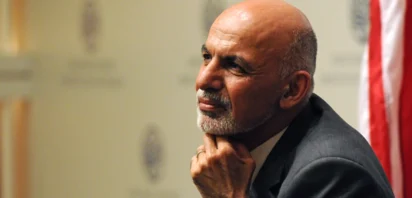
Former President Hamid Karzai was a Pashtun, as is current President Ashraf Ghani.
Tajik
The second largest ethnic group and primary challenger to Pashtun dominance in Afghanistan is the Tajiks. Tajiks are for the most part Sunni Muslims and they speak a dialect of Persian not far off from that which is spoken in Iran.
Like the Pashtuns, the Tajiks participated in the fight against the Soviet Union, but the two blocs fell into conflict after the Soviets pulled out. The Tajiks were driving force behind the Northern Alliance against the Taliban in the late 1990s, for which they received several high-profile cabinet postings in the Karzai government. They continue to be a powerful political force in the capital.
Though there are around 8 million Tajiks in Afghanistan, they have only ruled the country twice – in 1929, and later in 1992. Given the political renaissance that has occurred since the 2001 NATO invasion, it stands to reason that the Tajiks will not relinquish their newfound influence without a fight.
Abdullah Abdullah, Afghanistan’s Chief Executive Officer (a position created to resolve last year’s stalemate), is commonly viewed as belonging to the Tajik ethnic group due to his close links with the Northern Alliance in the past. In truth he is half-Tajik, half-Pashtun.
Hazara
The Hazara of central Afghanistan account for around 20% of the population, making them the country’s third-largest minority group. A Shiite group, the Hazara were singled out by the Taliban and subjected to particularly brutal treatment in the lead-up to 2001. The NATO campaign of 2001 delivered them from total destruction, and since then the Hazarajat region of central Afghanistan has been peaceful for the most part. But sectarian attacks against Hazara are once more on the rise in the early part of 2015.
Uzbeks & Turkmen
Though ethnically distinct from one another, both Uzbeks & Turkmen are relatively minor ethnic groups living in northern Afghanistan (together they account for 12% of the population). Uzbek tribes supported the anti-Taliban Northern Alliance leading up to 2001 and were rewarded with prominent government positions in both Karzai governments. Turkmen tend to have less representation in Kabul.