Europe was not consulted before the United States and Israel launched their war on Iran. Yet two weeks later, it is being drawn into the fallout anyway. Operation Epic Fury posits an uncomfortable though familiar question to the Old Continent: How far does alliance solidarity actually go?
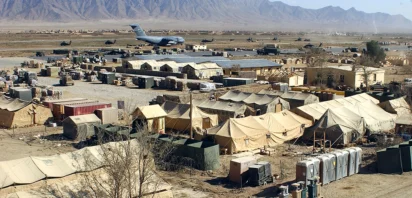
The newest flashpoint in the Euro-Atlantic rift has been the question of whether European countries will allow the United States to use military bases on their soil for operations against Iran. The question of when and how US forces may conduct operations from these bases is typically regulated by bilateral agreement and, in sensitive cases, requires explicit host-nation authorization.
Bilateral defense cooperation agreements between the United States and individual host nations vary enormously in scope and the degree of host-nation control they enshrine. The critical variable is sovereignty. In most cases, the bases remain under host-nation command, thus the host country’s flag flies over the installation, and its officers nominally administer the facility, while the US operates within designated Installation Defense Areas (IDAs) under the command of a US officer. Therefore, when the US seeks to use European territory as a staging ground for combat operations outside the NATO area, the host nation’s political consent is required.
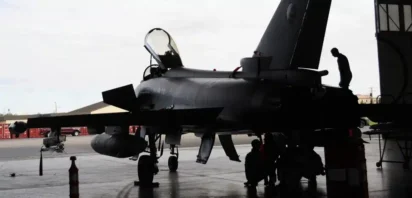
The current dispute surrounding Iran is not without precedent. In April 1986, when President Reagan ordered air strikes against Libya, France, Spain, and Italy all denied overflight rights and the use of European continental bases. The UK, under Margaret Thatcher, was the only European ally to permit operations, allowing US bombers to launch from RAF Lakenheath and RAF Upper Heyford.
A different scenario played out during the 2011 NATO-led intervention in Libya. Aviano Air Base in Italy served as a primary launch point for US and allied air sorties. RAF Mildenhall contributed tanker and reconnaissance assets. Back then, however, the operation carried a UN Security Council mandate, which made European participation far easier to justify to domestic political audiences.