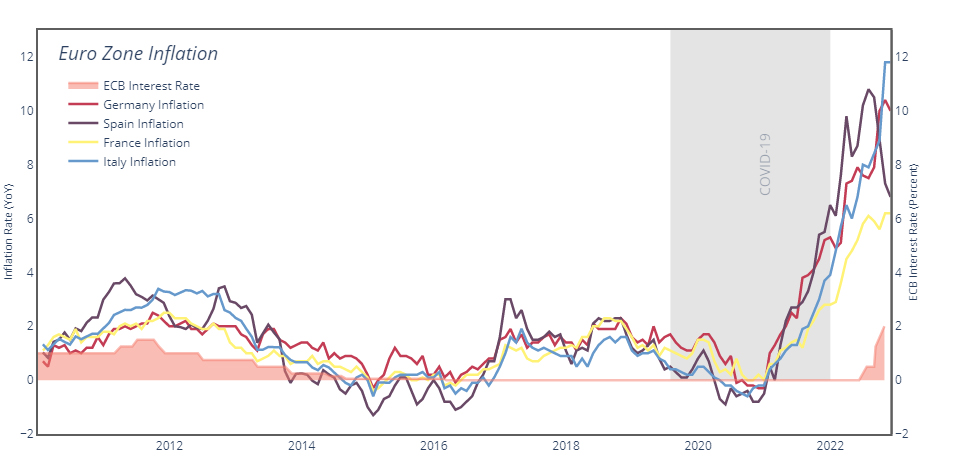
ECB officials must have greeted the latest inflation numbers with a sigh of relief. Overall, euro zone inflation slowed for the first time in one-and-a-half years, dropping to 10% year-on-year in November, which is below both the 10.4% median estimate and the 10.6% rate from the previous month.
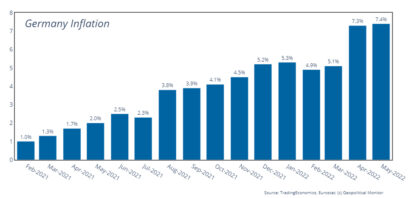
But on the member-state level, the November results are a mixed bag. The Baltics all hovered over 20% in November, recording minor decreases from the month before. Major economies like Germany and Italy both saw their double-digit rates modestly decrease, from 11.6 to 11.3% and 12.6 to 12.5% respectively. French inflation remained stuck at 7.1%, and Spain and the Netherlands recorded significant dips of 7.3 to 6.6% and 16.8 to 11.2% respectively.
Broadly, the November numbers are trending in the right direction, but caveats abound within the breakdown of sectoral inflationary/deflationary forces and the relatively slow decline in the price levels of certain states, particularly in economic motors like Germany and Italy.
A sector-by-sector, macro-level breakdown reveals that most deflationary gains came from lower energy prices; energy was down 1.9% month-on-month across the euro zone, representing by far the largest price movement in either direction. The dynamic is most obvious in the Netherlands, which recorded some of the biggest drops in CPI, but also saw November energy costs falling to 41.6% year-on-year, down from a eye-watering 99.7% in October. Elsewhere in the non-energy CPI, the outlook was markedly less rosy; for example, the annual inflation rate for food remained at 13.6% year-on-year, up from 13.1% in October.
Thus, though it’s true that energy prices are foundational in consumer budgets and as such are a key consideration, the impact of energy price fluctuations may be distorting the trend line with regard to euro zone inflation, with a risk of creating a false sense of complacency at the European Central Bank (ECB). It’s also worth bearing in mind that energy prices are unlikely to keep moving in their current direction. On the contrary, amid the roiling geopolitical upheavals in Eastern Europe, volatility in energy markets is expected to be the norm for several years.