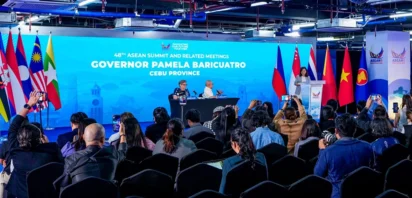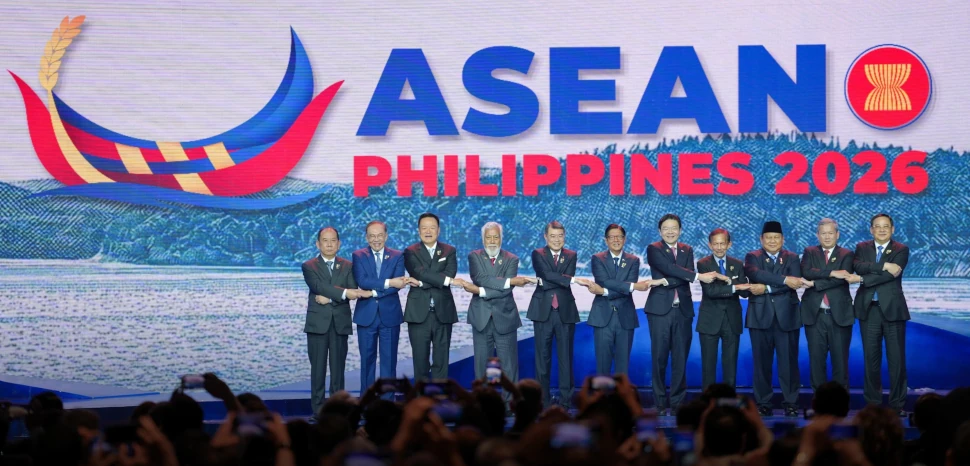
The lights did not go out in Cebu during the 48th ASEAN Summit. Yet across Southeast Asia, the fear of darkness hung over every communiqué, every guarded diplomatic phrase, every carefully staged family photograph of leaders clasping hands beneath the ASEAN emblem. The emergency was not theoretical. It was already visible in fuel queues in Manila, rationing measures in Cambodia, rolling blackouts in Vietnam, and swelling subsidy bills in Kuala Lumpur.
The Iran war and disruption around the Strait of Hormuz — through which roughly 20–30 per cent of global seaborne oil normally passes — shattered a dangerous illusion that Southeast Asia could indefinitely outsource its energy security while preserving strategic autonomy.
Cebu may ultimately be remembered not for what ASEAN achieved, but for what it finally admitted: the region’s celebrated centrality rests on alarmingly fragile foundations.
A Region Built on Growth, Exposed by Dependency
For decades, ASEAN built its diplomatic identity around neutrality, consensus, and economic openness. That formula delivered extraordinary growth. ASEAN’s combined economy now exceeds US$3.8 trillion, with nearly 700 million people tied into one of the world’s most dynamic manufacturing and trading hubs. But prosperity concealed a structural vulnerability. Around 56 per cent of ASEAN’s imported oil still comes from the Middle East. Most member states hold nowhere near the strategic reserves maintained by advanced economies under International Energy Agency standards. In many capitals, stockpiles barely cover weeks rather than months.
The result is a geopolitical paradox increasingly impossible to ignore: ASEAN aspires to strategic centrality while remaining strategically dependent.
The Cebu summit exposed how quickly that contradiction can become existential. The region’s growth forecast has already been cut by the Asian Development Bank amid spiralling energy costs, while food inflation is accelerating as fertiliser and transport prices surge. Malaysia’s fuel subsidies alone could reportedly jump from RM700 million to RM4 billion monthly. In the Philippines, emergency energy measures are already underway. Across the region, governments are rediscovering a lesson Europe learned painfully after Russia invaded Ukraine — energy dependence is never merely economic. It becomes political leverage, social instability, and strategic vulnerability all at once.
What made Cebu remarkable was not the panic, but the subtle shift in ASEAN’s political psychology.
For the first time in years, leaders openly discussed ideas once considered politically impossible: a shared regional petroleum reserve, coordinated fuel-sharing mechanisms, joint food and fertiliser stockpiles, and even a regional oil storage hub potentially hosted by Indonesia. Singapore’s Prime Minister Lawrence Wong urged urgent ratification of the long-dormant ASEAN Petroleum Security Agreement (APSA), first conceived in the 1980s but never operationalised. Indonesian President Prabowo Subianto framed the crisis in moral rather than technocratic terms, warning ASEAN could not allow its people to ‘suffer in the dark’.
That rhetorical shift matters. ASEAN has often approached security through the language of process — dialogue platforms, confidence-building measures, endless declarations of intent. Cebu hinted at something more visceral: the recognition that energy insecurity can destabilise governments, fracture social cohesion, and undermine ASEAN’s credibility far faster than territorial disputes ever could.
The Collective-Action Trap ASEAN Can No Longer Ignore
Yet beneath the summit’s solidarity lies a harsher reality. ASEAN’s collective-action problem remains unresolved. Every member state understands the benefits of regional cooperation. Few trust neighbours enough to surrender meaningful control over reserves, pricing, or emergency supply decisions. Thailand guards its national reserves. Vietnam pursues bilateral LNG arrangements. Cambodia leans heavily towards Chinese-backed energy arrangements. Indonesia wants leadership but also seeks to secure its own domestic needs first. The old ASEAN dilemma persists — everyone supports cooperation until the bill arrives.
This is not simply bureaucratic inertia. It is structural. ASEAN was designed to avoid coercion between sovereign states, not to compel sacrifice for collective resilience. The ‘ASEAN Way’ excels at preventing open conflict. It struggles when confronting problems requiring hard enforcement, financial redistribution, or rapid centralised coordination.
That limitation now collides with a far more dangerous global environment. The energy shock arrives amid intensifying US-China rivalry, fractured supply chains, maritime insecurity, and the accelerating weaponisation of economic interdependence. China continues expanding its strategic petroleum reserves while deepening energy diplomacy across Southeast Asia. Gulf states are pursuing deeper influence through infrastructure and energy financing. Japan, South Korea, Australia, and India are recalibrating their own resilience strategies. ASEAN sits at the centre of these overlapping pressures while lacking a coherent regional energy shield of its own.
This raises a profound strategic question: can ASEAN remain genuinely non-aligned without building collective resilience?
Strategic neutrality without energy security increasingly resembles strategic theatre. The answer emerging from Cebu may lie not in grand ASEAN-wide consensus, but in flexible minilateralism. Smaller coalitions of capable states — Indonesia, Singapore, Malaysia, Vietnam, and the Philippines — could begin constructing practical resilience mechanisms without waiting for unanimity. Shared petroleum storage facilities in Sumatra. Joint maritime energy-security patrols through the Malacca and Singapore Straits. Integrated emergency fuel-sharing contracts are enforced commercially rather than politically. Regional fertiliser reserves tied to food-security protocols.
These are not glamorous initiatives. They lack the symbolism of summit diplomacy. But they reflect the uncomfortable truth that resilience in the Indo-Pacific will increasingly depend less on ideology and more on logistics. Other regions offer sobering lessons. Europe discovered during the Ukraine war that markets alone cannot guarantee energy security. China spent decades quietly building enormous strategic reserves while others celebrated globalisation. India aggressively diversified suppliers long before the current crisis.
ASEAN, by contrast, often assumed that economic interdependence itself would reduce geopolitical risk. Cebu demonstrated the opposite. Interdependence without safeguards amplifies vulnerability.
The greater danger is not only economic disruption. It is political fragmentation. Energy shocks historically feed nationalism, protectionism, and domestic unrest. Southeast Asia remains acutely exposed because food and fuel costs consume a far larger share of household income than in advanced economies. In parts of ASEAN, consumers spend 30–40 per cent of their income on food alone. A prolonged supply crisis could trigger cascading political consequences — subsidy crises, inflation spirals, weakened governments, and intensified external influence operations by major powers eager to exploit divisions.
This is why Cebu matters beyond Southeast Asia. ASEAN’s energy crisis is becoming a test case for middle-power survival in an era where globalisation no longer guarantees stability. The challenge confronting the region mirrors dilemmas emerging across the Global South: how to preserve sovereignty amid intensifying geopolitical competition while remaining deeply dependent on external energy, food, technology, and financial systems.
A Crisis That Could Redefine ASEAN’s Future
There remains a narrow opportunity within this crisis. ASEAN could still transform vulnerability into leverage by building the world’s first genuinely cooperative regional resilience architecture for the developing world — linking energy reserves, food security, maritime coordination, and renewable transition strategies under one strategic framework. The region possesses enormous advantages: critical sea lanes, growing industrial capacity, renewable-energy potential, and diplomatic relevance to every major power.
But time is rapidly narrowing. Every month of hesitation deepens exposure. Cebu revealed an ASEAN standing at a strategic crossroads. One path preserves the comforting rituals of consensus while member states quietly retreat into national survival strategies. The other demands a difficult political evolution — accepting that sovereignty in the twenty-first century may depend not on guarding every national resource, but on learning how to share vulnerability before crisis turns neighbours into competitors.
History rarely announces when an era ends. It usually arrives disguised as a supply shock, a shipping disruption, or a summit communiqué written in cautious diplomatic prose. In Cebu, ASEAN caught a glimpse of the post-globalisation world approaching its shores.
The views and opinions expressed in this article are those of the author alone and do not represent those of Geopoliticalmonitor.com