With reciprocal intention and a common aspiration to forge a framework that could maximize the benefits of bilateral collaboration in the maritime domain, Cambodia and Thailand formally signed a Memorandum of Understanding (MOU) entitled “the Area of their Overlapping Claims of the Continental Shelf” on 18 June 2001.
The signing ceremony took place in Phnom Penh between H.E. Surakiart Suthirathat, Minister of Foreign Affairs representing the Kingdom of Thailand, and H.E. Sok An, Senior Minister and Chairman of the National Petroleum Authority of Cambodia, representing the Kingdom of Cambodia. The 2001 MOU, also known as MOU 44, was regarded as one of the most celebrated trust-building efforts, together with the notable 2000 MOU on the Survey and Demarcation of Land Boundary signed earlier on 14 June 2000, to promote a renewed partnership between the two governments at that time. These two MOUs have been hallmarks of friendship and effective tools for managing land and sea boundaries peacefully, avoiding unilateral actions in disputed areas.
It is important to note that the 2001 MOU was the culmination of a shared desire to establish a formal framework for negotiating overlapping maritime claims, with primary goals of jointly developing potential oil and gas resources. This would foster shared economic development and energy security for both nations while avoiding conflict over a 26,000-square-kilometer resource-rich contested area.
More strikingly, the MOU symbolized genuine political will by both countries to move forward steadily toward comprehensive negotiations that linked maritime boundary delimitation with joint development to share resources in the hydrocarbon-rich Overlapping Claims Area (OCA), in accordance with international maritime law.
However, recently, the Thai government has been actively pushing to cancel the 2001 MOU with Cambodia. This ill-considered action casts a dark shadow that could unravel decades of diplomacy, deepen mistrust between the two neighbors, and undermine Southeast Asia as a zone of peace and regional unity.
While Thailand increasingly seeks ways to withdraw from the MOU, Cambodia has expressed deeper concern beyond the legal dispute, pointing to a breach of mutual trust that could further aggravate existing border tensions between the two countries.
If and when it becomes official, the proposed cancellation of the 2001 MOU will set the stage for a significant shift in Cambodia–Thailand relations and create unwarranted long-term ramifications for the diplomatic, legal, and economic ties between the two countries.
Diplomatic Impacts
When the idea of terminating the MOUs became part of a campaign strategy, Prime Minister Anutin Charnvirakul called for a public referendum in September last year on whether to revoke the 2000 and 2001 MOUs with Cambodia.
In Thailand, the move is seen as a politically motivated strategy to exploit nationalism for political gain, stirring conservative politicians and military hardliners to push for the removal of the pacts, believing that these agreements have failed to safeguard Thai sovereignty.
In Cambodia, while unilaterally withdrawing from the agreements may fall within Thailand’s prerogative, such a move would severely undermine trust and friendship, complicate ongoing efforts toward peaceful resolution, and damage ASEAN unity. If dismantled, a vacuum would be created, encouraging more assertive postures.
Citing that the goodwill underpinning the MOUs has faded due to a lack of progress since their inception, Prime Minister Anutin has shown little regard for the traditional administrative approach of previous Thai governments, which painstakingly used diplomacy to nurture good relations with Cambodia. By invoking public sentiment as a nationalist force to scrap these well-intentioned agreements, the current Thai leadership risks dismantling the only bilateral frameworks addressing key security and economic issues between the two countries.
If the cancellation of the 2001 MOU is officially approved by the Thai Cabinet, several undesirable diplomatic consequences may follow:
- The loss of formal and informal bilateral mechanisms that enable both nations to manage maritime cooperation, particularly regarding the OCA, which would damage bilateral relations.
- Increased strain in relations would violate the spirit of cooperation, erode mutual trust, and hinder diplomatic efforts, potentially exacerbating border disputes.
- The risk of maritime confrontations between naval forces or fishing vessels could rise, potentially sparking conflict in the resource-rich 26,000-square-kilometer area.
- Once revoked, rebuilding trust would be extremely difficult, and Thailand may struggle to reestablish a similar framework for joint development of hydrocarbon resources beneath the seabed.
- It could encourage a more rigid nationalist and militaristic mindset that prioritizes security over diplomacy, destabilizing peaceful coexistence and regional stability.
- Experts warn that without the MOU, unresolved maritime disputes could escalate into politically sensitive flashpoints in the Gulf of Thailand, increasing the likelihood of naval confrontations and limiting opportunities for technical diplomatic engagement.
- The removal of both the 2000 and 2001 MOUs would nullify decades of diplomatic efforts and could push Cambodia to seek resolution through international legal mechanisms.
Legal Impacts
The Thai Senate and government have intensified efforts to void the 2001 MOU since late last year. The main reasons cited include minimal negotiation progress, allegations that Cambodia has not honored agreements, sovereignty concerns regarding maritime boundaries and Koh Kut island, and dissatisfaction with the use of a 1:200,000 scale map considered unfavorable to Thailand.
After conducting more than 20 meetings and field visits to seven border provinces, the Senate committee decided to recommend withdrawal from the MOUs. In March 2026, the Senate’s special committee unanimously urged the Thai government to cancel both agreements.
Prime Minister Anutin announced that the National Security Council had approved the revocation of MOU 44. While uncertain about the timeline for Cabinet approval, he emphasized that the government would act swiftly and indicated that Thailand would instead rely on mechanisms under the United Nations Convention on the Law of the Sea (UNCLOS). He also stated that the MOU could be revoked immediately without consulting Cambodia.
Scholars have warned of serious legal consequences. In Mid-October last year, one Thai scholar reacted that “The legal consequence would be serious,” and “Cambodia could take the matter to the International Court of Justice, inflicting long-term damage on Thailand’s diplomatic reputation. Revoking these MOUs would also dismantle the Joint Boundary Commission — the key bilateral mechanism for negotiation — and risk reigniting armed conflict over un-demarcated territory and maritime zones.”
Likewise, a Cambodia scholar questioned “Why now?” “This appears less about policy and more about politics. By stoking nationalist sentiment, Anutin’s government may be seeking to bolster domestic legitimacy at a time when other challenges at home demand attention.” He also added that “If Thailand unilaterally revokes these MOUs, it risks undermining its international credibility and creating new legal ambiguities in the demarcation process”.
Recently, another Cambodian lawyer reacted succinctly that “For twenty-five years, the Thai-Cambodian relationship was governed by the principle of pacta sunt servanda (agreements must be kept). Today, that principle has been replaced by a calculated policy of legal irredentism.”
Going forward with the cancelation of the MOU 2001, the legal ramifications that could impact the future of Thailand are as follows:
By attempting to shift the legal framework, Thailand intends to swing from the bilateral agreement toward to the United Nations Convention on the Law of the Sea (UNCLOS). While this preference is acceptable according to the international standard, this transitional legalistic approach cannot offer the same flexibility and inclusivity for the joint development model that the 2001 MOU was designed for, which linked boundary negotiations with shared economic benefits.
An old hand Cambodian legal expert stated that a unilateral withdrawal of the MOU would raise serious legal concerns and could be seen as a violation of international norms. While Cambodia could seek recourse at the International Court of Justice, enforcement would depend on international backing.
Analysts from both countries warn that cancelling the MOU could create legal uncertainty on how best to manage their contested water at sea. Vanishing the MOU 2001 creates a legal vacuum as there is no longer a specific bilateral agreement governing negotiations, should disputes over their territorial water arise.
There are debates among scholars and legal experts arguing that Thailand cannot legally terminate a bilateral MOU unilaterally without Cambodia’s consent under international law, and doing so might create negative repercussions for Thailand’s credibility.
Cancelling the MOU 2001 without the endorsement from Cambodia, Phnom Penh may be compelled to seek arbitration or take the dispute to international bodies, such as the International Court of Justice (ICJ), a move that could give Thailand bigger headache and setting apart the 75 years of good bilateral relations between the two kingdoms.
Economic Impacts
There exists substantial overlapping claimed areas between Cambodia and Thailand. Cambodia established its primary continental shelf claims via presidential decrees issued in 1972. The 1972 claims utilized an interpretation of the 1907 Franco-Siamese Treaty, drawing a line that included waters directly around the southern half of Koh Kut island in Thailand. Thailand on the other hand established the Continental Shelf of the Kingdom of Thailand in the Gulf of Thailand on 18 May 1973 through the enactment of the Royal Proclamation.
The Overlapping Claims Area (OCA) in the Gulf of Thailand is widely believed to contain significant hydrocarbon reserves, including natural gas and crude oil valued at approximately $300 billion. However, due to limited political will and slow negotiations, these resources remain untapped.
Without the 2001 MOU, these resources are likely to remain undeveloped. Thailand’s withdrawal would make joint exploration and development significantly more difficult. Critics argue that abandoning the agreement could lead to lost economic opportunities and increased regional tension.
The economic losses may include:
- Inability to develop energy resources estimated at 11 trillion cubic feet of natural gas and hundreds of millions of barrels of oil.
- Reduced energy security for both nations.
- Missed opportunities to develop petrochemical industries and refineries.
- Limited economic cooperation beyond the energy sector.
- Loss of equitable revenue-sharing arrangements under joint development frameworks.
Scraping MOU 2001 is legally unsound for the prospect of sharing the bounty amicably deriving from the economic benefit of the prospect of the joint exploitation of the hydrocarbon resources.
The cancellation would also eliminate the proposed 50–50 profit-sharing arrangement for the disputed maritime area.
Conclusion
The cancellation of the 2001 MOU risks causing a serious breakdown in Cambodia–Thailand relations that will be difficult to repair. The erosion of mutual trust undermines earlier efforts to transform the OCA from a zone of dispute into an area of cooperative resource development.
While the withdrawal may serve short-term political objectives for the current Thai government, it does not align with the long-term national interests of either country. The resulting diplomatic, legal, and economic consequences could take years to resolve.
What makes matter worst, the decision to cancel of MOU 2001 amidst heightened nationalistic sentiments following the land border clashes in July and December of last year prompted the Ministry of Foreign Affairs and International Cooperation of Cambodia to express disappointment twice through foreign ministry statements issued on April 8 and April 24, 2026.
The analysis provided serves a sober perspective of attendant risks and general climate in both Bangkok and Phnom Penh. While bilateral relations have fallen off a cliff over the previous year, there are efforts to mend relations. The People’s Republic of China has played a soft but integral role in bridging the divide. Most recently with shuttle diplomacy and Foreign Minister Wang Yi’s visit to Bangkok and Phnom Penh. FM Yi had shuttle messages and provided the needed reassurances to jumpstart diplomacy at the official level.
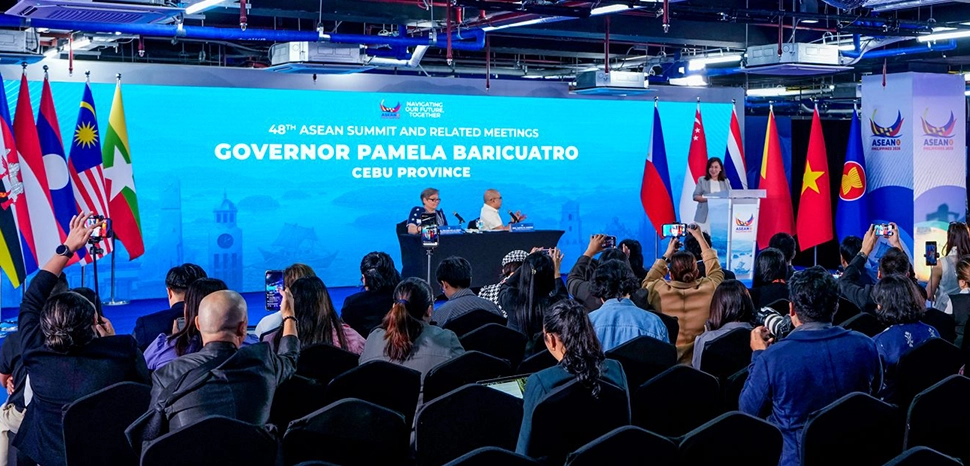
In the coming days, the ASEAN Summit will convene in Cebu. Importantly, the Philippines as ASEAN Chair will act as a facilitator for a tripartite meeting on the sidelines of the ASEAN Ministerial Meeting of Foreign Ministers. It has been confirmed that Foreign Ministers Prak Sokhonn and Sihasak Puangketkaew will meet under the auspices of Philippine Foreign Minister Ma. Theresa Lazaro’s good offices.
The tripartite meeting is a promising opportunity for face-to-face communication for the first time after recent elections in Thailand. More importantly, it provides the opportunity for signaling and a symbolic thawing of relations. It appears that both Bangkok and Phnom Penh are ready to climb down from the conflict of the previous year, and hopefully the coming AMM will provide the much-needed space to begin building back trust.
Pou Sothirak, Distinguished Senior Advisor of the Cambodian Center for Regional Studies
William J. Jones, PhD is an Assistant Professor of International Relations at Mahidol University International College
The views and opinions expressed in this article are those of the author alone and do not represent those of Geopoliticalmonitor.com