Last month marked 50 years since the fall of Saigon—a symbolic milestone for a country that has since emerged as a key player in global trade. Vietnam’s shift from postwar isolation to an open, export-oriented economy has been widely regarded as a model of market-driven reform. But its rapid ascent has not shielded it from policy-driven headwinds. US tariffs, initially aimed at China, have underscored Vietnam’s exposure to external trade pressures and highlighted the need for deeper structural adjustments—from currency transparency to compliance with international labor standards—to sustain its position in an increasingly fragmented global economy.
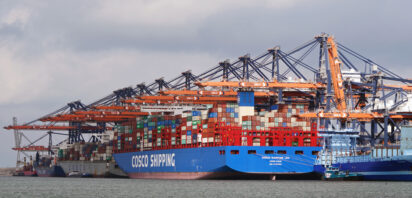
The US imposition of steep tariffs of 46% on Vietnamese goods, including agricultural exports and layered with existing antidumping duties, has drawn criticism from analysts and trade officials who call the move unprecedented and discriminatory. The measures, which disproportionately affect Vietnam compared to traditional US rivals, are putting strain on a key bilateral trade relationship.
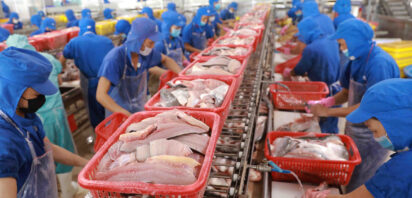
US tariffs and increased scrutiny have targeted major exports like catfish and shrimp, long popular in the US market. For many farmers in the Mekong Delta, the impact has been severe, with tariffs cutting into profits and prompting some to scale back production or withdraw from export markets altogether.
In response, Vietnam is offering financial support to help farmers transition to less vulnerable crops, while also investing in certification and traceability systems to meet tougher US and EU standards and reduce non-tariff trade barriers.
Manufacturing’s Double-Edged Boom
Once seen as a key beneficiary of the US-China trade war, Vietnam attracted major manufacturers like Apple, Samsung, and Nike as part of Washington’s push to reduce reliance on China. But now, the very companies that shifted operations under the US friend-shoring strategy risk being penalized by new tariffs—raising questions about the policy’s long-term coherence.
Washington raised concerns that some Chinese goods were being transshipped through Vietnam to evade US tariffs—a practice Hanoi has tried to curb with tighter customs enforcement and new digital tracking systems. The Ministry of Industry and Trade recently issued decrees requiring proof of origin, while ramping up inspections at key ports and manufacturing hubs.
Tensions peaked in 2020 when the US Treasury labeled Vietnam a currency manipulator, accusing it of undervaluing the dong to gain a trade advantage. Though the designation was later lifted, the move pushed Vietnam to adopt more transparent, market-based currency policies and improve financial reporting.
At the same time, Hanoi has pushed labor reforms under pressure from both Washington and Brussels. Vietnam has ratified key International Labour Organization (ILO) conventions and amended its labor code to allow greater freedom of association. These reforms are key not only to US trade talks but also to maintaining access to agreements like the EU-Vietnam Free Trade Agreement and the Comprehensive and Progressive Agreement for Trans-Pacific Partnership (CPTPP).
Concessions Behind Closed Doors
To ease tensions, Vietnam has quietly pledged to shrink its $120 billion trade surplus with the U.S. by boosting imports of US goods such as agriculture, liquefied natural gas, and advanced technology.
In addition, Vietnam is cooperating more closely with the US Treasury and Federal Reserve to improve transparency in monetary policy and currency market interventions. These efforts aim to address lingering concerns that Vietnam manipulates its currency to boost exports. By collaborating on trade data and fiscal governance, Hanoi is seeking to be seen as a credible economic partner, not a manipulative outlier.
The US-Vietnam relationship has steadily evolved from post-war reconciliation to a deepening economic and strategic partnership. Since diplomatic ties were normalized in 1995, Vietnam has joined the WTO and become a magnet for foreign investment. In 2023, the two countries upgraded their ties to a Comprehensive Strategic Partnership—signaling closer alignment on economic and security interests. But the threat of steep US tariffs now risks not only damaging Vietnam’s economy, but also undermining Washington’s broader Indo-Pacific strategy.
Still, Vietnam knows the U.S. is irreplaceable as a trading partner. That’s why it is threading the needle—meeting American expectations on trade and labor without appearing too dependent. Ongoing talks under the US-Vietnam Trade and Investment Framework Agreement (TIFA) suggest the groundwork is being laid for a deeper trade relationship—possibly even a future free trade agreement.
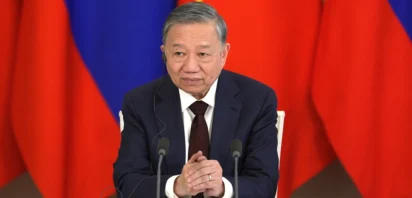
In a renewed push to ease trade tensions, Vietnam and the U.S. have held a second round of talks in Washington, focused on narrowing Vietnam’s trade surplus. Led by Trade Minister Nguyễn Hồng Diên, the discussions addressed concerns over re-exported Chinese goods and explored ways to boost Vietnamese imports of US energy, agricultural products, and high-tech equipment.
Prime Minister Phạm Minh Chính has called the trade talks essential to meeting Vietnam’s 8% growth goal for 2025, urging officials to balance national interests with deeper US engagement. Key aims include reducing tariffs, settling intellectual property issues, and securing US recognition of Vietnam as a market economy.
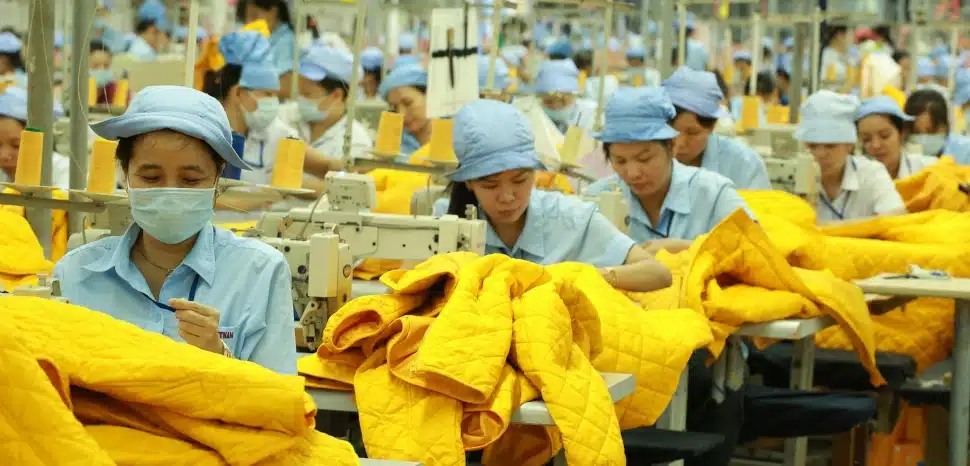
For the United States, however, escalating tariffs on Vietnamese goods carry economic risks. Many US companies depend on Vietnam for affordable manufacturing in sectors like electronics, textiles, and furniture. Higher duties could disrupt supply chains and drive up prices for consumers. Meanwhile, American exporters risk losing access to one of Southeast Asia’s fastest-growing markets if tensions continue to mount.
From Conflict to Cooperation—With Caveats
Vietnam’s rise from postwar isolation to a regional economic force is a remarkable success story. But mounting US tariffs highlight how even rapid growth offers little protection from shifting global trade tensions. There is a risk that excessive trade pressure could push Hanoi closer to Beijing—undermining US foreign policy goals and complicating efforts to diversify global supply chains away from China.
The tariffs may not have been aimed at Vietnam, but the lessons they’ve triggered are profound: diversify markets, reform trade practices, and invest in diplomacy. If Vietnam succeeds, it won’t just survive the turbulence—it will solidify its place as a key player in a new global economic order.
The views expressed in this article belong to the authors alone and do not necessarily reflect those of Geopoliticalmonitor.com.