Ibn Khaldun wrote that a political community begins to dissolve not when it is defeated from outside, but when its strongest member decides the common bond costs more than it returns. He called this the decay of asabiyya — the group solidarity that holds collective power together. He was writing about dynasties in fourteenth-century North Africa. He could not have imagined OPEC. But he would have recognized Monday’s announcement immediately. And he would have noted, with characteristic precision, that the decay had been visible for at least fifteen years to anyone willing to read it.
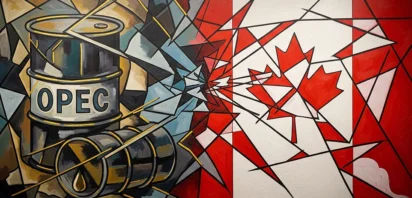
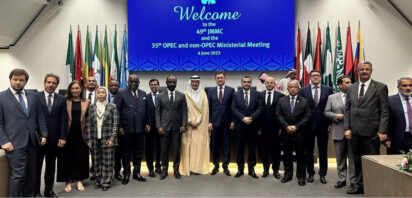
On April 28, 2026, the UAE became the first Gulf state to formally withdraw from OPEC and OPEC+, effective May 1st. The announcement carried the bureaucratic calm of a resignation letter written long before it was delivered. But it was the answer to a single journalist’s question — did Abu Dhabi consult Riyadh before deciding? — that contained the real news. Energy Minister Suhail Al-Mazrouei paused, then confirmed the UAE had not consulted any other country. Including Saudi Arabia.
Three words of omission. An entire architecture, quietly named.
What broke on Monday was not built suddenly, and it did not break suddenly. To call this a rupture is to mistake the moment of declaration for the moment of decision. UAE’s decision was made incrementally, across fifteen years, in theaters far from any OPEC meeting room.
The sequence is worth stating plainly, because its logic is cumulative. In 2011, the UAE intervened in Libya — not within a Gulf consensus framework, but ahead of one, setting facts before positions were coordinated. In 2013, Abu Dhabi backed the Egyptian military’s removal of an elected government before Riyadh had processed the regional implications of doing so openly. In Yemen, the UAE pursued its own military objectives — cultivating southern separatists, consolidating control over Aden and Socotra — that diverged structurally from the Saudi-defined war aims it nominally shared. Across the Red Sea, it established port footholds in Eritrea, Somaliland, and Djibouti, constructing a maritime presence that answers to Abu Dhabi’s strategic geometry, not to any Gulf collective. In Sudan, its fingerprints on the Rapid Support Forces predate the current crisis by years.
Each of these moves was conducted from inside Gulf frameworks — summits attended, communiqués signed, partnerships maintained. The UAE was not defecting from the GCC. It was running a parallel foreign policy with such consistency that what began as deviation eventually hardened into doctrine. Monday’s OPEC announcement is not where that doctrine was born. It is where it finally reached the one file — oil — where silence was no longer possible.
The paradox that every analyst has noted — and none has fully resolved — is this: the UAE announced its production independence in the same week that the Strait of Hormuz remains closed, choking off the very exports that independence is meant to maximize. Before the Iran war disrupted traffic, the UAE was producing 3.4 million barrels per day. That figure collapsed to 1.9 million under Hormuz constraints. Its actual installed capacity sits near 4.85 million, with a declared target of 5 million by 2027. The math of the OPEC exit is clear: Abu Dhabi was operating at less than forty percent of capacity under the double weight of quota discipline and maritime blockade. Removing the quota removes one constraint. The other waits on events Abu Dhabi cannot control.
This is where most analysts stop. It is not where the analysis should.
The Hormuz paradox is not a contradiction in Abu Dhabi’s strategy — it is its clearest expression. The UAE is not making a decision for today’s market. It is positioning for the post-crisis architecture, for the moment the strait reopens and the regional order must be renegotiated. At that table, Abu Dhabi intends to arrive as a sovereign producer with established legal independence from collective discipline — not as a member-state requesting quota adjustments. The withdrawal is a staking of position for a negotiation that has not yet begun. Ibn Khaldun would call this reading the cycle ahead of the cycle.
The View from Riyadh
Riyadh, for its part, is not a passive reader of these cycles. The Saudi state has governed within Gulf frameworks long enough to understand that the frameworks have always been instruments rather than ends — useful when they concentrate leverage, constraining when they distribute it too broadly. The question is not whether Saudi Arabia grasps what Abu Dhabi has done. The question is what it calculates about timing.
The convening of a Gulf summit in Jeddah this week — scheduled around the Iran strikes but now receiving the OPEC announcement in its agenda — is not incidental. It is the first formal multilateral space in which Riyadh can respond without responding bilaterally. Saudi Arabia’s historical pattern in moments of Gulf stress has been to use precisely these frameworks to reassert the terms of solidarity: not by punishing the defector openly, but by making the costs of operating outside the architecture visible to everyone else. The smaller Gulf states — Kuwait, Bahrain, Qatar — are watching Jeddah not to see how the UAE is treated, but to calibrate whether the roof they have sheltered under is still load-bearing.
This is where Saudi strategic depth becomes relevant in ways that raw production numbers do not capture. The Kingdom retains the world’s largest spare capacity, the deepest bilateral relationships with the Asian buyers that will determine post-Hormuz market share, and the institutional memory of having outlasted every previous challenge to its oil centrality — from the 1980s quota wars to the 2020 price collapse. These are not consolations. They are instruments whose deployment has not yet been chosen.
The scenario that current commentary has largely missed is the one in which Saudi Arabia’s response to Monday’s announcement is neither punitive nor accommodating, but architectural: a restructuring of the remaining OPEC+ framework around tighter commitments and clearer enforcement, combined with bilateral energy agreements that offer the smaller Gulf states something the UAE’s independent path cannot — the security of Riyadh’s market stabilization function, available only to those inside the tent. Whether this succeeds depends on whether Abu Dhabi’s exit makes membership more or less attractive to those who remain.
Ripples in the Gulf
There is a register in which this story is not about oil at all.
The normative architecture of the Gulf — the unwritten rules about consultation, about announcing decisions within frameworks rather than from outside them, about treating Saudi centrality as a condition rather than a preference — has been eroding since 2011. What the UAE has done is apply that erosion, for the first time, to the domain where it could not be absorbed quietly. The OPEC exit did not create the crack. It made the crack the headline.
Other states in the Gulf are watching. Not because they intend to follow immediately, but because the consequences for Abu Dhabi over the next eighteen months will determine whether the unwritten constitution has enforcement mechanisms or merely habits. If the UAE exits OPEC, expands production when Hormuz reopens, outperforms in Asian markets, and faces no structural cost — then the lesson is written in market data, not diplomatic cables. If, on the other hand, the post-crisis renegotiation finds Abu Dhabi needing what only the Gulf architecture provides — security frameworks, diplomatic weight, crisis coordination — then the withdrawal may prove to have been a declaration made at precisely the wrong moment in the cycle.
Ibn Khaldun’s account of asabiyya contained one further observation that is rarely quoted: the member who detaches earliest from a declining solidarity does not always escape its consequences. Sometimes it simply moves faster toward the same destination, alone.
The views and opinions expressed in this article are those of the author alone and do not represent those of Geopoliticalmonitor.com