It didn’t take long for the tide to turn in the Libyan civil war.
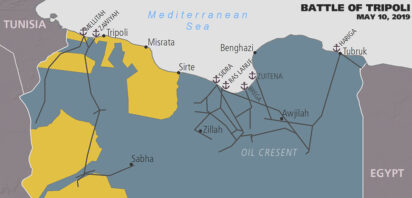
In May 2019, it appeared as though victory was imminent for General Khalifa Haftar and his Libyan National Army (LNA), whom were besieging the Libyan capital of Tripoli after taking control of large swathes of the country, including lucrative oil fields in the east. The bloody siege would drag on for months, with some surrounding villages changing hands several times. Then the scale tilted in favor of the Tripoli-based Government of National Accord (GNA) in December, when Turkey signed a variety of agreements pledging security assistance. The help materialized almost immediately, and by January 2020, the first Turkish troops were arriving in Libya.
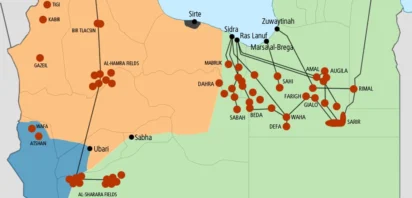
Fast-forward to the present and the once-dominant LNA has been driven from the northwest entirely, and is now holding the line in Sirte – the gateway to the ‘oil crescent’ that both sides covet. And with rumors that the Egyptian government is considering taking a more active role in the conflict, the question begs answering: Is the Libyan civil war nearing its end, or is it just getting started?
Background
Libya is in many ways a classic example of a proxy war in that most of the combatants are being funded, supplied, and/or strategically influenced by outside powers, thus perpetuating an extremely destructive conflict so far as the Libyan population is concerned. In terms of the big players, the GNA – the UN-recognized government that is based in Tripoli – is backed by Turkey, Italy, and Qatar. The LNA, which is aligned with the Tobruk-based House of Representatives (HoR), is backed by Russia, Saudi Arabia, the UAE, France, and Egypt. However, there are also numerous local militias playing a central role in the civil war, many of which are aligned to either the LNA’s or the GNA’s cause. These militias have also been courted directly by outside powers at times.
Foreign support comes in many forms, and it is motivated by various geopolitical rationales. For example, that EU partners Italy and France find themselves on opposing sides of the conflict is notable given the GNA’s status as the de jure Libyan government under international law. The spat in all likelihood boils down to oil interests, as represented by French energy giant Total and Italy’s Eni; the governments are backing two different horses, and to the winner will go oil concessions – or so the reasoning goes.