Libya has been locked in various degrees of civil war since Muammar Gaddafi was captured and killed by rebel forces in 2011.
The events leading up to Gaddafi’s death – rebellion in the east of the country and a UN-approved NATO no-fly zone turned active bombing campaign – are now viewed as a turning point in the post-Cold War international order, one where the East-West fault lines first emerged.
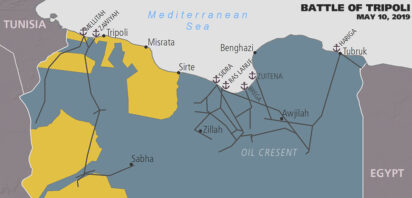
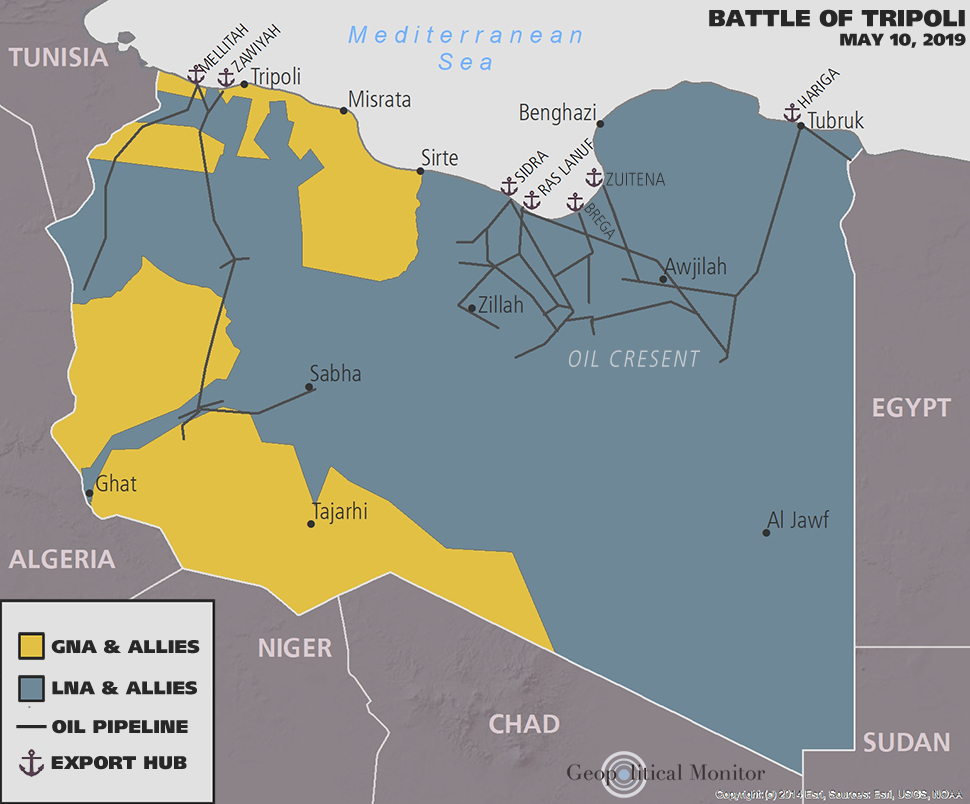
The war went from a cold to a hot conflict last month following the launch of a major new offensive on the capital by the Libyan National Army (LNA). The attack has thus far been repelled by the Tripoli-based Government of National Accord (GNA) at a cost of over 400 deaths, 2,000 wounded, and 50,000 local residents displaced.
Background
Here’s a rundown of the combatants:
General Haftar’s Libyan National Army (LNA)
The LNA is the armed wing of the House of Representatives (HoR), the legislative body that was elected in Tripoli in June 2014 on a sub-20% voter turnout. When the Supreme Court nullified the result months later, the HoR refused to recognize the decision and relocated to the east of the country, in Tobruk.
Since then, General Khalifa Haftar and the LNA have been advancing themselves as the legitimate representatives of Libya and waging a campaign to reunite the country by force. In 2014, Haftar launched “Operation Dignity” to flush Islamist militias out of Benghazi. Three years later, after brutal urban warfare that left large parts of the city in rubble, all of Benghazi was in the hands of the LNA.