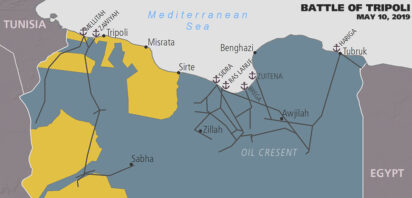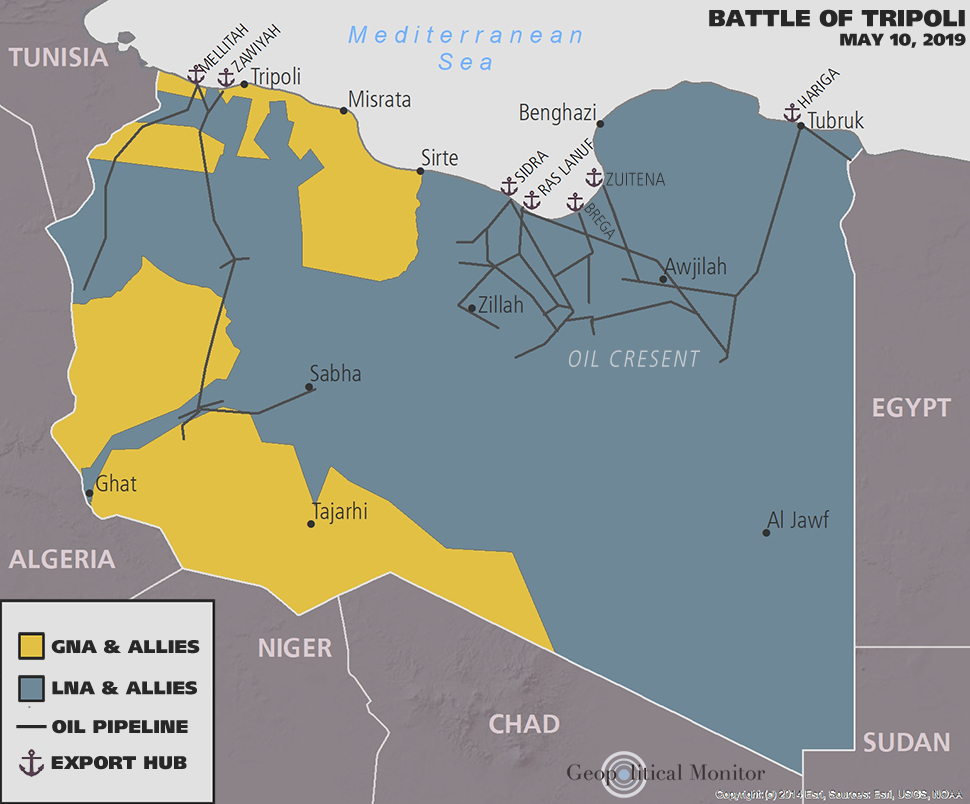
General Khalifa Haftar’s military offensive ground to a halt two weeks ago in the southern suburbs of Tripoli, where a stalemate still prevails to this day.
According to Reuters, some 510 people have been killed in the campaign and over 75,000 have been forced to leave their homes.
Efforts by outside parties to bring about a ceasefire have all failed. Most recently, French President Emmanuel Macron came away from a meeting with General Haftar empty-handed. Haftar still refuses to negotiate with any of the militias that have rallied to the defense of the Government of National Accord (GNA) in Tripoli. And for his part, the GNA’s Prime Minister Fayez al-Serraj has also ruled out a ceasefire.
According to UN envoy Ghassan Salame, the Tripoli campaign could mark the beginning of a new and bloody phase in the civil war, one that could ultimately result in the country’s permanent division in two.
Impact
Salame’s grim assessment echoes that of our backgrounder on the conflict. The two sides are relatively well-matched, making it difficult for one or the other to gain the upper hand and reunify the country by force. Consequently, military impasse and the bifurcation of Libya are the most likely medium- to long-term term scenarios. And even if Haftar eventually succeeds in seizing Tripoli, he will face a host of challenges consolidating his new rule across the deep-seated mistrust that pervades the warring militias.