The Russian rouble briefly hit a two-year low of 69.64 against the US dollar on Friday, before bouncing back to recover 0.5%. Though still far from the post-Crimea low of 82.45, recent declines reveal a vulnerability to new sanctions and the same kind of capital flight that is fueling currency routs in Turkey, India, and Argentina.
Where does the Russian economy go from here? It will be a question of politics, both in Western capitals where sanctions may soon be toughened even further following Theresa May’s recent Skripal revelations, and in Moscow where the Putin administration will be forced to choose between growth and stability.
Impact
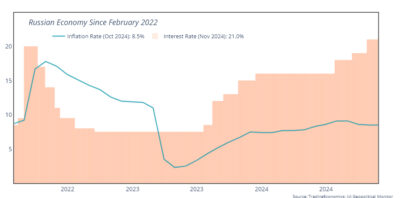
The rouble’s new decline: Turkey redux? Russian monetary policy is partially to blame for recent declines in the rouble. Amid a global capital flight from emerging markets, the Russian central bank has held interest rates fast at 7.25%, unwilling to move away from the looser policy of recent years.
There are growing calls to increase interest rates to shore up the value of the rouble, but this would come at the cost of jeopardizing Russia’s growth targets. The Russian economy has finally returned to limited growth after years of contraction. The country is now averaging about 2.2% annual growth, a considerable uptick from the dismal average of 0.7% over the past decade. The rouble’s new plunge comes right on the heels of President Putin’s successful reelection campaign, where he promised to reduce unemployment and produce an economic ‘breakthrough,’ returning Russia to the days of 4%+ GDP growth.