The timing of Moscow’s return of Nadiya Savchenko – a captured pilot whose high-profile trial in Russia transformed her into a national hero – couldn’t be more telling. It comes just two months before the EU must decide whether or not to extend its wide-ranging Russia sanctions on the country’s energy and banking sectors.
The move signals the launch of a diplomatic charm offensive from Moscow, one that will continue until the EU decides whether or not to extend its Russia sanctions in July. The period will surely see eastern Ukraine return to the international spotlight, particularly in regards to whether or not the Minsk II peace process is being properly implemented.
Countries like Italy, Greece, and Hungary have already made their decision; they will push for the sanctions to lapse, pointing to the possibility of permanent damage to the EU’s market share in Russia and Ukraine’s stabilization over the past year. An increasingly skeptical Germany will be under pressure from the United States to stay the course, and Warsaw and London are expected to push for the sanctions’ renewal.
Background
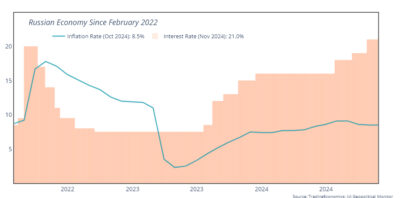
The sanctions in question forbid EU companies from operating in Russia’s financial or energy sectors. They have driven up the price of financing in Russia, and made it harder for the government to raise money (luckily Moscow started with relatively low amounts of debt, which has helped it cope with what would otherwise be an economic crisis). The sanctions have also hit the Russian energy sector hard, particularly in the field of capital development; here we will see an impact that isn’t necessarily immediate, but plays out over years to come in the form of lower output capacity and being a step behind the West in the technology driving the shale revolution.