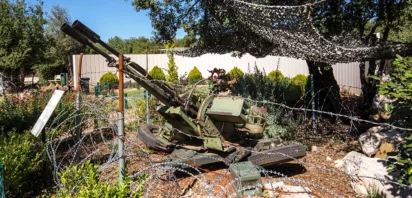
Recent conflicts in the Middle East and Eastern Europe have reinforced the importance of energy security. As supply disruptions and the targeting of critical assets increasingly define modern warfare, there is renewed focus on diversifying energy sources, expanding domestic production, and investing in more secure infrastructure
Türkiye’s Akkuyu Nuclear Power Plant reflects this shift. While the project is expected to strengthen Türkiye’s energy production capacity and stability, it simultaneously introduces new risks linked to external dependence and regional instability. Akkuyu should therefore be viewed not only as an energy project, but as one with broader implications for Türkiye’s strategic autonomy, NATO dynamics, and the regional balance of power.
Akkuyu Nuclear Plant in the Context of Energy Strategy
This year, Türkiye is anticipating the launch of the Akkuyu nuclear power plant. Located in Mersin on the Mediterranean coast, Akkuyu is Türkiye’s first nuclear power plant and represents a significant step in its energy security strategy. Türkiye has one of the fastest-growing energy demands in the world and remains heavily dependent on imported energy, with 72% of its energy consumption sourced from abroad, primarily from Russia.
This reliance has constrained it economically while making it vulnerable to supply disruptions. To address this, Ankara has pursued a strategy of diversifying energy supplies and expanding domestic production capacity. Nuclear energy offers advantages: it is less exposed to short-term market fluctuations and can operate continuously under conditions that disrupt other energy sources. Once fully operational, Akkuyu is expected to generate approximately 10% of Türkiye’s electricity needs, providing stable energy while reducing fossil fuel dependence. This will strengthen energy security and support Türkiye’s ambition to position itself as a regional energy hub.
Akkuyu also holds symbolic significance. As Türkiye’s first nuclear power plant, it represents technological advancement and national prestige, reflecting ambitions for strategic autonomy and modernization. Planned facilities in Sinop and Kırklareli indicate that Akkuyu is not a standalone initiative but part of a broader national strategy. This expansion reflects a structural effort to diversify energy production and reduce reliance on imported hydrocarbons, while embedding nuclear power within Türkiye’s energy infrastructure.
Structural Constraints to Energy Independence
Despite its potential to diversify Türkiye’s energy sector, the structure of the Akkuyu project raises concerns about whether it meaningfully enhances energy independence. The plant is being built, owned, and operated by Russia’s state nuclear corporation, Rosatom, placing it largely under Moscow’s control. Russia is also expected to supply fuel and provide technical expertise over the plant’s lifespan, creating a long-term dependent relationship that potentially grants Moscow leverage over a critical component of Türkiye’s energy infrastructure.
This arrangement introduces new strategic dependencies. While Akkuyu reduces reliance on imported fossil fuels, it creates long-term dependence on Russian fuel supply chains and expertise. Unlike other energy sources, nuclear fuel and technology are not easily substituted in the event of disruption, making this dependence particularly significant under political tension. Given Türkiye’s existing reliance on Russian energy imports, the project risks deepening interdependence and expanding Russian influence into its political and economic domains, potentially constraining Ankara’s strategic autonomy. Moscow’s demonstrated willingness to weaponize energy resources to advance its geopolitical interests further underscores these risks.
At the same time, Türkiye retains some capacity to mitigate risk through diversification, including investment in renewables and alternative suppliers. Russia’s economic interest in maintaining long-term partnerships with Türkiye may also limit its willingness to exploit nuclear energy as it has with Europe and natural gas. This is supported by the fact that bilateral cooperation in other domains has continued largely without issue even during periods of diplomatic tension. Moreover, Moscow is investing $20 billion in Akkuyu; if relations collapse, Türkiye could nationalize the asset, leaving Moscow with a massive financial and strategic loss.
Ultimately, Akkuyu does not eliminate external energy dependence but restructures Ankara’s relationship with Moscow. While this does not translate into direct or immediate coercive leverage, it creates asymmetric dependencies that may constrain Ankara’s flexibility in periods of heightened political tension.
Strategic Russian Foothold in NATO Territory
Beyond its implications for Türkiye’s energy security, the Akkuyu project carries significant consequences for NATO. Akkuyu grants Russia a long-term strategic foothold on Türkiye’s Mediterranean coast along NATO’s southeastern flank. The nuclear plant embeds Russian technological and operational presence within a NATO member state’s critical infrastructure. Given its sustained military presence in the region, the proximity of Russian-controlled infrastructure to NATO assets raises security concerns regarding intelligence risks and Moscow’s expanding reach.
The primary concern is not direct control over the plant, but the potential influence Russia could have during periods of tensions with NATO. Akkuyu depends on Russian fuel and operations, meaning Moscow could use the threat of disruption as leverage. While unlikely to result in direct coercion, it could limit Türkiye’s decision-making and increase the cost of actions that damage bilateral relations.
Akkuyu therefore risks undermining Türkiye’s position within the alliance and introduces new challenges for NATO’s cohesion and security. Türkiye remains a significant alliance member, controlling access to the Black Sea and hosting key military installations. However, its expanding ties with Russia may complicate NATO’s ability to form a unified front in collective decision-making, particularly in scenarios involving Moscow. This raises difficult questions: in a crisis scenario involving Russia, could Moscow leverage Akkuyu to exert pressure on Ankara? Would Türkiye be hesitant to fully align with NATO policy if it risked disruption to a vital energy asset?
However, this influence should not be overstated. Türkiye’s foreign policy is shaped by a wider set of strategic considerations, independent of any single project. NATO has historically managed internal differences among members, including states with substantial economic ties to Russia. Akkuyu is better understood as one factor within the wider context of Türkiye-Russia relations rather than a decisive constraint on alliance behavior. The more likely impact is that Akkuyu will shape Türkiye’s cost-benefit calculations without altering its NATO commitments.
Security Risks and Infrastructure Vulnerability
The Akkuyu nuclear power plant operates within a broader regional security environment characterized by the proliferation of asymmetric warfare capabilities and instability across the Eastern Mediterranean and Middle East. However, assessing the risk profile of the facility requires distinguishing between different threats in terms of both likelihood and feasibility.
The most immediate risk stems from the development of long-range strike and unmanned systems, which have lowered the threshold for attack. The diffusion of military technologies among state and non-state actors increases the potential vulnerability of high-value targets such as nuclear facilities. Drone incidents violating Türkiye’s airspace linked to the Ukraine war and recent ballistic missile launches from Iran underscore this risk. Yet the probability of direct kinetic strikes remains relatively low due to risks of escalation or environmental and humanitarian fallout, particularly given the potential for regional and international spillover.
More plausible risks are indirect or lower-intensity disruption, including unintended collateral damage, cyberattacks, sabotage, and attacks on supporting infrastructure. These forms of coercion are more consistent with recent conflict patterns in Ukraine and the Middle East, where critical infrastructure has increasingly been targeted as part of pressure strategies rather than as isolated military objectives.
The site’s location near critical logistical infrastructure, particularly Mersin Port, further shapes the risk environment. As one of Türkiye’s largest commercial and energy transit hubs, the port plays a central role in supplying and supporting large-scale industrial activity such as Akkuyu. This concentration of vital infrastructure increases the potential impact of disruption and enhances the area’s attractiveness as a target in escalation scenarios.
Terrorism also represents an additional threat. Dispersed Islamic State fighters and Kurdistan Workers’ Party (PKK) affiliates have demonstrated both the capability and intention to target strategic assets in Türkiye. Additionally, the prevalence of proxy warfare in the Middle East, along with weak governance in Syria and Iraq, increases the likelihood that such groups could reorganize or receive external support. However, the complexity and security that accompanies nuclear facilities significantly constrains the ability to execute high-impact attacks. As a result, these actors are more likely to focus on peripheral targets rather than the site itself.
Overall, these risks suggest that Akkuyu is less vulnerable to direct, large-scale attack than to indirect and systemic forms of disruption. Mitigating these risks will likely require expanded security measures, with implications for Türkiye’s military posture and for the wider region.
Militarization and Perception in the Eastern Mediterranean
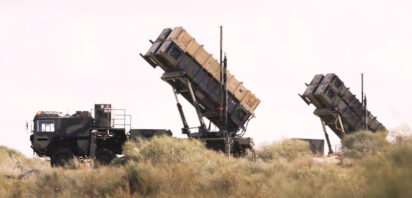
The necessity of protecting Akkuyu in the current regional security environment is likely to influence Türkiye’s defense planning. Priorities are likely to focus on protection against low- and medium-level threats, such as sabotage, drone incursions, and cyberattacks, rather than projecting force.
More broadly, Akkuyu is likely to reinforce Türkiye’s strategic engagement in the Eastern Mediterranean. The protection of long-term nuclear infrastructure requires sustained security provision and stable operating conditions, likely driving adjustments in Türkiye’s defensive posture, particularly in air defense, naval presence, intelligence and surveillance capabilities.
However, Ankara’s defensive measures may be perceived externally as assertive posturing. In the Eastern Mediterranean, existing disputes over maritime boundaries and energy exploration heighten tensions, causing even limited increases in surveillance or defense activity to be viewed through a competitive strategic lens. This dynamic is especially pronounced in relations with Greece and Cyprus, where security developments are closely tied to broader concerns over regional balance and deterrence. Emerging Greece–Cyprus–Israel security and energy cooperation further reinforces this dynamic, increasing the likelihood that even minimal defensive adjustments may be viewed as shifts in strategic positioning.
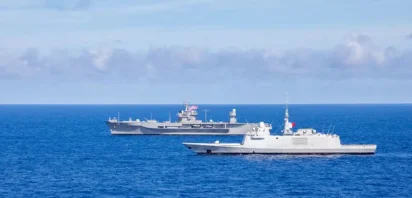
Military buildup in the Eastern Mediterranean, accelerated by the Iran War, has already driven Türkiye to expand its air and naval presence there. Further increase in Turkish defense measures linked to the protection of Akkuyu risks being interpreted as an effort to assert control in the region, potentially intensifying existing security dilemmas. While Akkuyu alone is unlikely to drive significant militarization, it will likely reinforce existing patterns of competition in the absence of a greater crisis.
Nuclearization Concerns
Türkiye’s development of nuclear technology raises concerns about proliferation. Although Akkuyu is a civilian project operating under international safeguards, it contributes to broader discussions about regional nuclear capabilities. For neighboring states, concerns center less on immediate weaponization than on latent capacity. Even civilian nuclear programs build expertise and infrastructure capacity, shortening the pathway to military capabilities. While there is no indication that Ankara seeks nuclear weapons, perceived potential can shape regional threat assessments.
This perception is increasingly visible in regional discourse. Israeli officials have described Türkiye as a “new Iran,” signaling apprehension over its expanding influence and potential future nuclear capabilities. Greek and Cypriot policymakers similarly frame Türkiye’s growing militarization and defense industry as efforts to shift the regional balance of power. Even as a civilian project, Akkuyu signals Türkiye’s rising technological and strategic capacity, influencing how neighboring states assess its role in the region.
Domestically, Türkiye’s pursuit of nuclear energy aligns with a wider narrative of strategic autonomy. Ankara’s increasingly independent foreign policy and tensions with Western allies have demonstrated weakened confidence in external security guarantees. Rising doubts over US and NATO’s reliability in upholding its security commitments to allies, along with disputes over defense procurement, have strengthened support for strategic autonomy and greater self-reliance. Alongside the growing role of the domestic defense industry, this shift suggests a potential recalibration of Türkiye’s strategic objectives, with nuclear deterrence becoming an increasingly plausible long-term consideration.
However, the Russian-controlled operational model of Akkuyu significantly limits the risks of nuclear proliferation. External control over key stages of the fuel cycle, particularly enrichment and reprocessing, limits Türkiye’s ability to independently pursue nuclear weapons development. While not impervious to future shifts, this provides a structural constraint on Türkiye’s ability to weaponize nuclear technology.
Overall, Akkuyu’s significance is primarily strategic, not technical. The project signals Türkiye’s expanding technological and geopolitical ambitions, with implications for regional power dynamics. While it does not present an immediate proliferation risk, it informs assessments of Türkiye’s evolving security posture and long-term trajectory, shaping regional perceptions and policy responses.
Strategic Outlook
Akkuyu should be understood as part of a broader global shift in which energy infrastructure is no longer solely a response to demand, but a mechanism through which long-term geopolitical relationships are embedded and sustained. Its significance lies not in immediate shifts in regional power balances, but in the gradual accumulation of dependencies that are more durable and less reversible than conventional fuel trade.
For Türkiye, the project illustrates a wider dilemma increasingly faced by mid-sized powers: efforts to enhance energy security through large-scale infrastructure often come with embedded external control over critical systems. In this sense, Akkuyu reflects a broader pattern in global energy transitions, where diversification does not necessarily reduce dependence but instead transforms its form, shifting it from market exposure to structural and technological reliance.
At the regional level, Akkuyu reinforces an emerging reality in the Eastern Mediterranean and surroundings: critical infrastructure projects are no longer neutral economic assets, but long-term strategic anchors that shape perceptions of alignment, autonomy, and vulnerability. Even without altering power balances directly, they contribute to a strategic environment defined by uncertainty and competition.