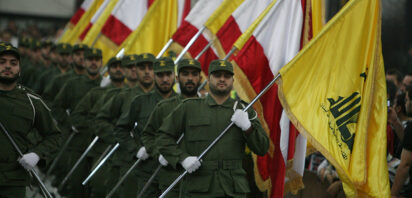
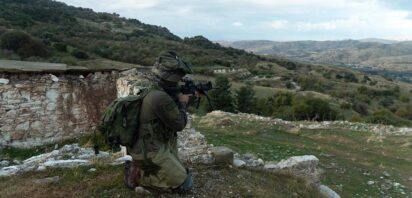
Since its emergence in the 1980s as an Iranian-sponsored militia resisting Israeli occupation, Hezbollah has grown into a hybrid force, simultaneously a Lebanese political party, a powerful militia, and a regional actor operating across multiple theaters. Lebanon’s fragile stability and the broader impacts of Hezbollah’s armed capabilities remain critical calculations in any attempt to achieve a lasting regional peace.
Recently, the debate over Hezbollah’s weapons has accelerated dramatically. Under heavy US pressure, the Lebanese government is pursuing an ambitious roadmap to disarm the group by the end of 2025. However, events over August and September, namely a US disarmament proposal, deadly explosions at military facilities, cabinet walkouts, and ongoing Israeli strikes, show how unstable this process is and reinforce why it remains unlikely that Hezbollah will willingly give up its weapons.
The Strategic Rationale to Resist Disarmament
Hezbollah’s refusal to disarm is deeply rooted in its strategic worldview. Firstly, with its deterrence ideology against Israel, Hezbollah views its armed capabilities as Lebanon’s only credible defense against Israel’s military power. The 2006 war reinforced the belief that its arsenal deters Israel and preserves national sovereignty. Secondly, being a key component of the so-called “Axis of Resistance,” Hezbollah is Iran’s premier proxy and is indispensable to Tehran’s regional deterrent strategy. Despite Israel’s success over the past year in eliminating their leadership and some of the militia’s armed capabilities, Hezbollah maintains a missile stockpile and asymmetric warfare capabilities, which serve as Iran’s forward shield against Israel and potentially US regional interests. Furthermore, Hezbollah’s arsenal translates into political dominance in Lebanon’s sectarian system, thus providing the group with domestic leverage. The 2008 seizure of Beirut in response to government measures demonstrated how arms safeguard its political red lines. For Hezbollah, weapons are existential guarantees, not negotiable assets.
Hezbollah’s Domestic Political Base
This security dilemma on the part of the Lebanese government has been a constant for decades. Successive Lebanese administrations have pledged to unify all arms under state authority. Yet the Lebanese Armed Forces (LAF), despite strong training and Western aid, lack the political cover and military capability to challenge Hezbollah directly or indirectly. Any confrontation risks sectarian fracture within the LAF itself. This problem stems from how Lebanese social structures are built upon sectarian lines. Lebanon’s confessional system structurally enables Hezbollah’s armed status. As the dominant Shia actor, Hezbollah portrays itself as the protector of its Shia community. Calls for disarmament from Christian or Sunni politicians often deepen sectarian mistrust, casting them as attempts to undermine Shia influence.
In addition, Lebanon’s economic collapse has provided Hezbollah unprecedented leverage over the past few years. Lebanon’s economic crisis since 2019 has eroded state authority but paradoxically reinforced Hezbollah’s relative weight. Through parallel welfare and salary systems, the group maintains loyalty among its followers, shielding them from the erosion of state capacity.
External Pressures
International actors, especially the United States and Western nations, have routinely called for Hezbollah’s disarmament. The most significant recent initiative came in August 2025, when US envoy Tom Barrack proposed a four-phase roadmap for Hezbollah’s full disarmament by year-end. In exchange, Lebanon would receive a reconstruction package backed by Washington, Paris, Riyadh, and Doha. Notably, the process included a withdrawal of Israeli troops from Lebanese territory.
The Barrack plan represents the most ambitious external disarmament initiative in years. Nonetheless, Hezbollah and its allies walked out of government sessions in protest, branding the move as foreign interference. Some degree of this pushback comes from Iran, which remains the
ultimate guarantor of Hezbollah’s military capacity. Tehran’s Revolutionary Guard Corps has supplied training, arms, and direction to Hezbollah for decades. A weakened or disarmed Hezbollah would represent a major strategic setback, further eroding Tehran’s position in the wake of recent US and Israeli strikes.
On a more critical note, Israel’s security concerns over Hezbollah remain one of the key drivers of how the confrontation with the Iran-backed group will play out should the latter refuse to disarm and hand over their weapons to the LAF. Israel views Hezbollah’s arsenal, estimated at over 100,000 rockets, as its most pressing conventional threat. Israel has cautiously welcomed Lebanon’s announced disarmament roadmap, with Prime Minister Netanyahu calling it a potential “opening for Israeli withdrawal.” Yet Israeli airstrikes and drone incursions into Lebanon continued throughout August and September, undercutting any momentum for disarmament.
Hezbollah Internal Debates
Hezbollah publicly presents a united stance against disarmament; however, internal debates do exist. On one hand, years of combat in Syria drained manpower and morale, causing a military strain within the group. On the other hand, the August Wadi Zibqin explosion, which killed six Lebanese soldiers while dismantling Hezbollah-linked munitions, underscored the risks and instability surrounding Hezbollah’s arsenal.
The economic burden in Lebanon has also affected both sides, where economic crisis has affected Hezbollah’s own constituency, raising questions about the sustainability of its vast military infrastructure and investments in armaments, while also impacting how the LAF can effectively supplant Hezbollah’s position. This boils down into a debate over the group’s political image, where some within Hezbollah recognize that militarization fuels Lebanon’s isolation and sanctions, though they fear that disarmament would expose their base to external threats. The result is Hezbollah’s tactical flexibility without an actual willingness to relinquish its core arsenal.
Recent Developments and Possible Pathways
Developments over the past few months illustrate the inherent volatility of Lebanon’s disarmament push:
- Introduction of the US Phased Plan (August 7). The plan envisions a decree within 15 days, phased weapons dismantlement, Israeli withdrawal, and reconstruction aid. Hezbollah-aligned ministers walked out in disagreement.
- Wadi Zibqin Explosion (August 9). A fatal blast at a Hezbollah-linked depot during army dismantlement operations killed six soldiers. It highlighted the dangers of the disarmament process.
- Cabinet Session Crisis (September 5). The Lebanese cabinet “welcomed” the LAF’s disarmament plan but gave no timeline or details. Five Shia ministers (aligned with Hezbollah and Amal) walked out. Hezbollah later called it an “opportunity to return to reason,” insisting disarmament must be contingent on Israeli withdrawal from occupied hilltops and cessation of airstrikes.
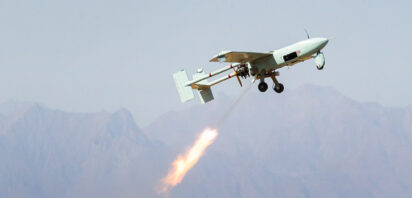
- Israeli Drone Incident (Early September). Israeli drones dropped grenades near UNIFIL peacekeepers, prompting a diplomatic protest. The incident lent support to Hezbollah’s argument that its armed capabilities remain essential for maintaining deterrence against Israel.
Taken together, these developments show how fragile and contested the disarmament process is, with each step forward being met with setbacks or political resistance. In this respect, several pathways forward exist where the most probable scenario remains a continuation of the current equilibrium: Hezbollah keeps its arsenal, the state tolerates it, and external actors push for change without meaningful enforcement. Another scenario would be a partial or symbolic disarmament gesture, such as moving heavy weapons away from the border or “possibly” integrating fighters into the LAF. Yet these moves would be cosmetic and not structural; moreover, they would not be unacceptable to Israel, the U.S., or even certain political groups in Lebanon. Accordingly, forced disarmament and possible civil conflict remains a possibility – a contingency that risks reigniting sectarian confrontations across Lebanon.
Strategic Implications
For Lebanon, the ongoing disarmament debate reinforces the image of state weakness and an inability to monopolize the legitimate use of force. The concept of Hezbollah’s deterrent role continues to shield Lebanon from unilateral Israeli actions, creating a paradox between true protection and a volatile status quo. Furthermore, the disarmament roadmap risks deepening sectarian polarization if pursued without broad consensus with different political groups in the country.
In the wider geopolitics of the Middle East, Hezbollah remains Iran’s most potent lever. This in turn makes it a persistent threat to Israel, forcing the Israelis to plan for multi-front contingencies and increasing the risk of armed escalations on multiple axes involving Syria, Iran, and/or US regional assets. For international policy, the West’s insistence on full disarmament without addressing Iran’s role with Hezbollah or Israel’s security posture increases the risk of failure. Conversely, a pragmatic focus on phased de-escalation and limiting Hezbollah’s military activity while strengthening legitimate state institutions, including the LAF capabilities, may be a more sustainable approach than maximalist disarmament goals.
Hezbollah disarmament is undoubtedly a volatile source of geopolitical risk. The US-backed disarmament plan and Lebanese cabinet deliberations reflect new momentum in this direction, but ongoing political resistance and Shiite ministerial walkouts reveal a fraught path ahead. Hezbollah will not willingly disarm so long as Israel remains a perceived threat to Lebanon, and most importantly, Iran depends on it as a forward deterrent regardless of the security of Lebanon as a nation. The most realistic near-term outcome is a continued stalemate fueled by internal crises, with only symbolic or partial measures possible. True transformation would require not just a collective Lebanese consensus but a fundamental reshaping of the regional balance between Israel, Iran, and the U.S. Until such a realignment takes place, Hezbollah’s arsenal will continue to serve as a deterrent, a source of destabilization, and a source of political complexity in Lebanon and the wider Middle East.