The geopolitical impacts of drought are cumulative. What starts as a minor crop disruption one year can build into an agricultural disaster the next should disruptive weather patterns persist. Similarly on the individual level, a small-but-manageable caloric reduction can descend into disaster as household items and capital are sold off to purchase food, effectively mortgaging the economic future of a families and whole communities.
2018 saw its fair share of extreme weather events, which disrupted agriculture and produced run-on political, economic, and humanitarian impacts around the world. 2019 is expected to be no different. In fact, some models are predicting an increased likelihood of extreme temperatures through to 2022. These conditions threaten to exacerbate active droughts and generate new ones, often in regions of the world that are already highly vulnerable to economic disruption, mass migration, and conflict.
Here are a few contexts to keep an eye on in 2019, a year that some are tipping as the hottest yet in human history.
Forecast
Afghanistan
Covered in last year’s drought outlook, Afghanistan’s drought is one of the most severe and long-lasting in the world. Large swathes of the agricultural heartland in the west of the country have seen rain deficits of up to 70% through 2018, and an estimated 9.8 million people – nearly half of the country’s rural population – has been classified as food insecure by the Food and Agriculture Organization (FAO) of the United Nations. By the UN’s own definition, acute food insecurity involves not just skipping meals, but also a degree of future livelihood threat after having sold key implements to feed yourself or your family – livestock, farming tools, etc.
Afghanistan’s geography and politics make it extremely vulnerable to the effects of climate change. The country’s agricultural industry lacks advanced irrigation and cultivation methods, and farming is mostly small-scale with next to no financial buffers by way of personal savings or government assistance. This leaves the 75% of Afghans who rely on agriculture for their livelihood almost completely at the mercy of the whims of the weather, which continues to be more erratic and less bountiful with every passing year.
In the case of Afghanistan, the potential geopolitical ramifications of drought are abundantly clear. As the humanitarian crisis builds, more people are forced to leave their homes, and more strain is put on an already enfeebled state apparatus. By one estimate, some 260,000 Afghans have already been displaced in the northern and western regions. The worsening outlook is complicating government efforts in the ongoing civil war against the Taliban (indeed the Taliban are expanding their control in many of the regions that are worst hit by the drought). Finally, there’s long-term ramifications for Afghanistan’s agriculture industry. On one hand, the crisis triggered by the drought illustrates a huge failure on the part of Western donors, who have poured money into Afghan agriculture for over a decade without building up a capacity to withstand these kinds of weather events – events that will only become more frequent from here on out. On the other hand, we may be witnessing the onset of new patterns of cultivation, a “new normal” that will create winners and losers, and inevitably fuel renewed turmoil in a country like Afghanistan.
According to the US Aid Famine Early Warning System, pockets of northern and western Afghanistan will experience ‘emergency’ levels of food insecurity in the early months of 2019 (one level below famine). Whether or not the humanitarian crisis eases or intensifies from there on out depends on the 2019 rainy season. One encouraging sign is that current forecasts are calling for a weak El Nino phenomenon next year, which might provide some much-needed relief in the form of above-average precipitation levels.
Somalia
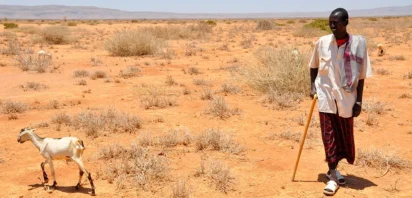
Somalia also featured in last year’s drought outlook, which tracked worsening conditions there due to a severe drought since 2015 that impacted several countries in the Horn of Africa, notably Kenya, Ethiopia, Djibouti, and South Sudan. Like Afghanistan, Somalia is a country that’s highly vulnerable to extreme weather events: its agricultural industry is underdeveloped and mostly comprised of small-scale farmers, its state institutions are weak and unable to provide a safety net to its citizens, the country has an overwhelmingly young population (in 2018, two-thirds of the internally displaced were under the age of 18), and the Somali government is still fighting a long-running Islamist insurgency from al-Shabaab and other militant groups.